



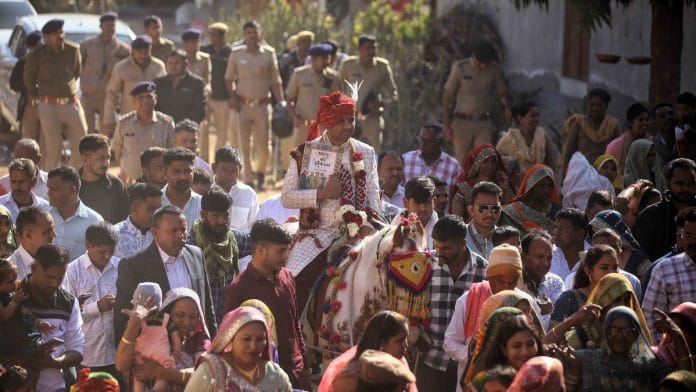
Gujarat/New Delhi: In India, a groom riding a horse is tradition. But a Dalit groom riding a horse is the stuff of revolution.
It didn’t just stop at the horse. On his wedding day, this groom took his resistance to another sublime level.
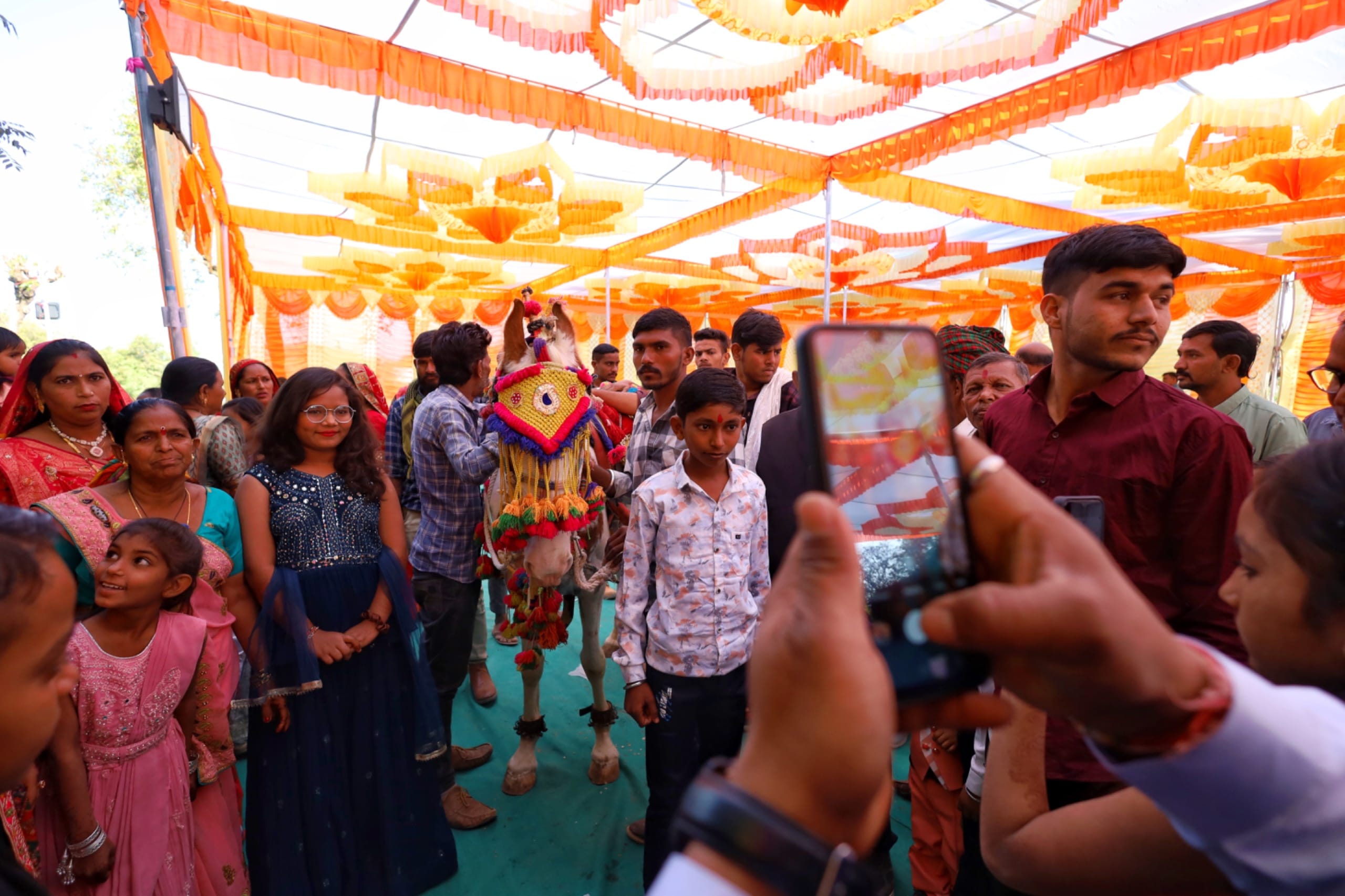
As Kaabar, the marriage procession horse decorated with a red saddle blanket, a browband, and a rainbow-coloured bridle, arrived at the Parecha house at 9:30 am, wedding guests lined up to take selfies—amid oohs and aahs. For the first time in her three years of work, Kabaar was going to carry a Dalit groom.
And Mukesh Parecha, 33, was about to become the first person from his community in Gujarat’s Gadalwada village, in Banaskantha district, to ride a horse in his wedding procession since India’s independence in 1947.
But it wasn’t without trouble. The dominant upper-caste villagers taunted and objected. Some threatened him. Others warned him. Parecha remained resolute.
“The idea came to me five years ago when people threw stones at a Dalit groom for riding a horse in his wedding procession,” said Parecha.
The more he read about such bans, the more determined he became.
Dominant castes do not allow Dalits to follow certain wedding rituals, and a groom arriving on horseback is one of them. However, young and financially independent Dalit professionals are pushing back—even when dominant caste Hindus attack them, beat them with lathis, and pelt them with stones.
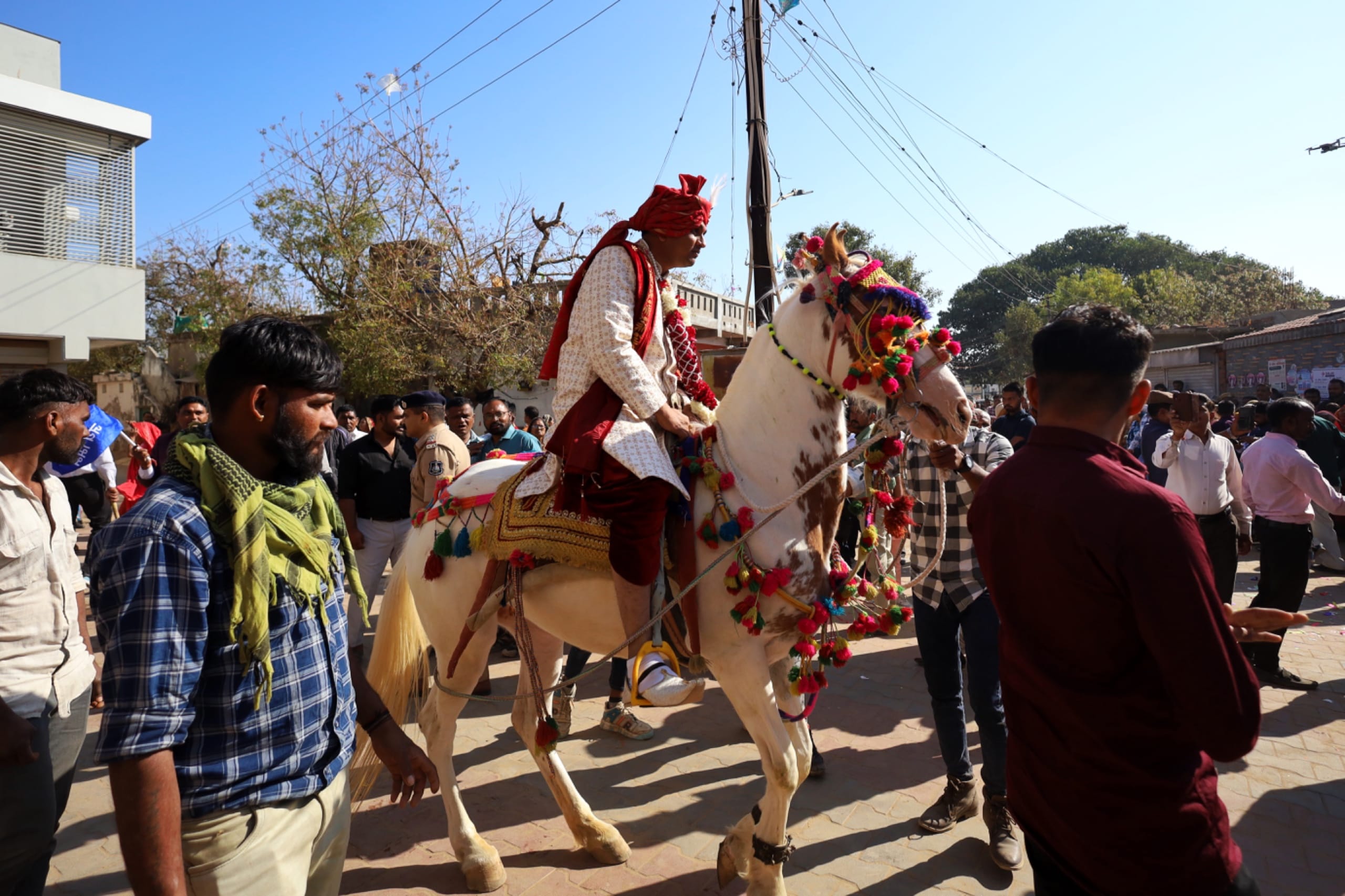
“Why is a Dalit riding a horse such a big deal? If we can afford it, why shouldn’t I exercise my right granted by the Constitution? We need to break these orthodox, centuries-old traditions,” said Parecha.
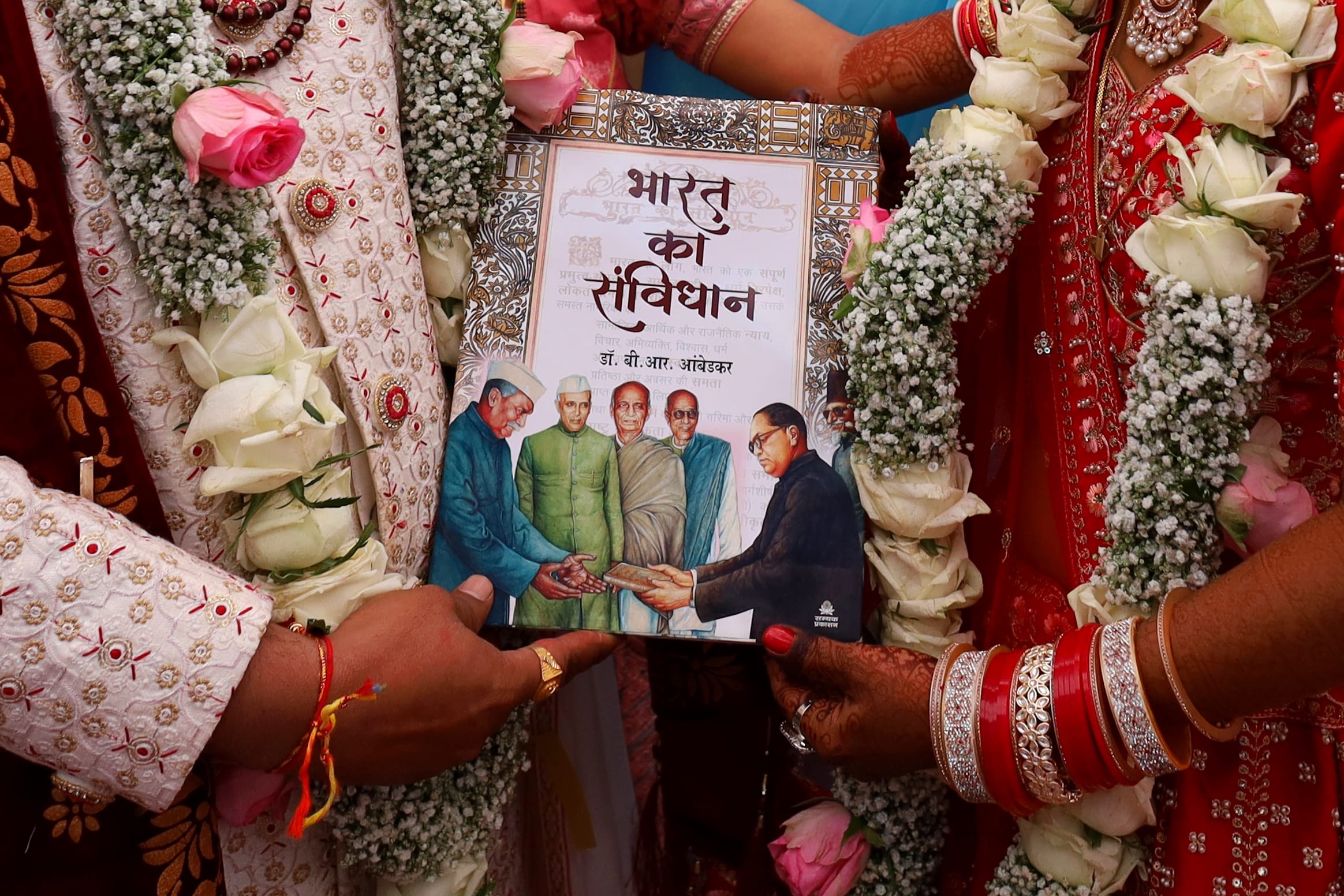
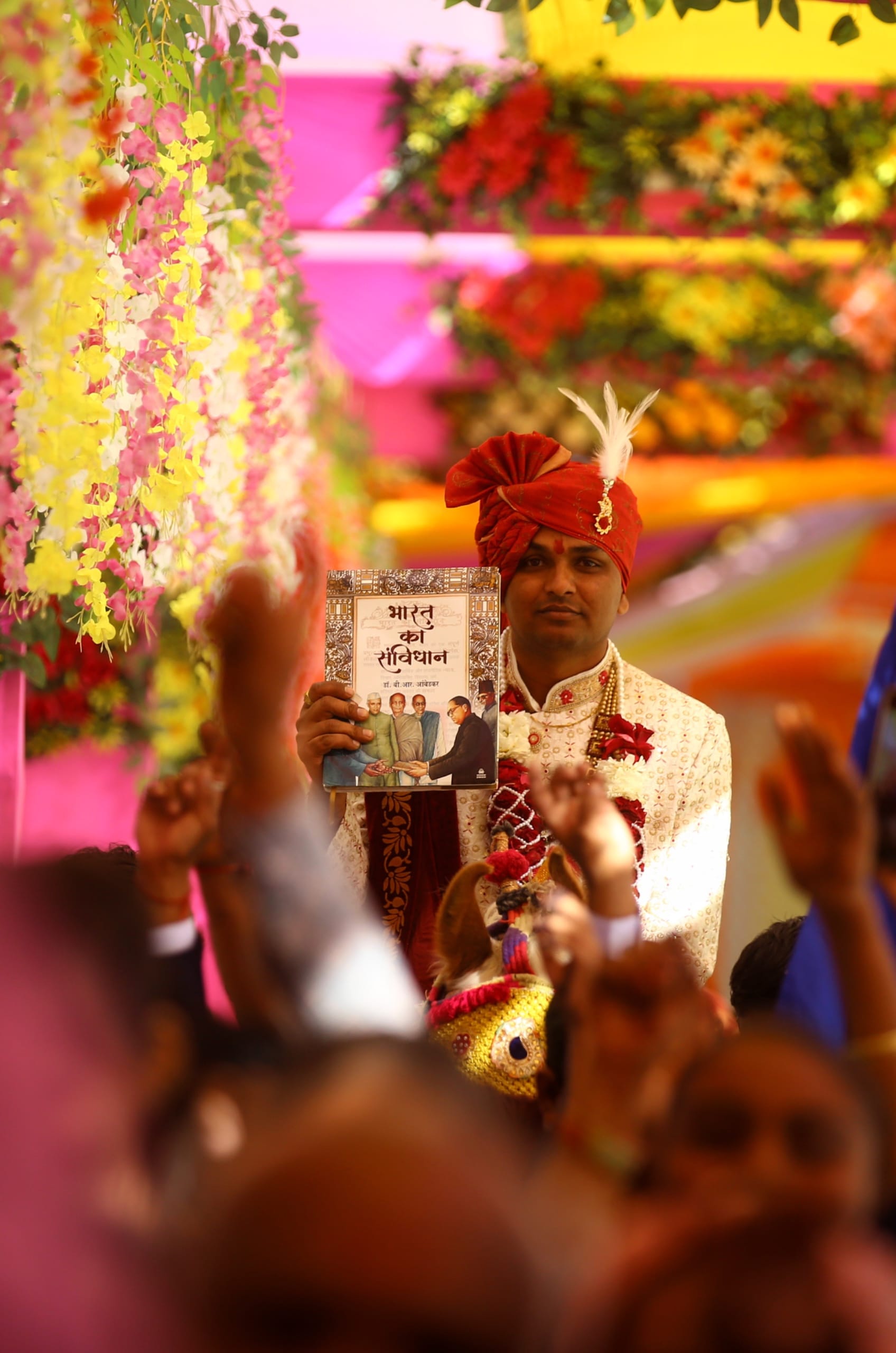
His wedding became the perfect stage to take a stand. And instead of a sword, Parecha chose to hold up the Constitution.
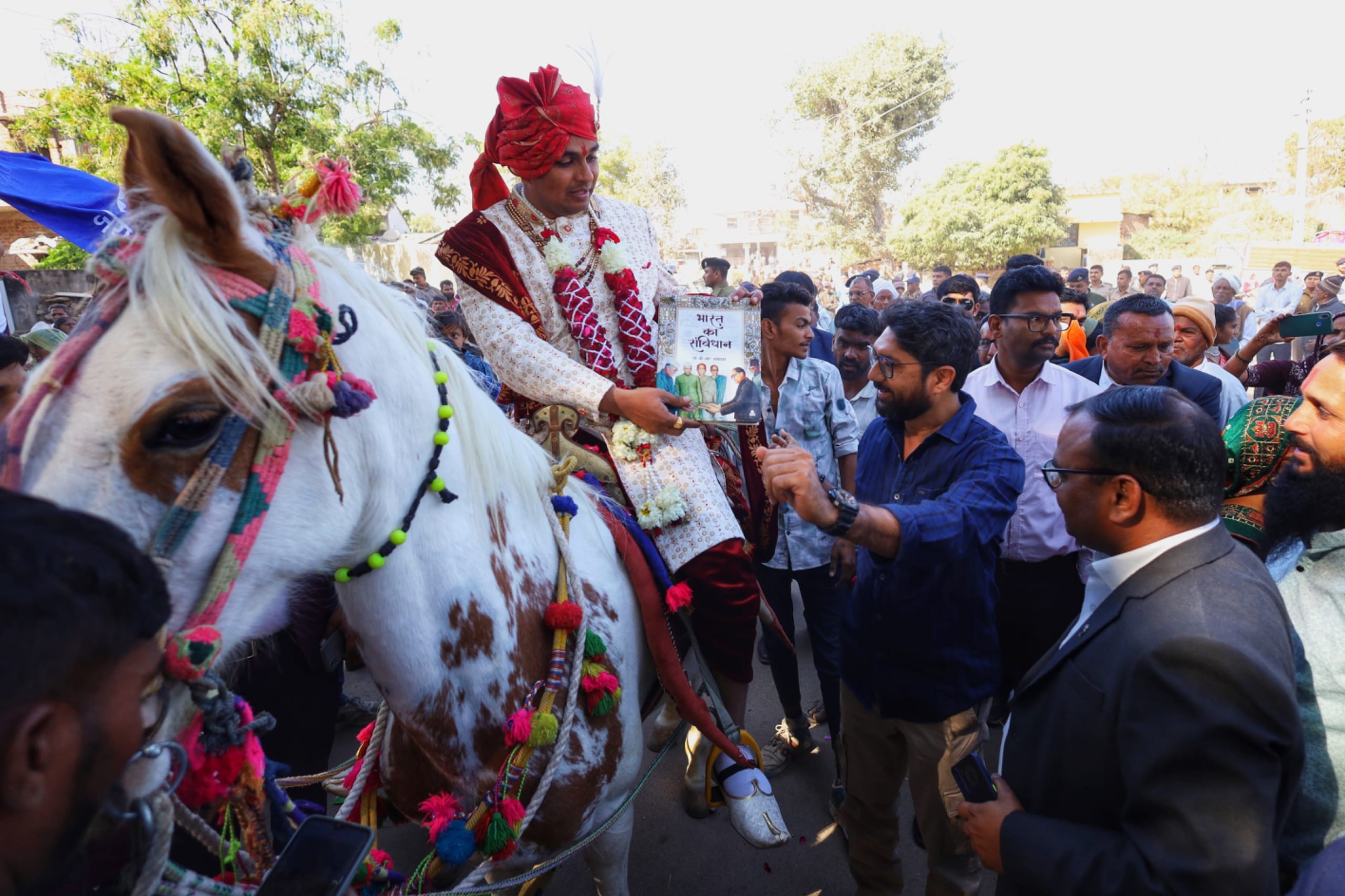
On 6 February 2025, Mukesh Parecha and Lalilta Parmar tied the knot, in what is arguably independent India’s most revolutionary wedding.
Also read: A day in the life of a Delhi census worker. Houselisting survey with thick skin & patience
Threats before the wedding
On 4 February, an upper-caste youth barged into the Parecha house, which stands in a corner surrounded by plains and paddy fields. It’s where Dalit families reside–far removed from the homes of the dominant castes.
“You want to ride the horse? Do it. The police will protect you now, but we will teach you a lesson later,” he said before storming out.
The police took him into custody and made a list of villagers threatening to disrupt the festivities, according to Parecha.
The next day, Parecha lay in bed when his phone rang. His smile faded as he cut the call.
“These men are now calling me,” he muttered to his brother, Vinod. The dominant-caste villagers were upset that he had sought police protection. They didn’t appreciate the police knocking on their doors.
On the eve of the wedding, the celebrations crackled with an undercurrent of tension.
The Parecha home glowed under green, pink, and blue lights. A live orchestra played a popular garba song.
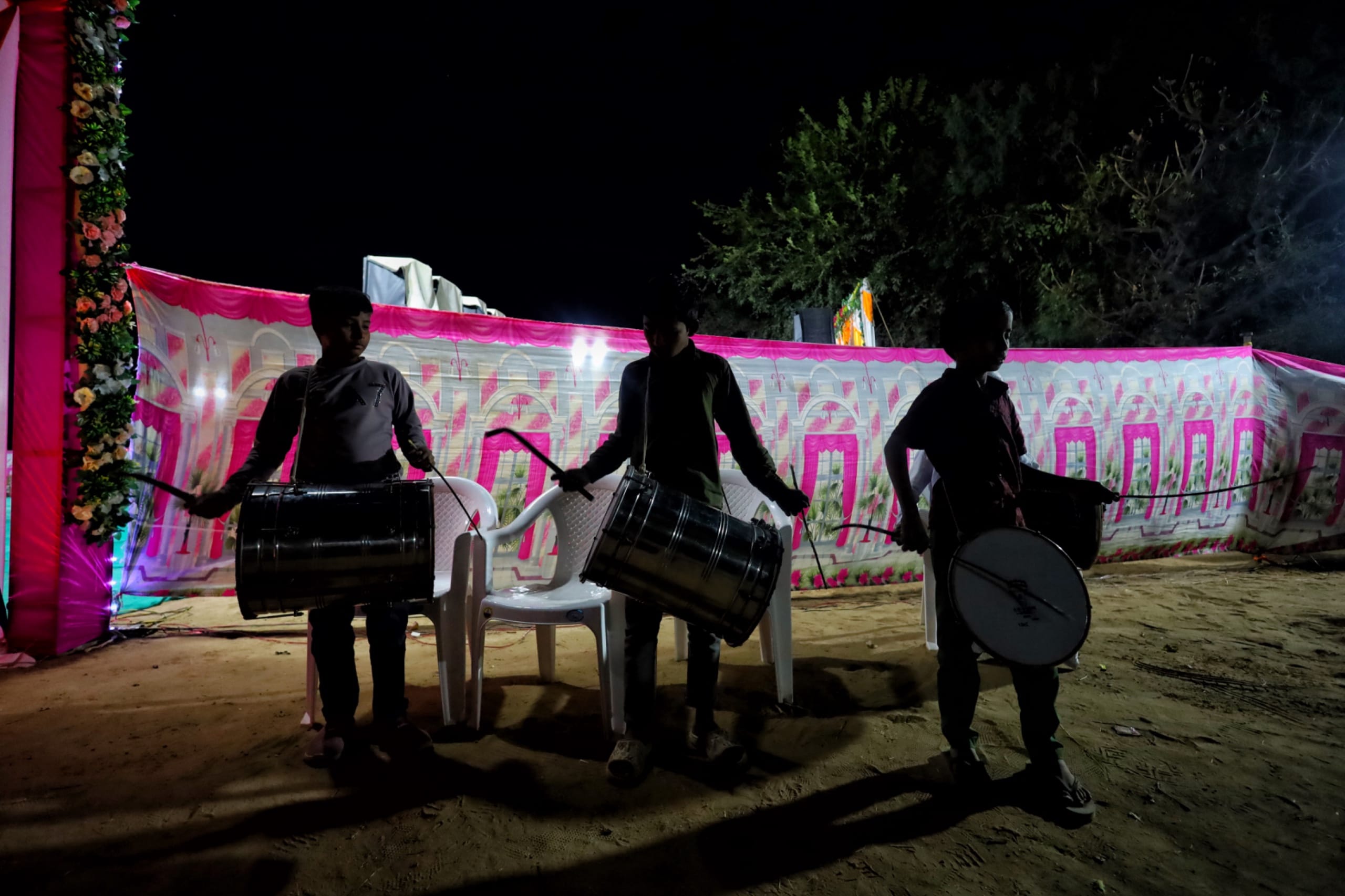
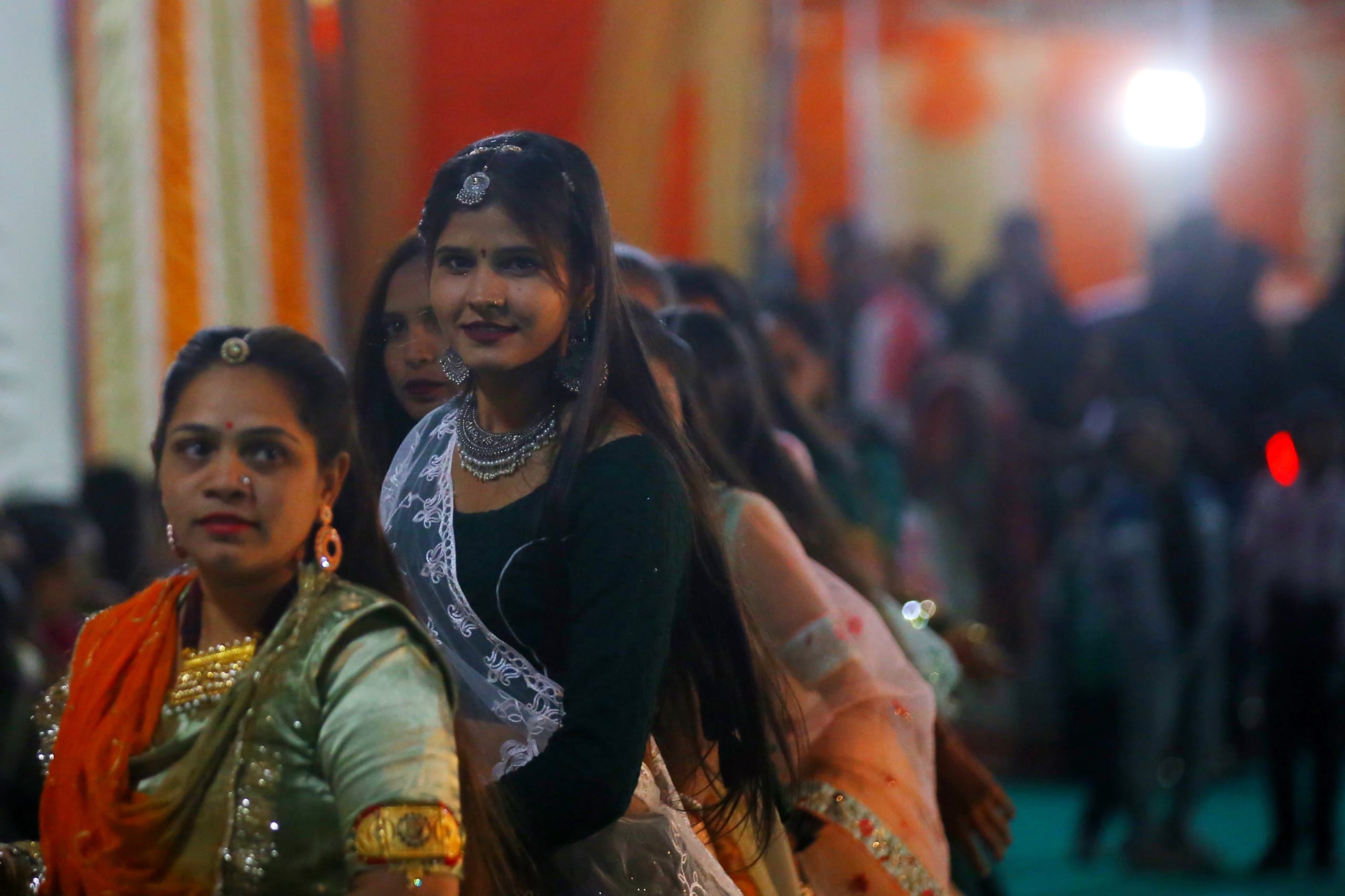
Women in shimmery lehengas, kurtas, and saris, and men in crisp suits, danced alongside children sporting graphic T-shirts.
Over a hundred police officers stood guard.
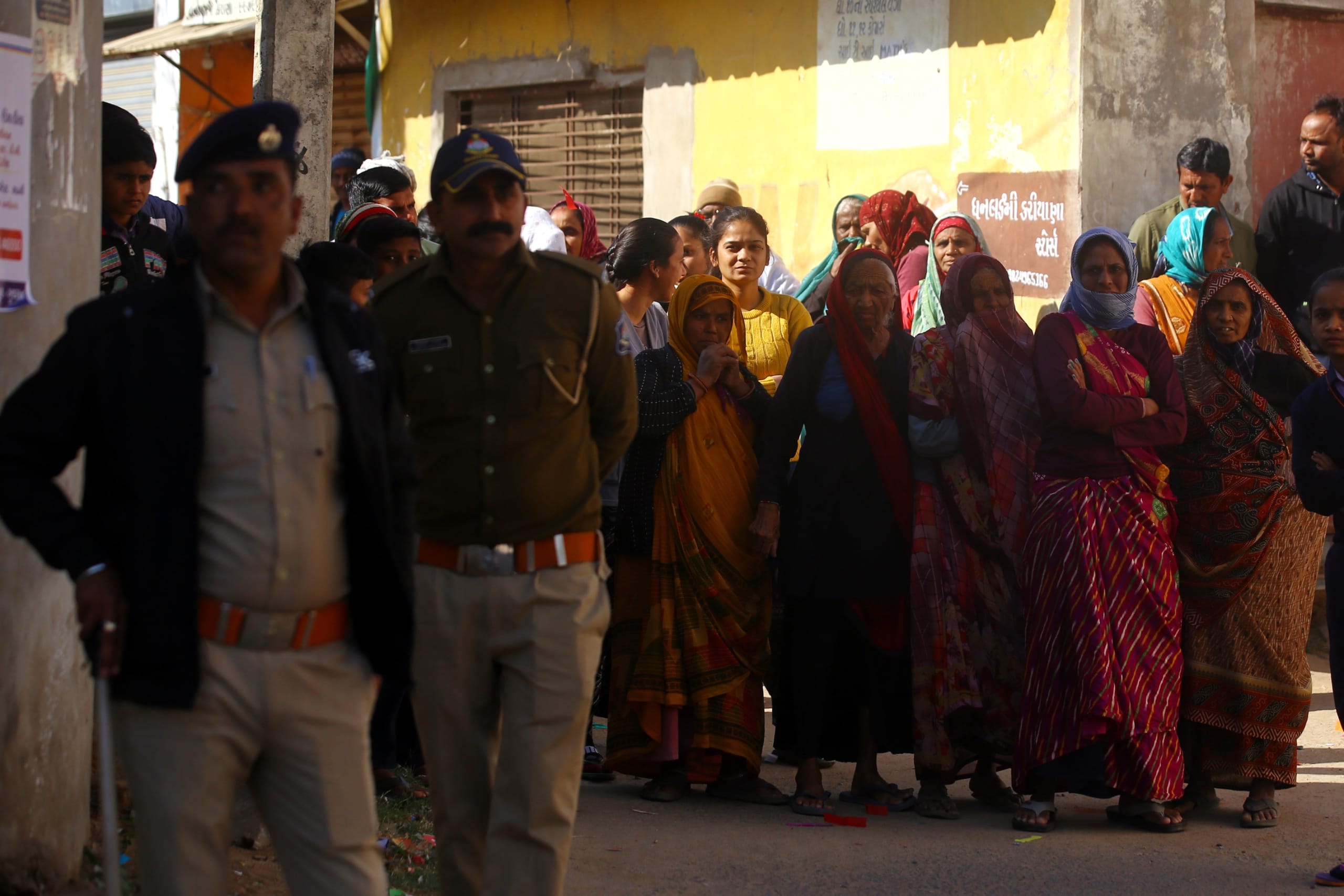
“We are not scared. This is a right given to us by the Constitution of India. Mukesh is an educated lawyer—if he gets scared, what will happen to others in our community?” said his uncle, Panasant.
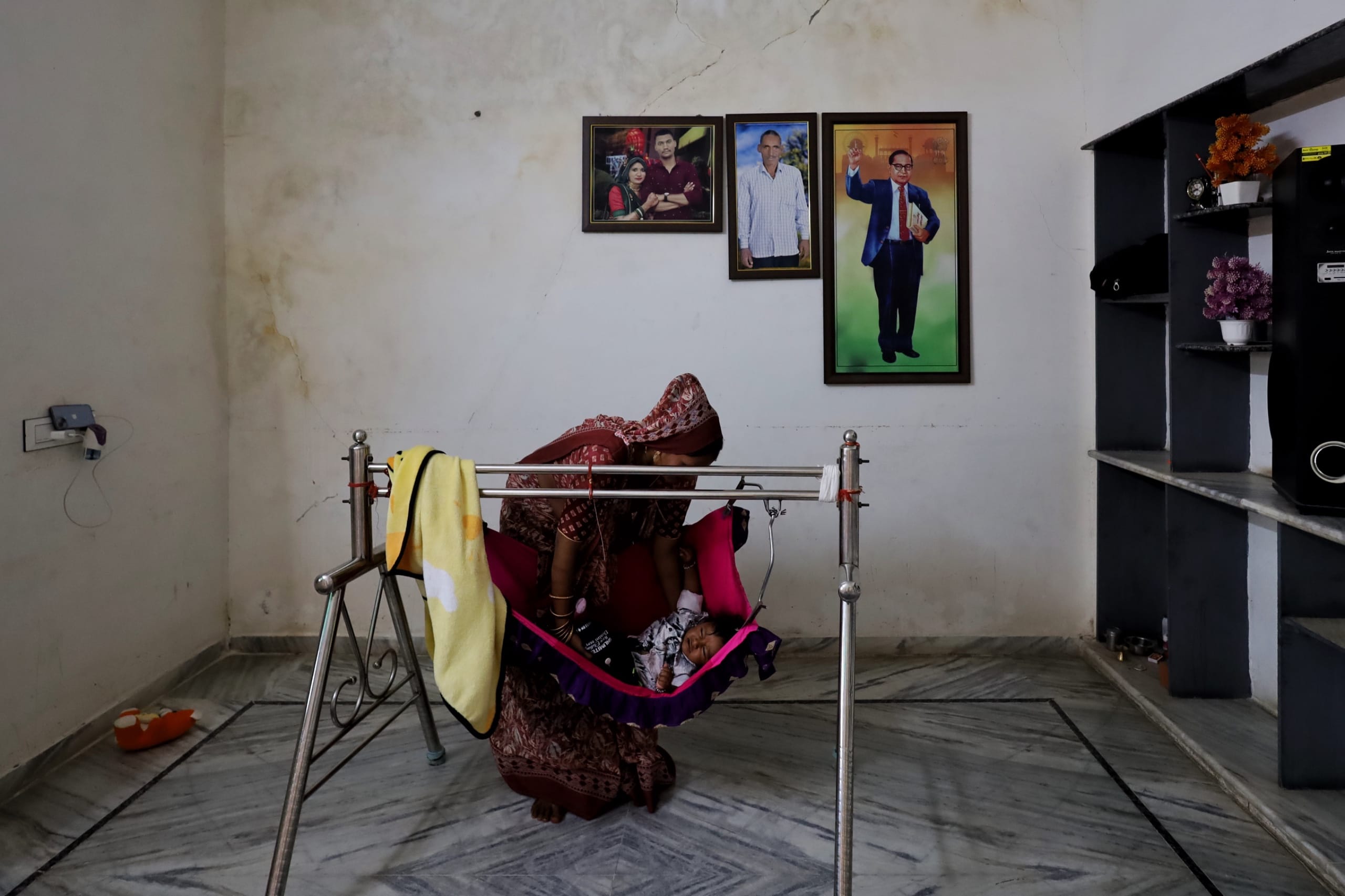
Advocate Mukesh Parecha has become a symbol of cautious hope for his community.
“The Parecha family supports Mukesh. Despite the risks, we believe his stand will bring awareness,” said his uncle.
In rural Gujarat and feudal Rajasthan, Dalits like him are pushing back, subverting entrenched norms by riding horses, sporting moustaches, and wearing branded clothes. According to an activist, 52 Dalit men in Banaskantha district have ridden horses in their wedding processions in the past three years.
A covert operation
Getting the horse was a high-stakes, top-secret operation. Parecha and Vinod kept the horse’s location and even the dealer’s name hidden from the family and community.
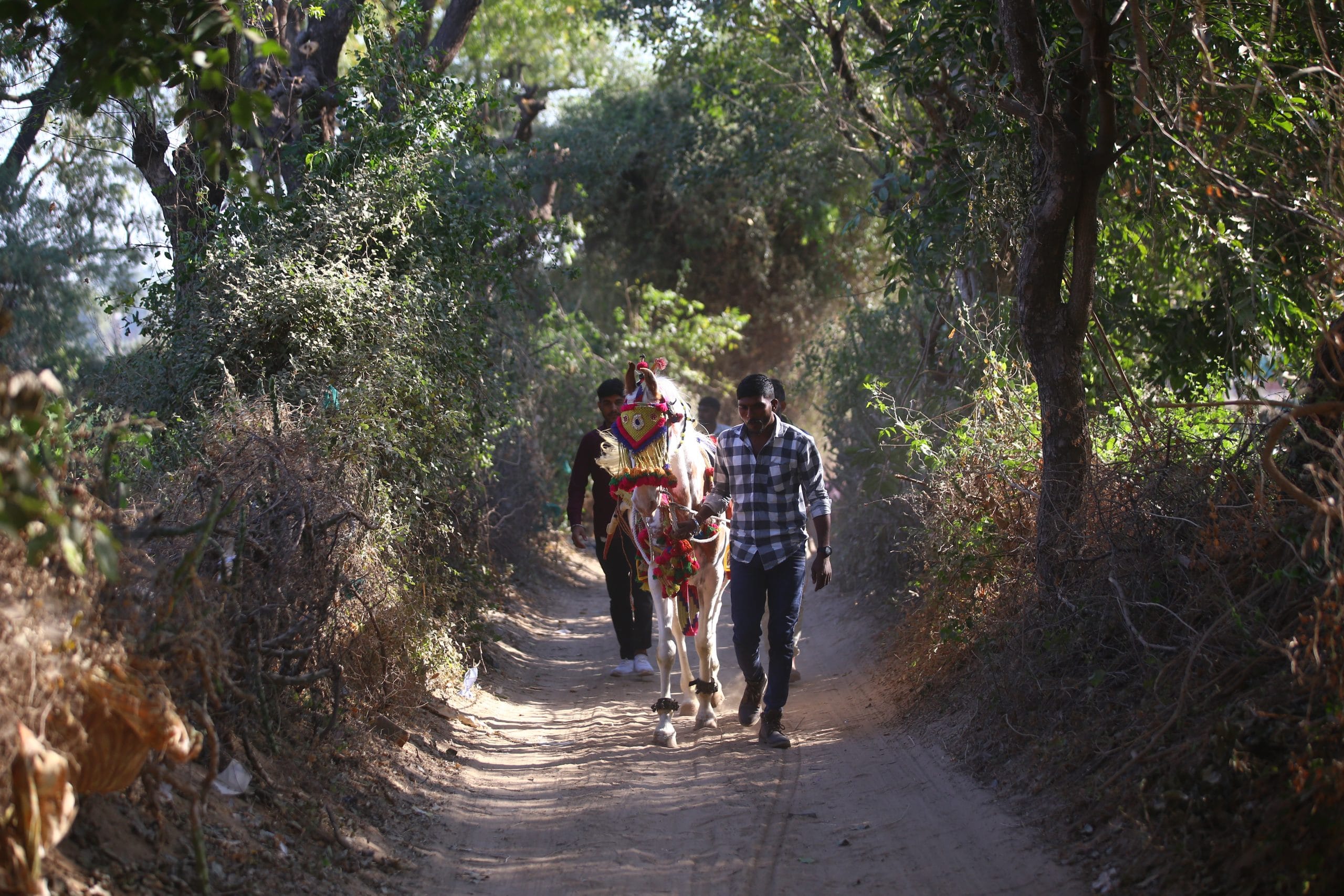
“We wanted the horse to reach safely. We couldn’t trust anybody,” Vinod said on the morning of the wedding.
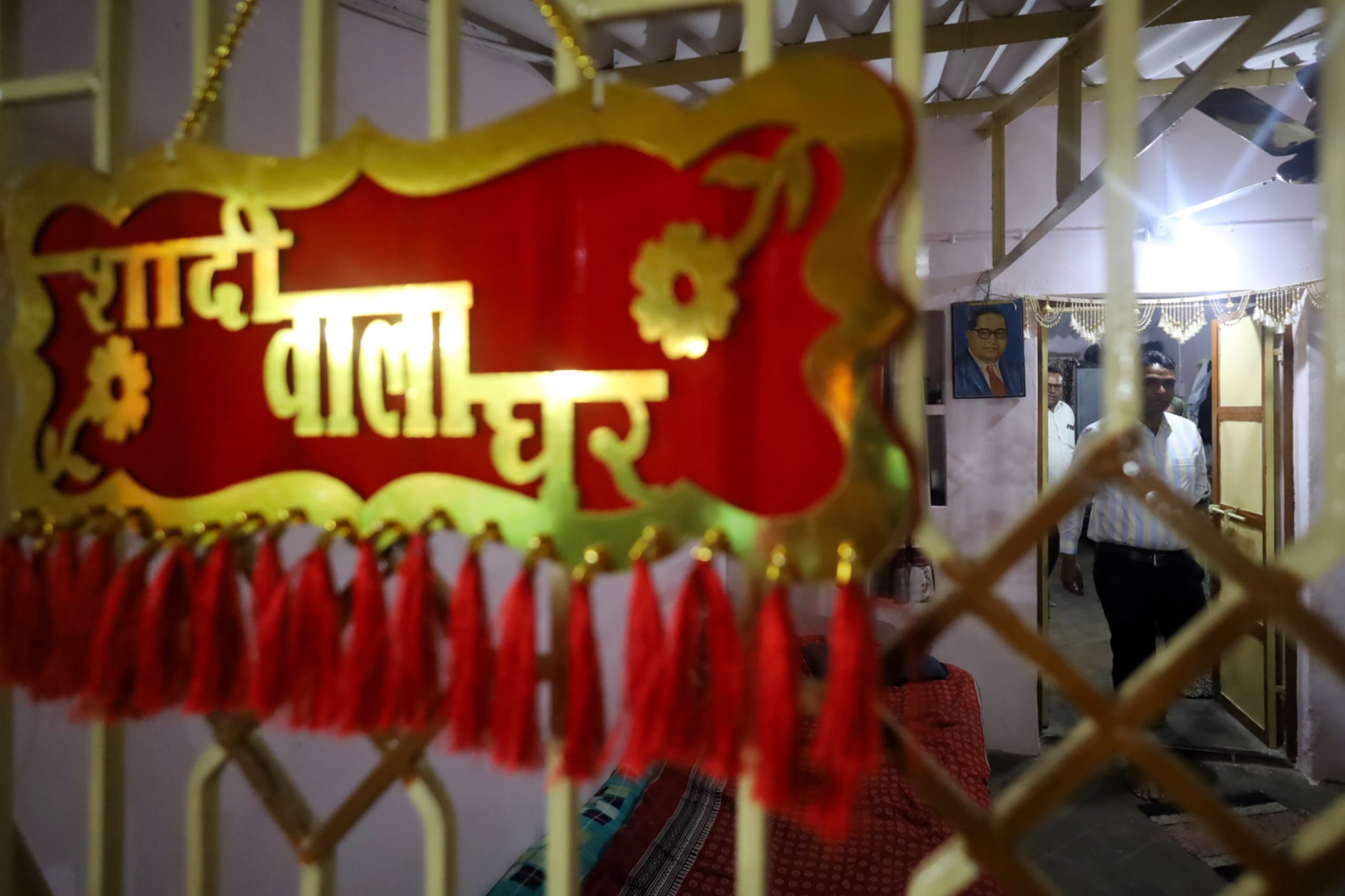
Outside the one-storey house, green carpets covered the ground, and an orange-and-white pandal with a flowered archway gleamed in the sunlight. Plastic chairs were arranged neatly, but there was no sign of plush sofas—rare in a Dalit household.
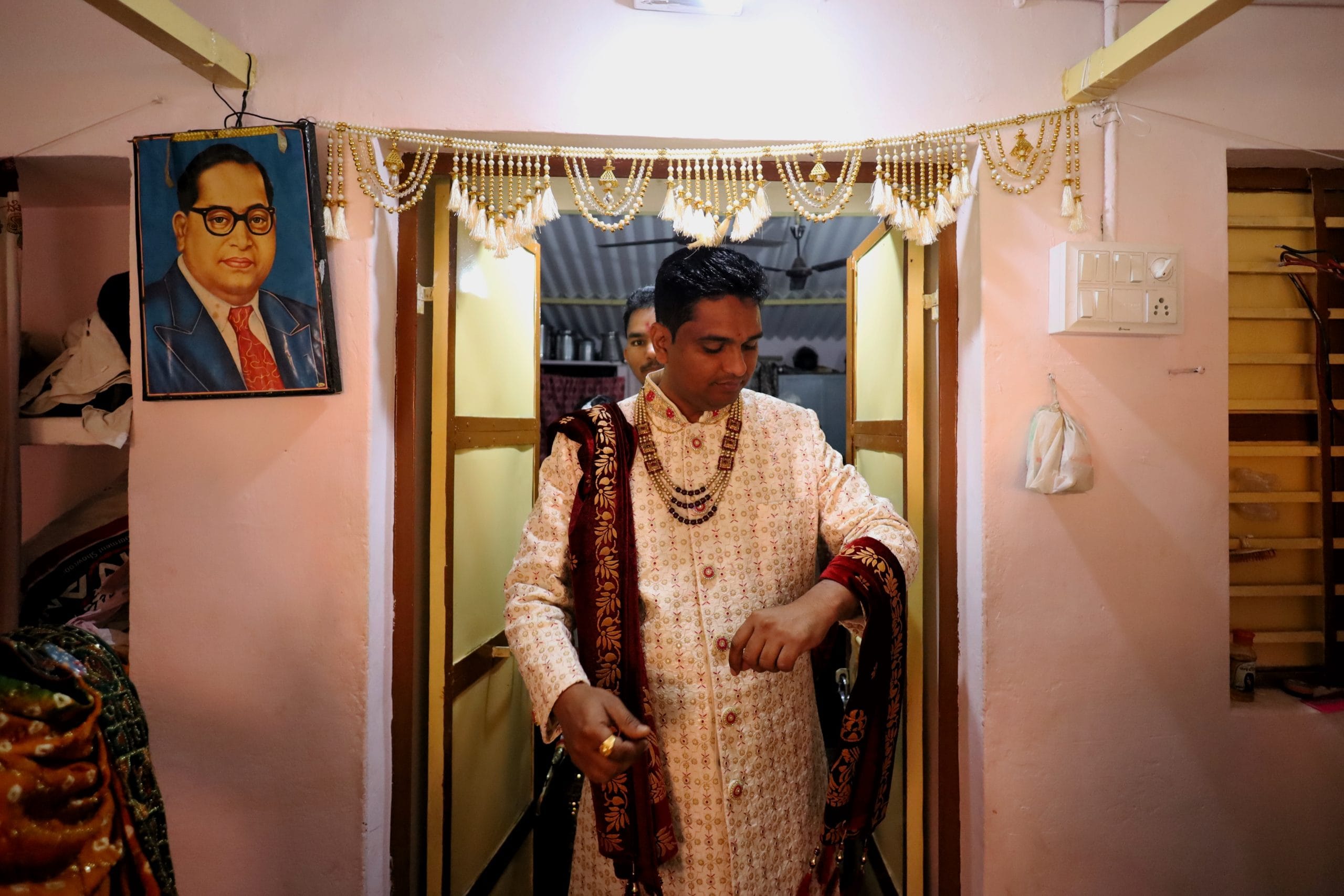
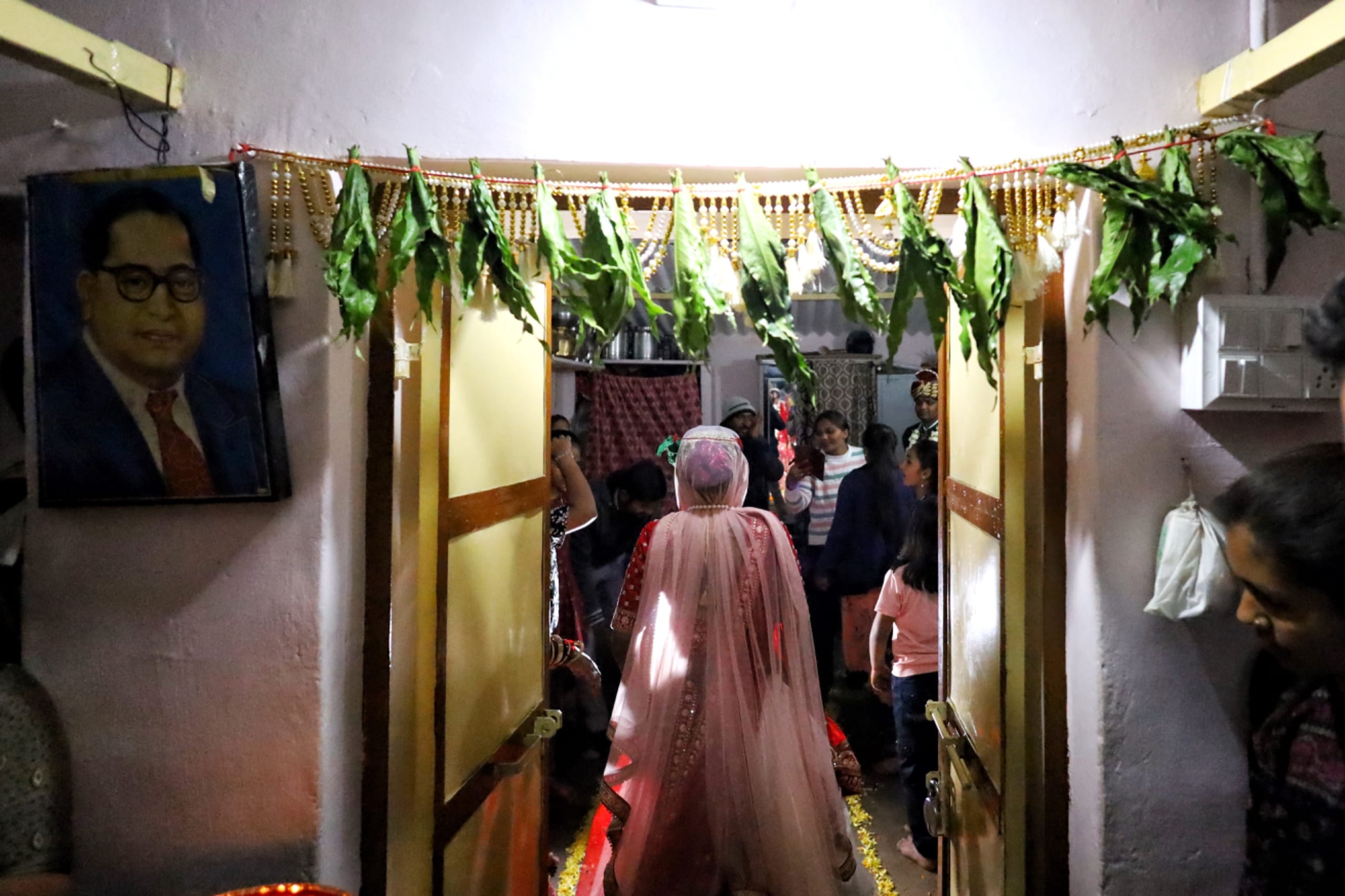
A long pathway decorated with flowers and a portrait of the Parecha family welcomed guests. At the entrance of the house, a photo of Dr BR Ambedkar commanded attention. The wedding was simple. The menu was dal baati churma—without ghee, a luxury in this part of India.
The horse was the only ‘extravagance’.
Also read: The cult of Khan Sir and Patna’s coaching war
The arrival of Kaabar
Parecha’s nephews and nieces came running through the flowered archway, shouting, “The horse is here! The horse is here!”
Kaabar’s arrival overshadowed the main event. Uncles, aunts, grandparents, and cousins gathered around him, cheering as he walked through the archway to the house entrance.
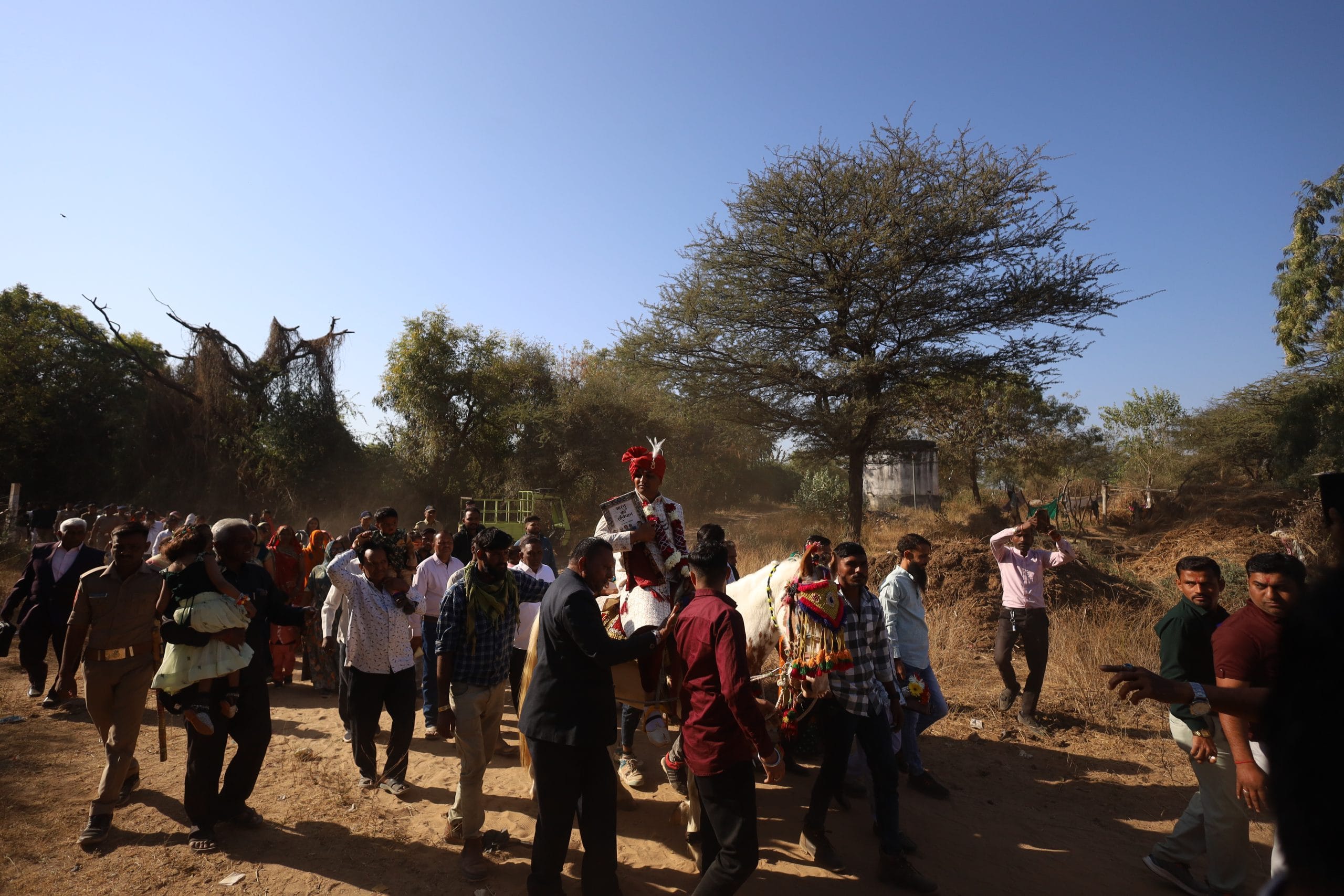
Children and elders lined up for selfies. Caterers carted vats of food, band players lugged their drums and flutes, and neighbours and relatives trudged across the fields to reach the decked-up house.
Parecha isn’t the only trendsetter in his family. Four years ago, his cousin Vasant bought a horse of his own.
“Why can’t I own a horse? Do only Thakurs have that right?” he said.
His horse, Kiran, died in 2022, but in the time she spent with the Parecha family, she set the cat among the pigeons.
“Kiran was like our child. My kids and my brother’s kids rode her in the village,” Vasant recalled. “But when they entered Savarna areas, it raised eyebrows. Those people did not like that we had a horse.”
Kaabar’s owner is not a Dalit, but he’s thrilled to be part of this change.
“I have never seen a Dalit groom ride a horse in a wedding procession. It’s time we change these orthodox traditions,” said Jigar, Kaabar’s owner, as he stroked his head and hugged him. His only concern was to ensure the horse’s safety.
Police escort
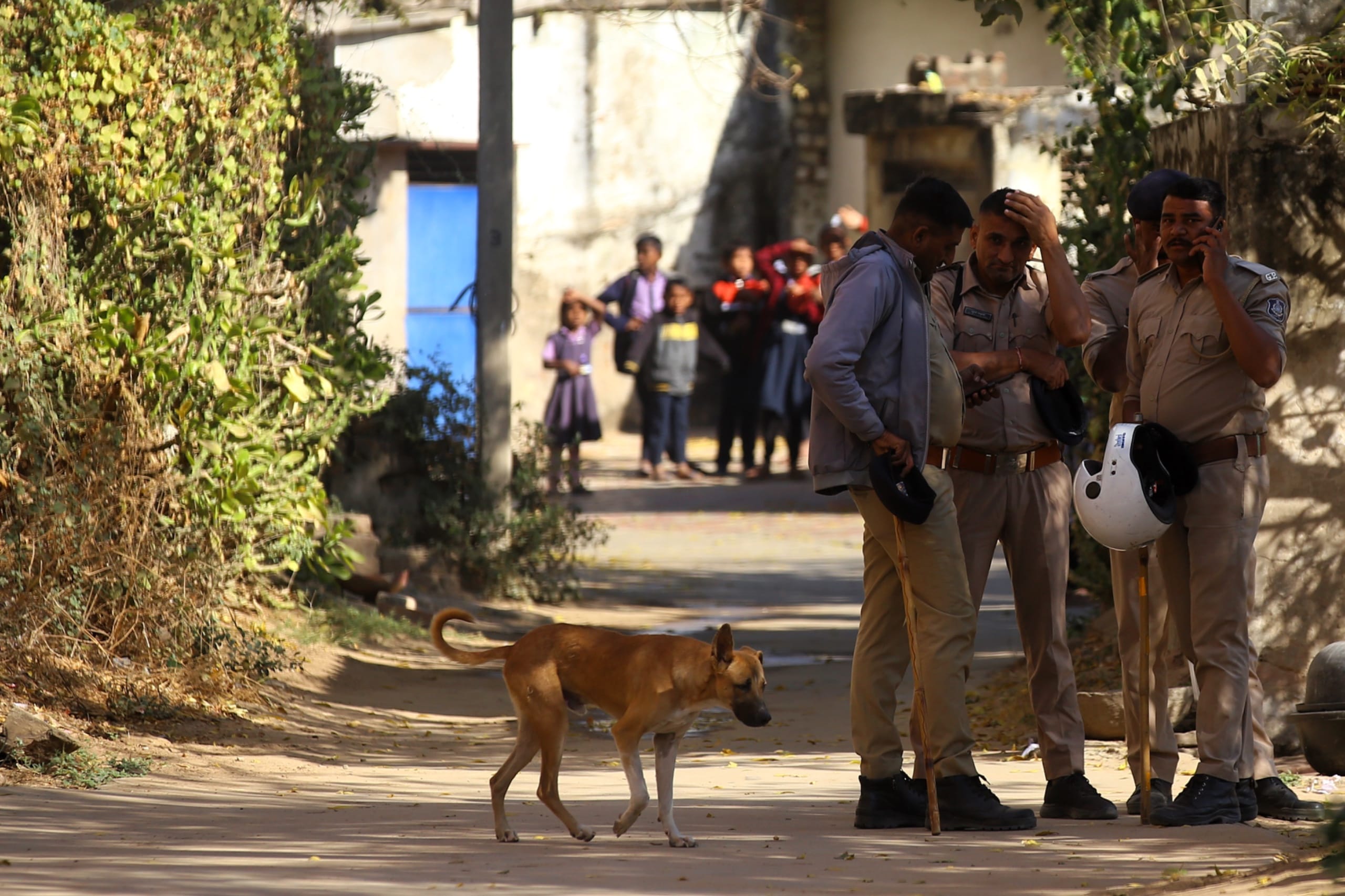
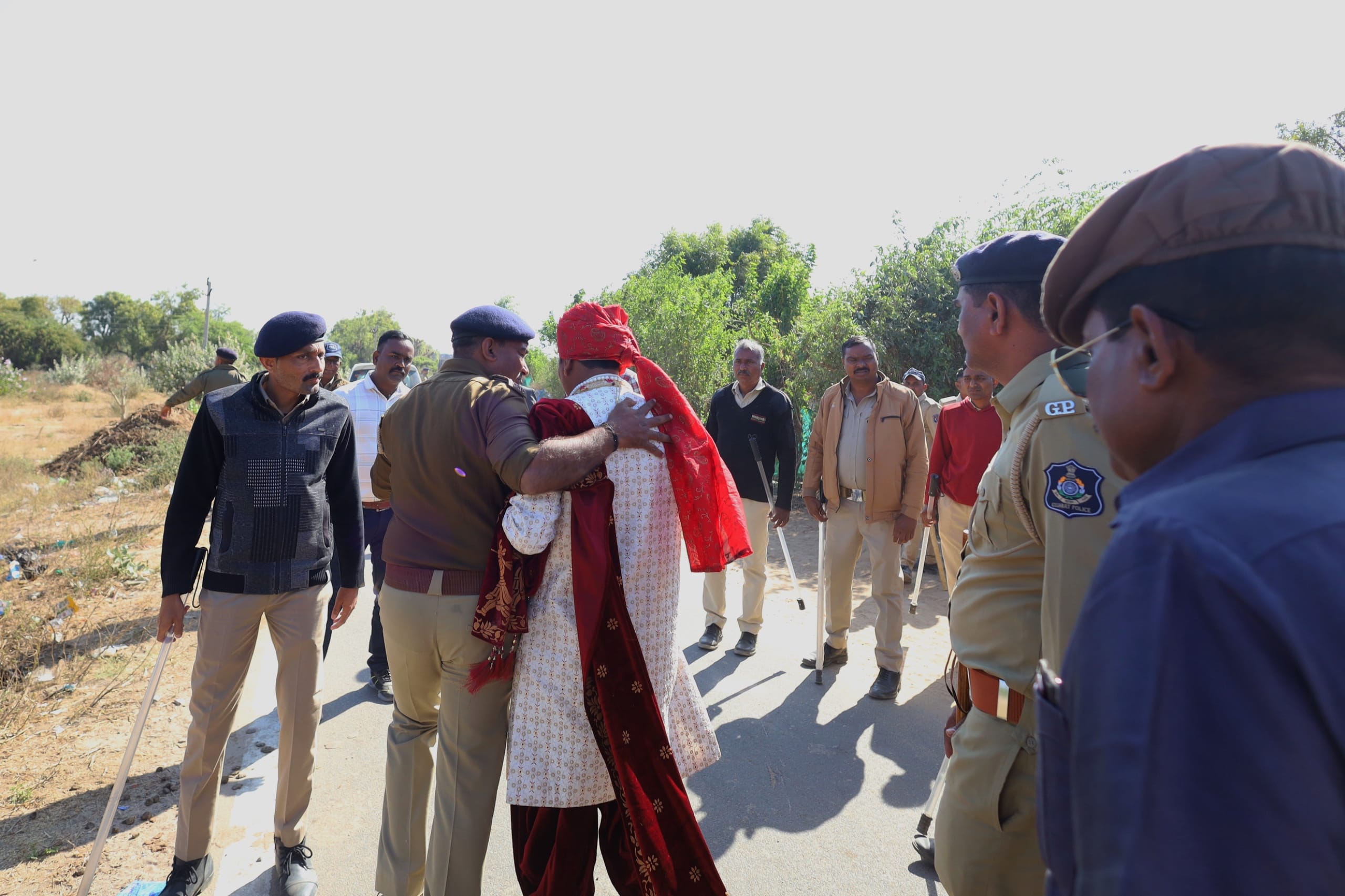
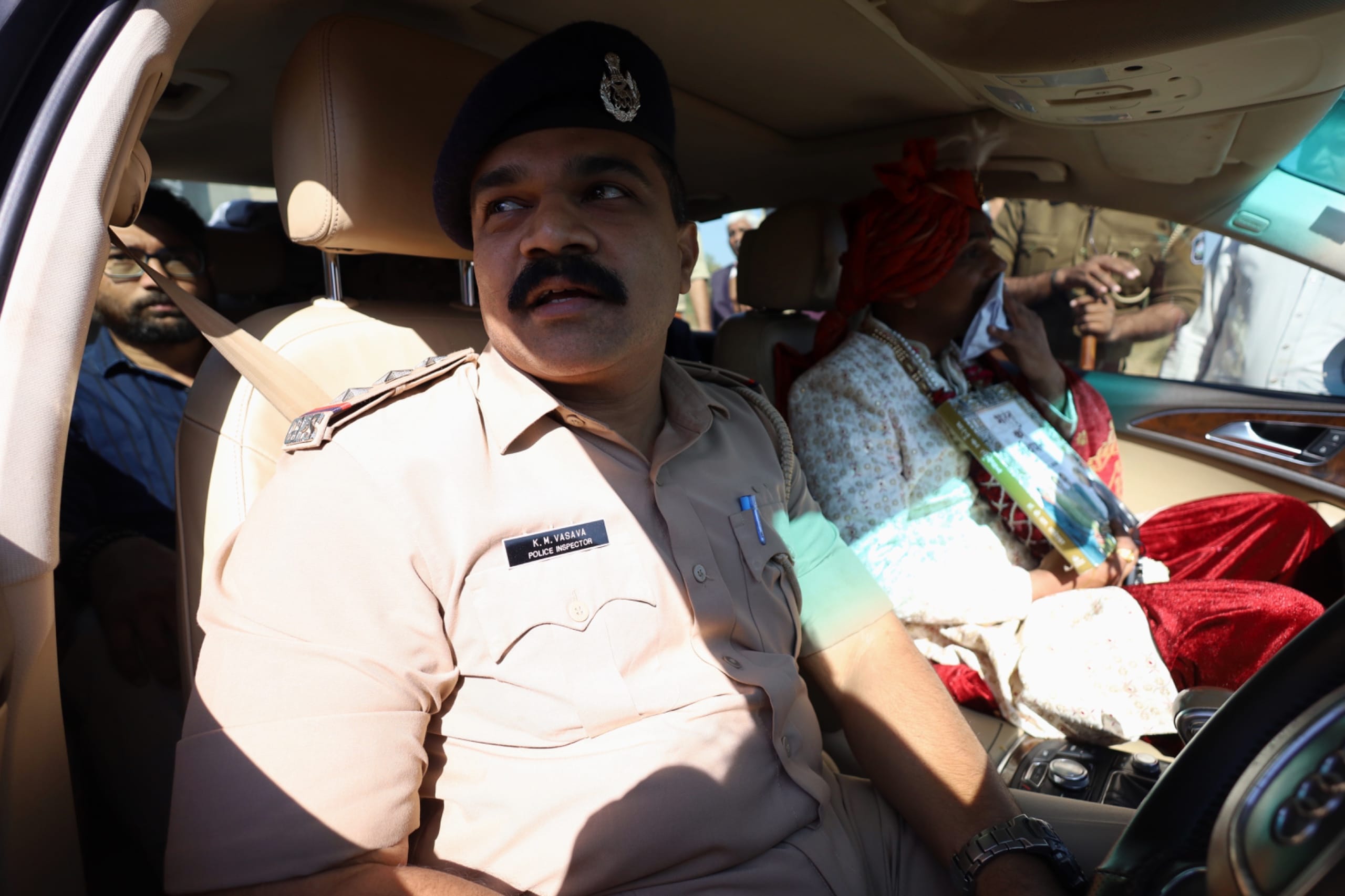
Anticipating attacks from dominant caste villagers, Parecha wrote to the district administration requesting security. As many as 145 police personnel were deployed in Gadalwada.
When Kabbar arrived, the police stood on high alert. Guests and family members exchanged looks of disbelief.
“Such VIP treatment for us?” they whispered.
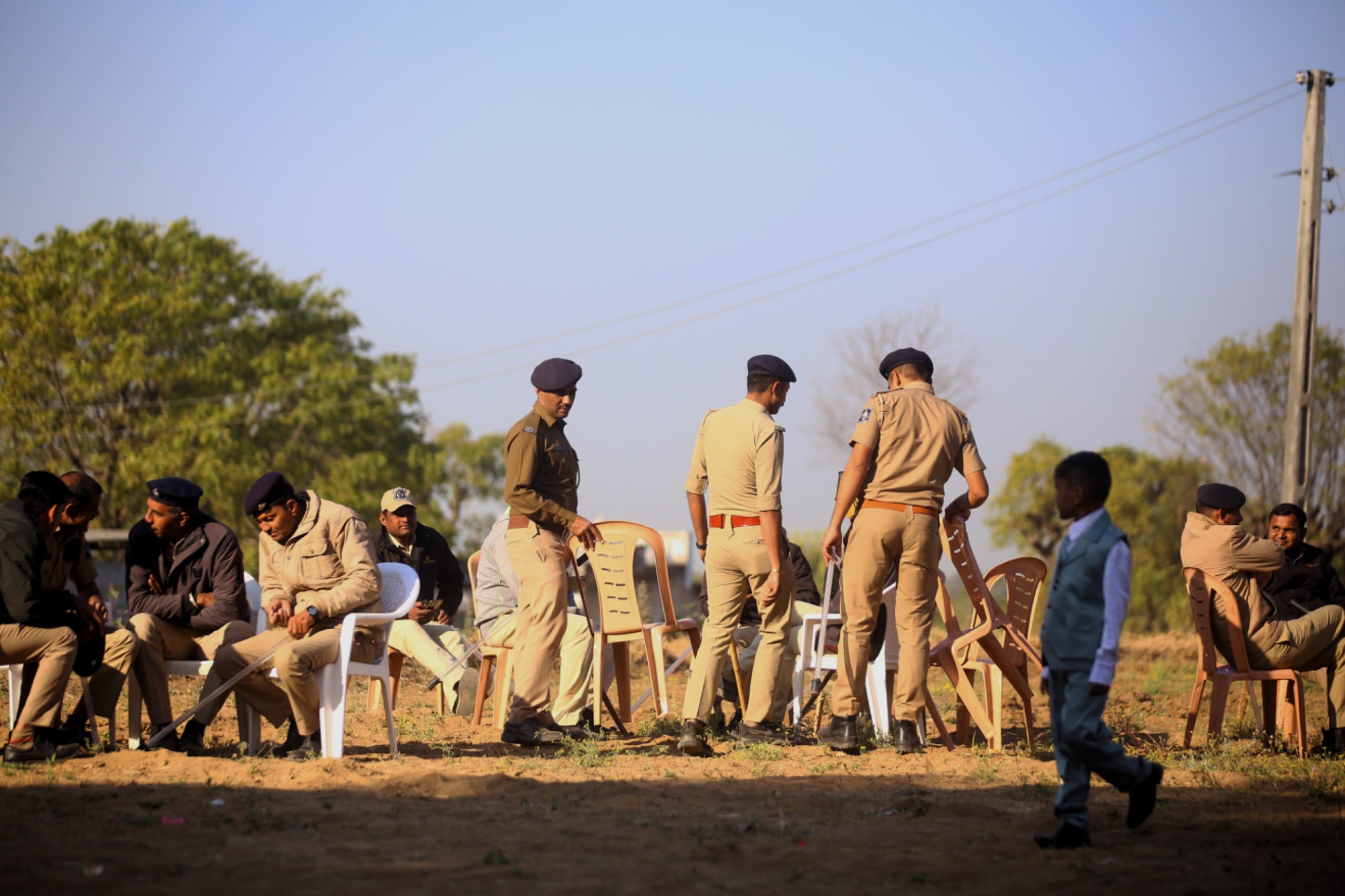
Though everyone was laughing, sharing jokes, and enjoying themselves, uneasiness lingered.
“It’s getting late. The police are asking us to start the procession,” Vinod announced.
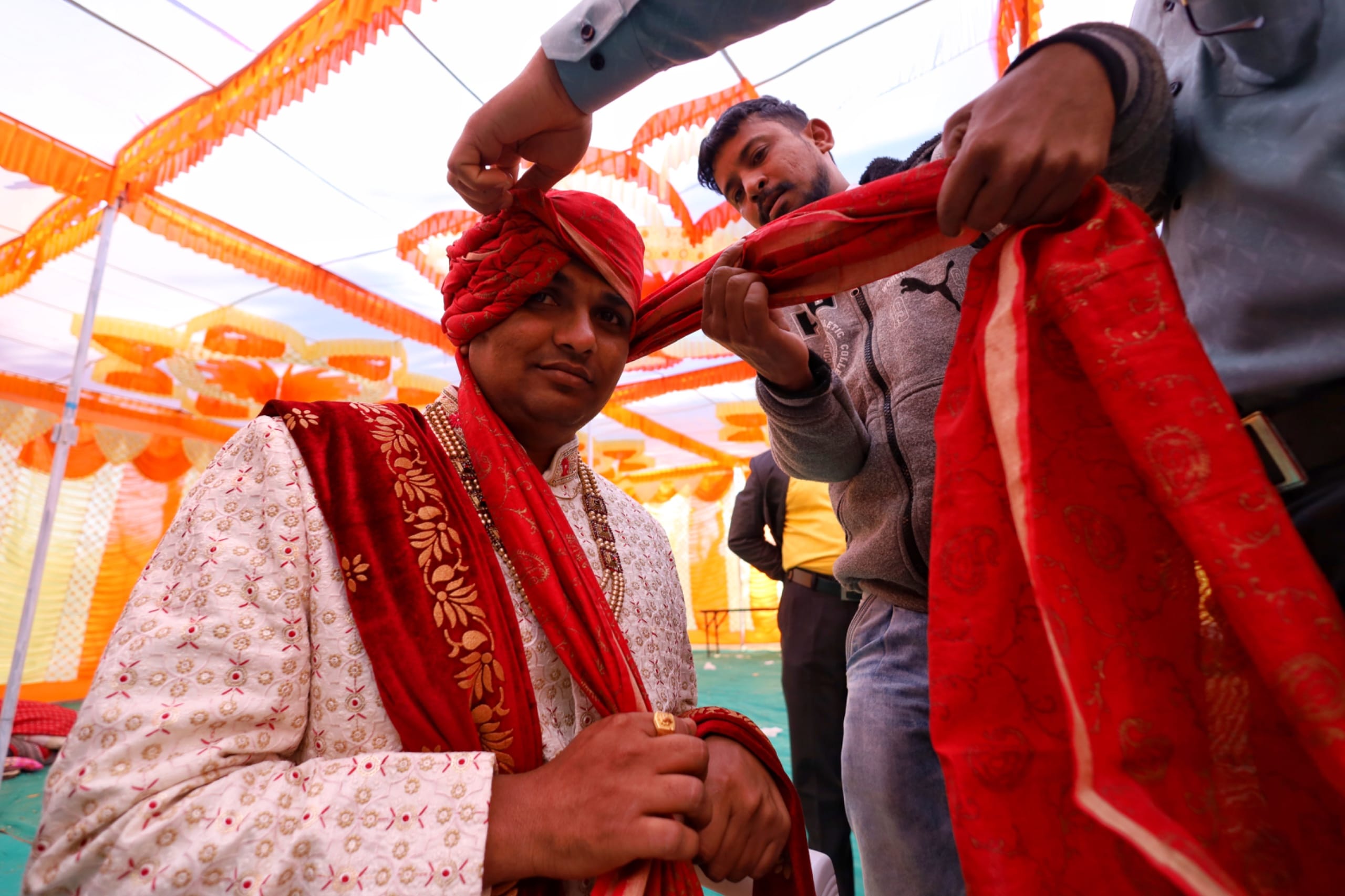
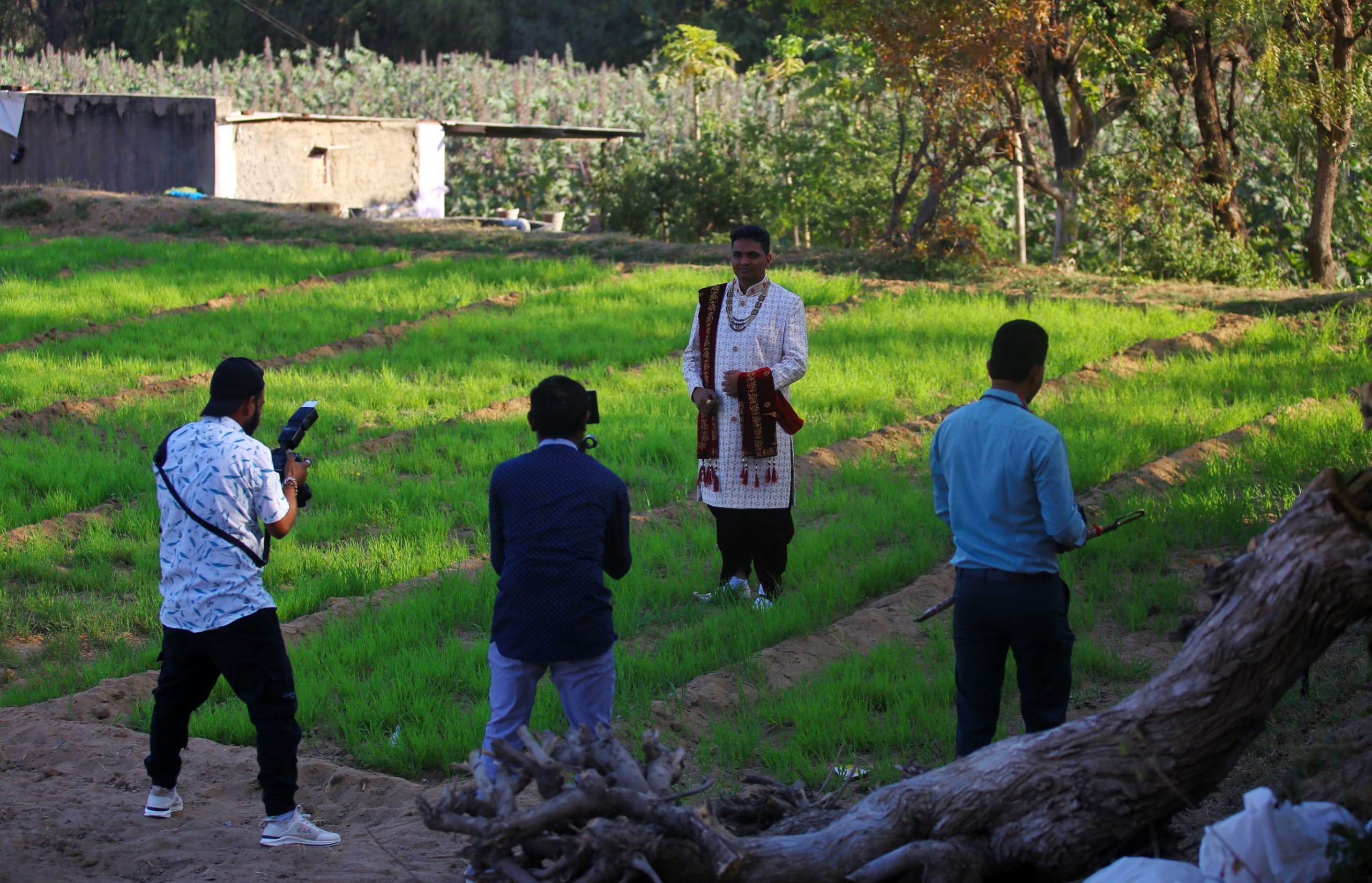
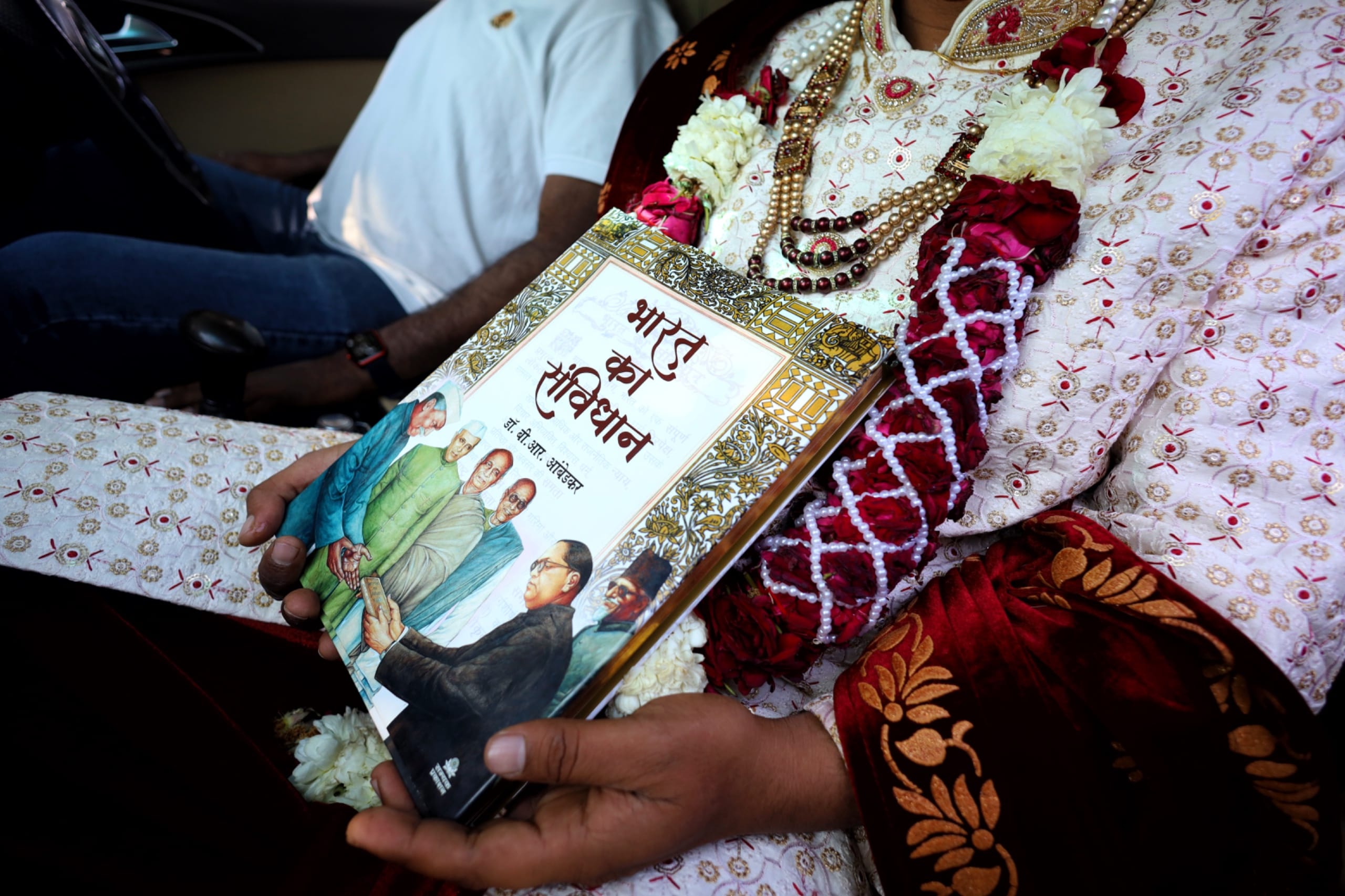
The groom emerged, wearing an off-white sherwani with a maroon velvet shawl draped over his shoulders. A pagdi adorned his head. Sitting astride the horse—his back straight, head high—he looked like a king ready for battle. His mother handed him a copy of the Indian Constitution. He took it and held it close to his chest.
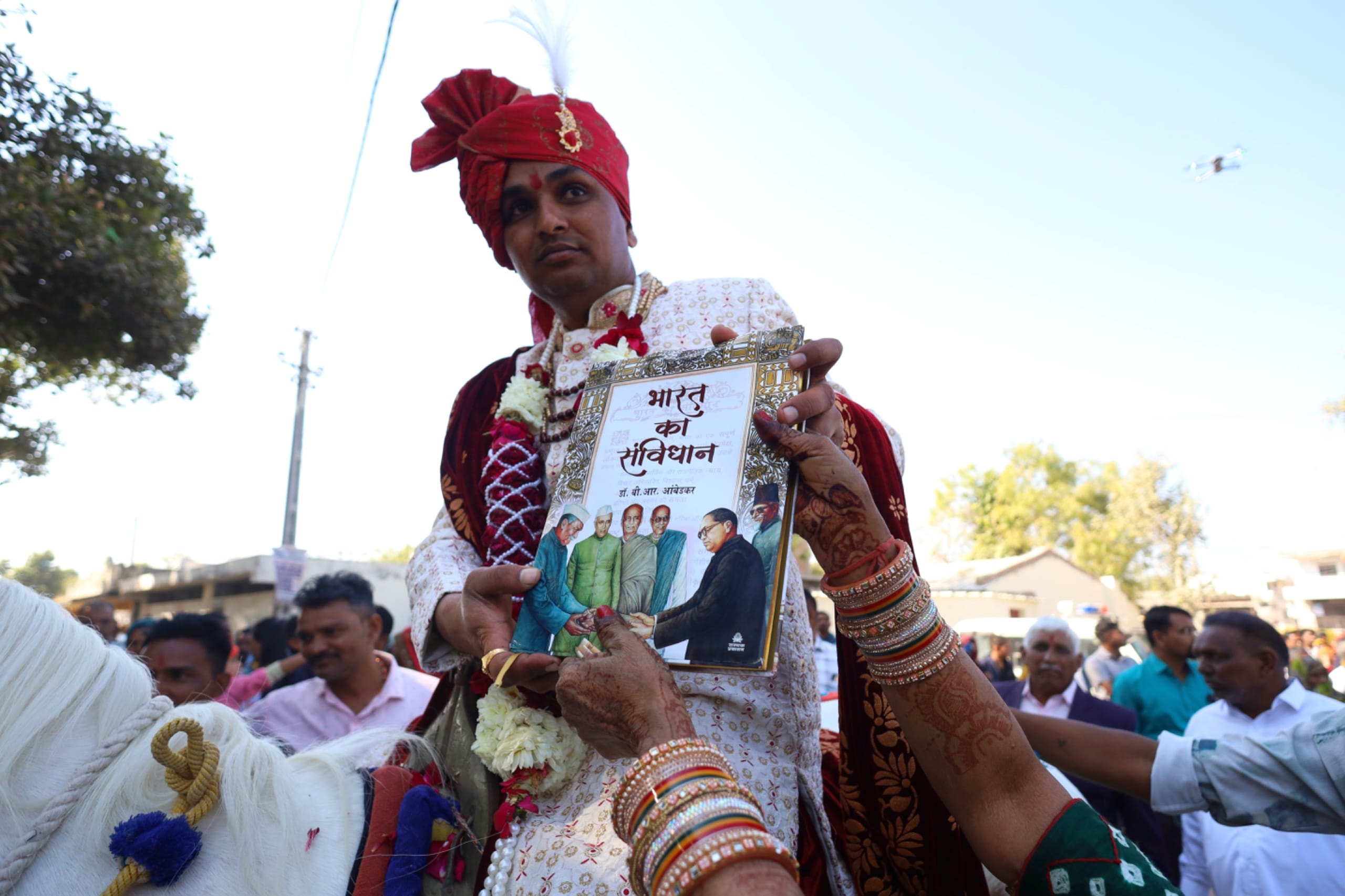
“Today, I have the right to do whatever I want because of the Constitution. I don’t have any interest in riding a horse, but I wanted to see what would happen if I hurt the caste pride of many,” Mukesh declared.
His resolution wasn’t just a personal challenge but also a reflection on how symbols of masculinity have long reinforced caste hierarchies.
“Whether it’s wearing a pagdi, sporting a moustache, or riding a horse, these symbols have long been linked with male chauvinism. Caste, too, is steeped in such chauvinistic elements,” said YS Alone, professor of Arts and Aesthetics at JNU.
“The casteist Hindu does not believe in equality. Dr Ambedkar once remarked that varna is a perversion; today, what we witness is a psychotic perversion of caste.”
Twenty to thirty policemen and women walked as the procession began, followed by a DJ, dancing relatives, and then Parecha on Kaabar, with more police following behind. His brother carried the blue Jai Bhim flag.
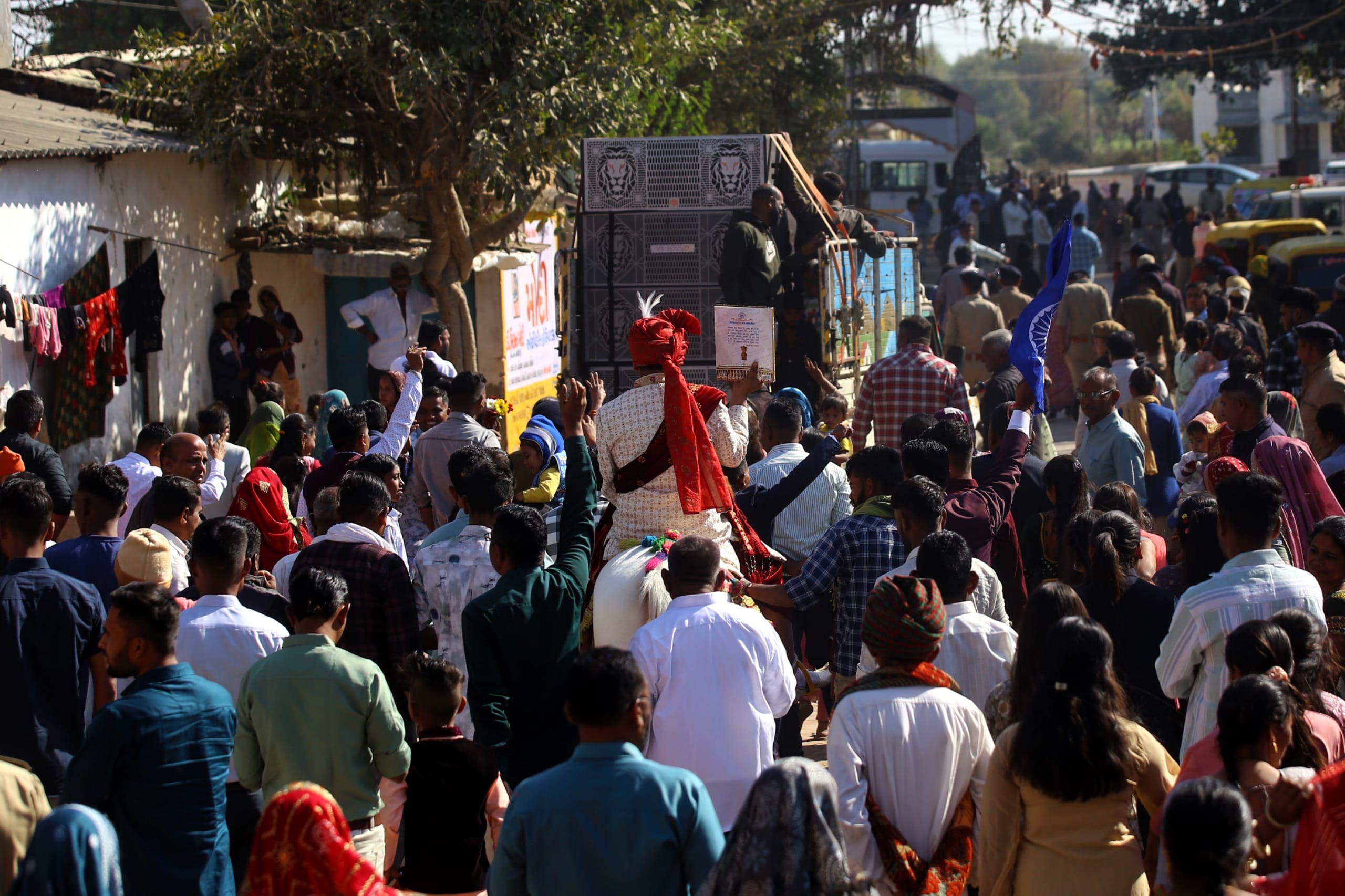
“Jai bhim bolke duniya jeetenge…nahi jhukenge…sabko pasand aayenge… Dalit hain hum…nahi kisi se darne ka,” played on the loudspeaker as the procession moved forward.
The procession
To reach the final destination, the village square, they had to pass through the upper-caste areas. More than a hundred police officers were deployed across Gadalwada to maintain order.
When the procession entered a narrow lane, an officer told the DJ: “Now don’t play this Bhim song.” A traditional garba song began playing instead.
As Mukesh’s procession passed the upper-caste areas, a sudden commotion erupted. Horrified, many men rushed their women inside their homes and bolted the doors. Others hid behind boundary walls. Some, driven by curiosity, gathered on rooftops to watch.
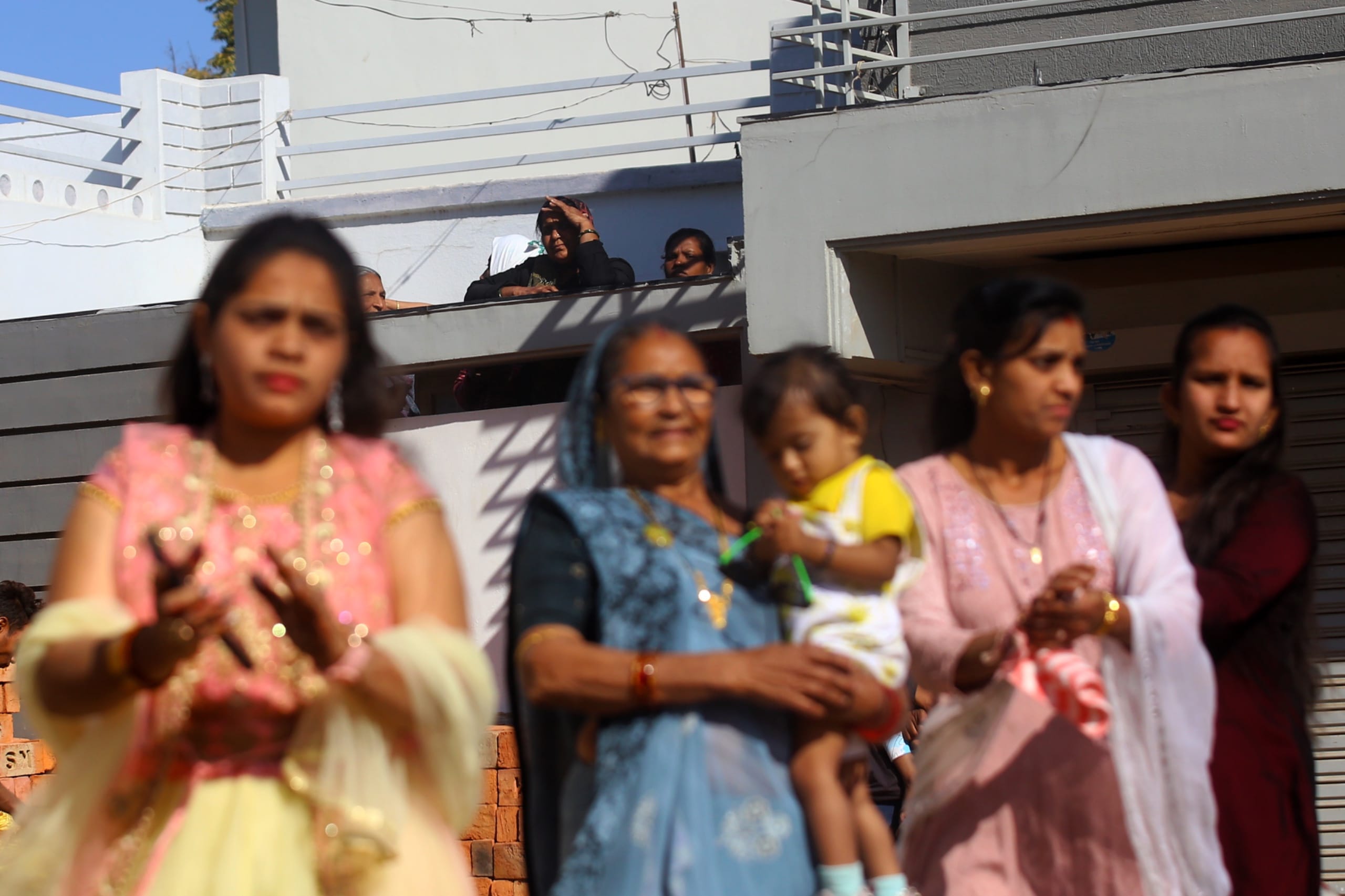
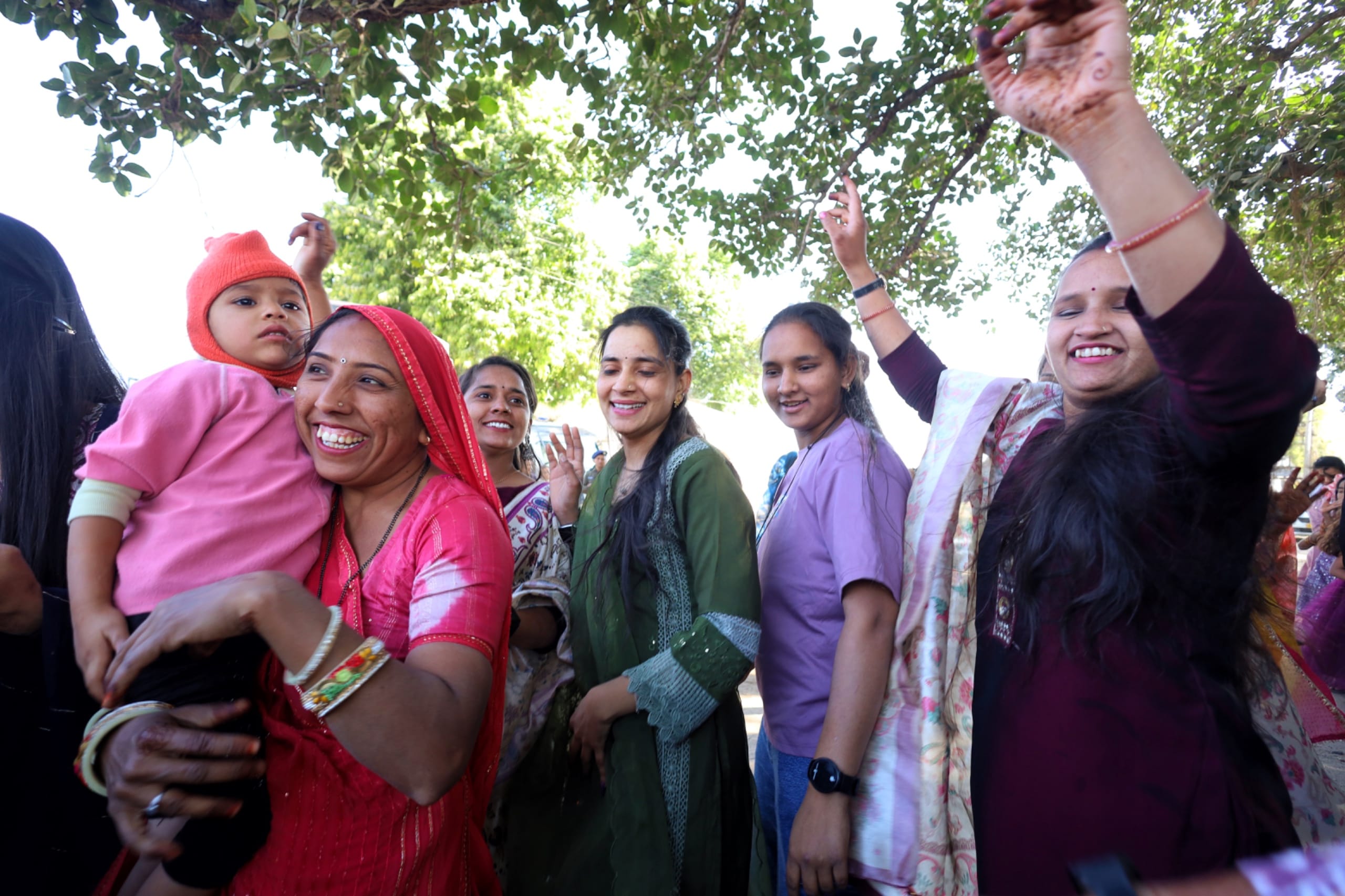
Stoically ignoring the drama unfolding around them, women from Parecha’s family, dressed in green, pink, and red saris, formed a semicircle and performed the garba—a key part of the celebration.
The bride
Several kilometres away in Limboi village, Mukesh’s bride, Lalita Parmar, waited in her red lehenga. Unlike Gadalwada, her village is Dalit-dominated, where riding a horse has never been a problem.
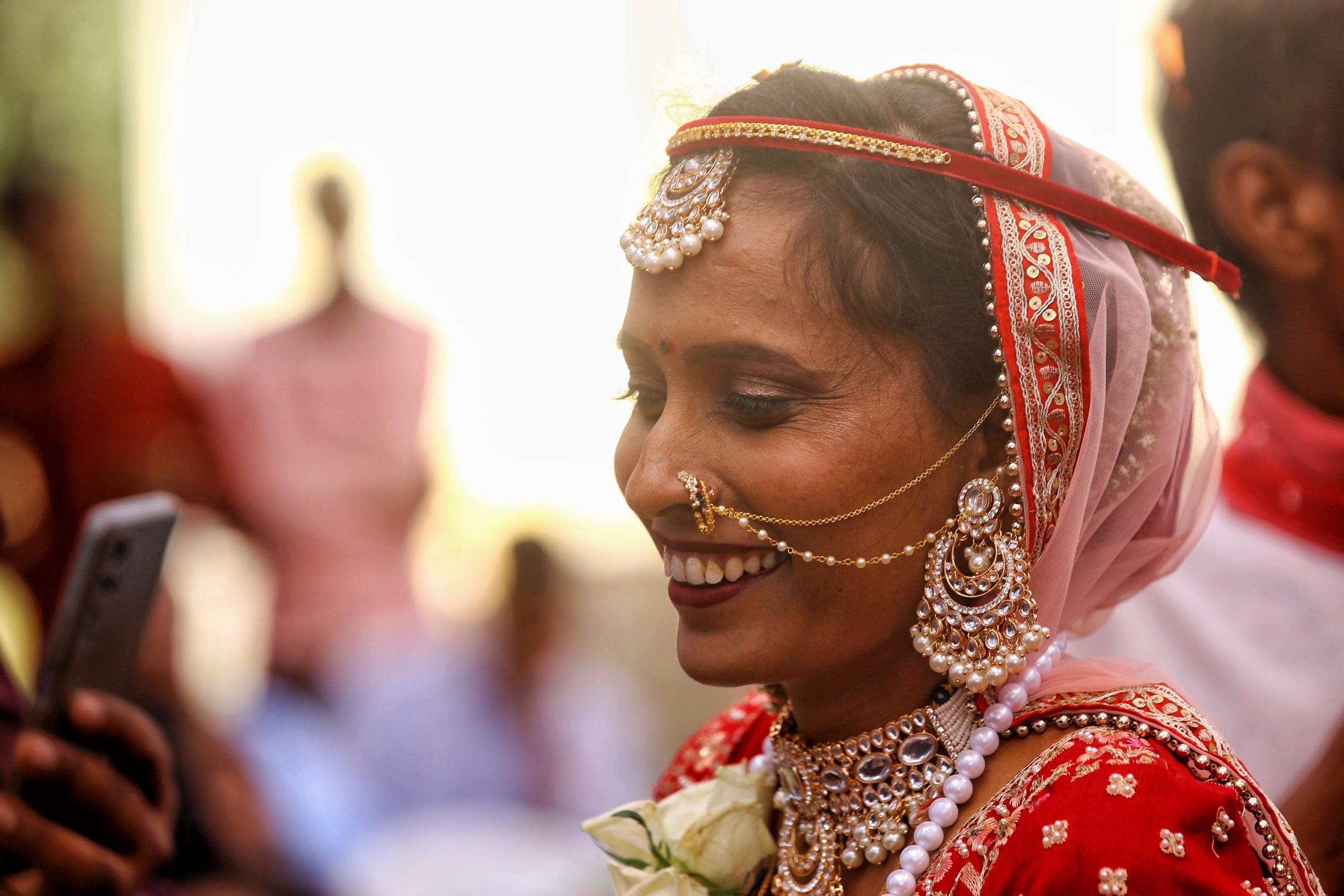
“In our village, all our brothers have ridden horses in their marriage processions,” said Parmar.
Parmar and Parecha met two months ago, and she learned about the horse only two days before the wedding.
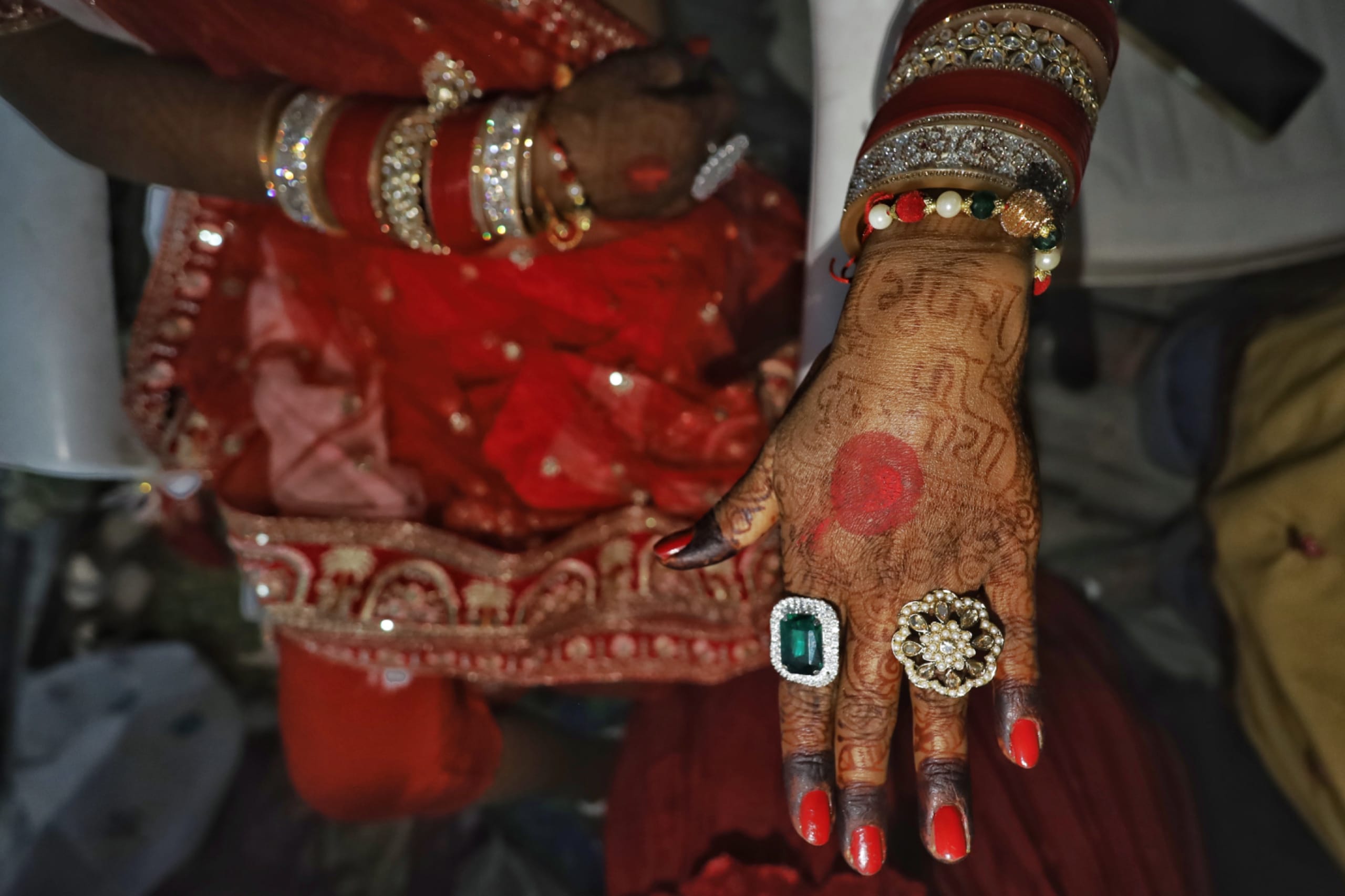
“I support him, and now that I am moving to his village, I will protect my husband’s caste pride,” Lalita Parmar said.
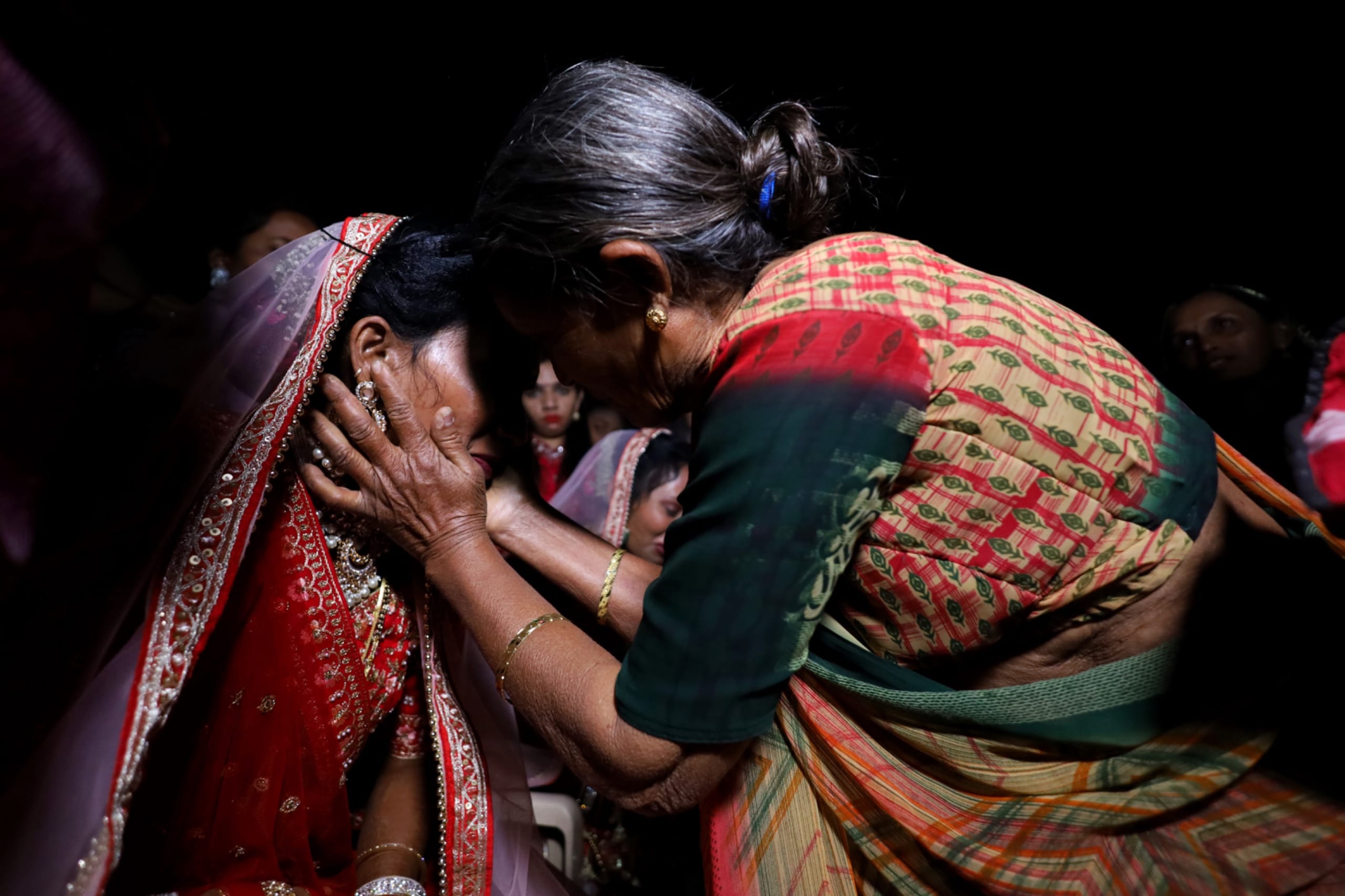
Back in Gadalwada, the garba came to a close. The police looked visibly relieved.
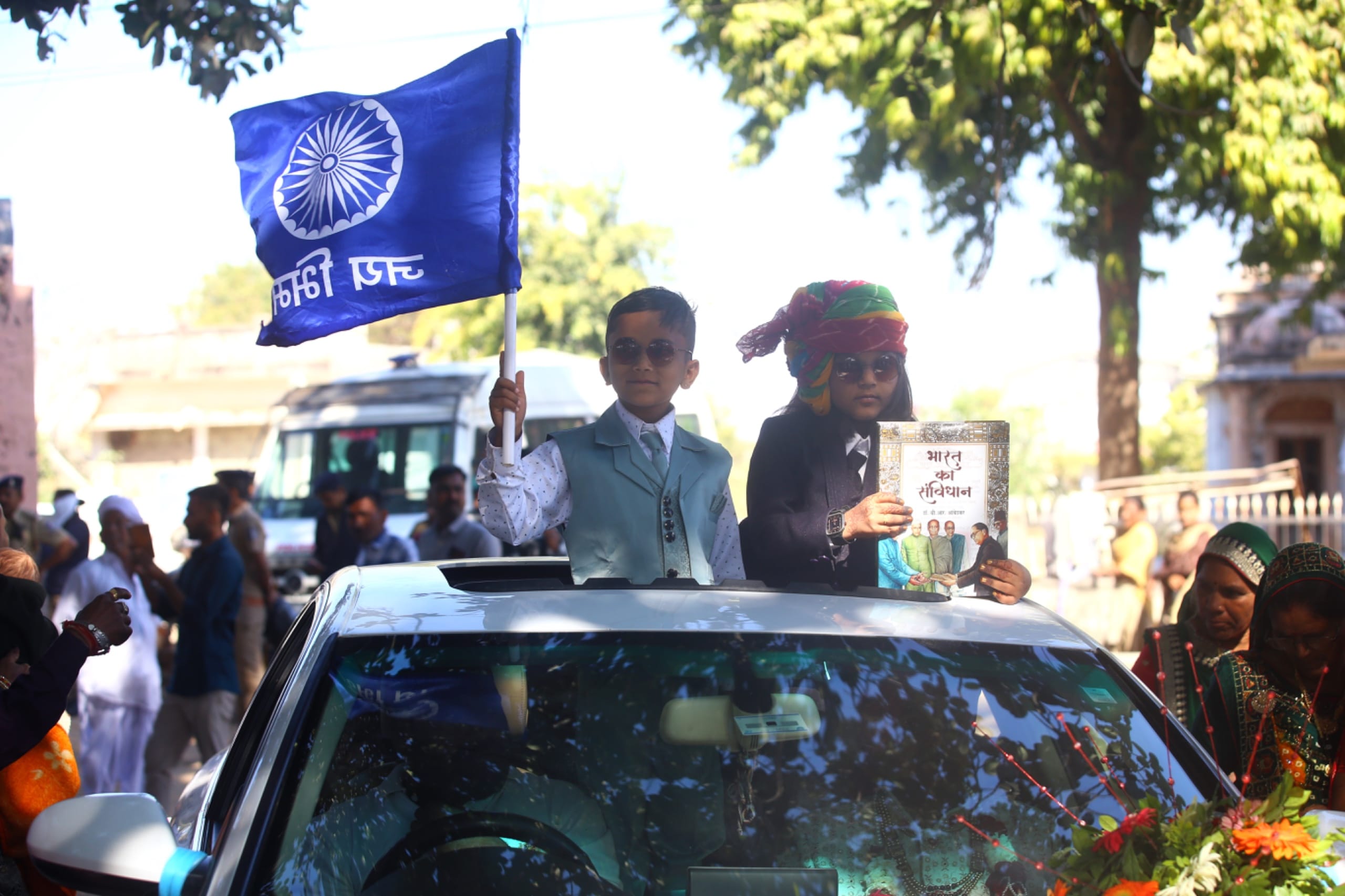
It was time to bid farewell to Kaabar. Still clutching the Constitution, Parecha dismounted and walked to his final chariot—a white Audi—that would take him to his bride.
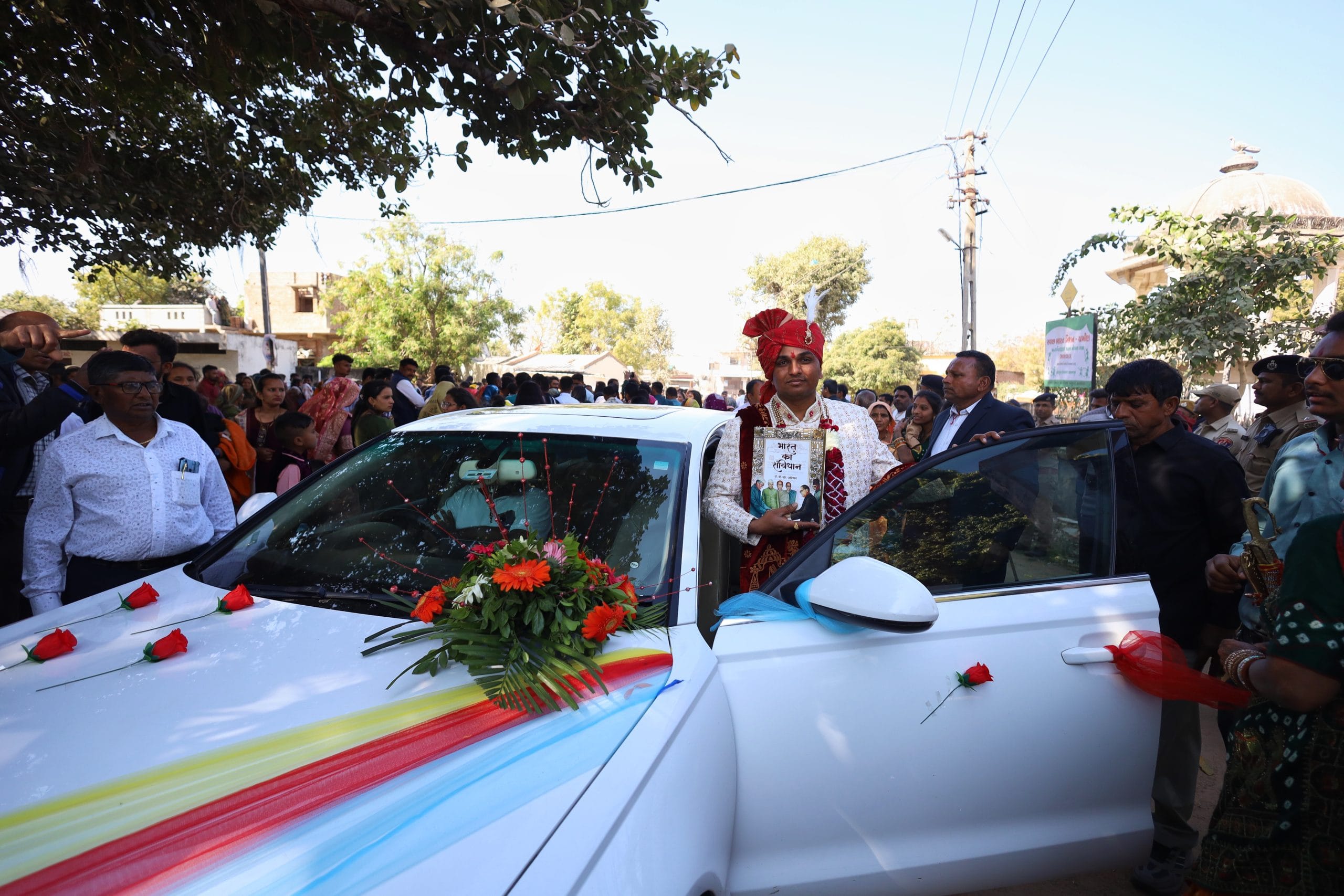
Parecha sat in the front seat holding the Constitution as the car pulled out of the village square.
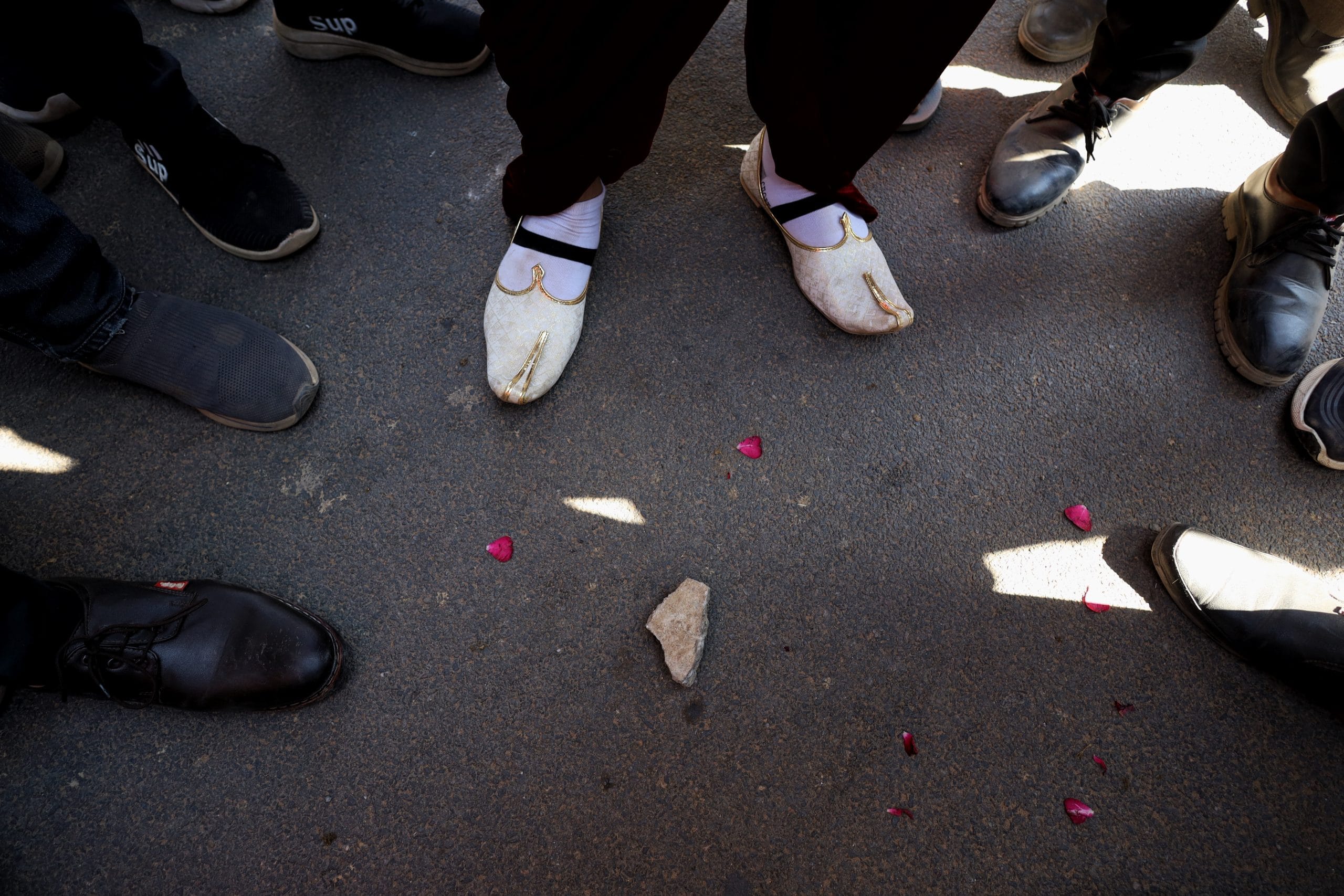
As they left the police perimeter, a stone hurtled through the air—and struck the window.
(Edited by Prashant Dixit)