





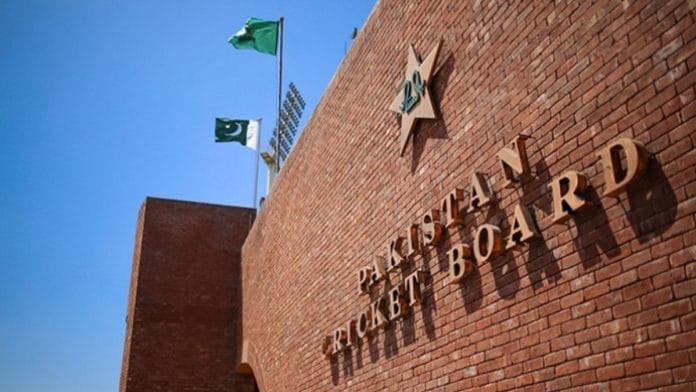

New Delhi: Pakistan’s cricket board has hit a new low. Less than 24 hours after another heavy defeat to England confirmed the Test series loss, the Pakistan Cricket Board sacked seven players and its head coach. And then, because apparently there was still some room left for chaos, the board turned to LinkedIn to hire a fielding coach.
The PCB has put up a public job advertisement seeking an “experienced and skilled Fielding Coach” for the Pakistan men’s national cricket team. The successful candidate, according to the listing, will be responsible for “developing and enhancing the Fielding skills of Pakistan National Team Players.”
The job comes with requirements, too: a minimum Level II cricket coaching accreditation, at least five years of experience working with elite cricketers, national, franchise or international teams, knowledge of modern fielding techniques, game analysis, player development and, rather wonderfully, computer literacy. Coaching software is listed as an added qualification. Applications close on 9 September.
It did not take long for the internet to notice.
On X, one Pakistani user simply concluded: “We are not a serious country”.
On LinkedIn, Aamir A Rehman, a Pakistani finance manager, asked sarcastically: “Why are you posting this here? Just directly call some retired military or army personnel for the job.”
Another user responded: “This message has been deleted by Asim Munir.”

The revolving door
The PCB’s latest bout of firing comes after Pakistan’s 194-run defeat to England at Lord’s, which left them 2-0 down in the three-match series. The board responded by releasing seven players from the Test squad and letting head coach Sarfaraz Ahmed and bowling coach Umar Gul go ahead of the third Test at Edgbaston, which begins on 9 September.
The seven players sent home were Mohammad Rizwan, Imam-ul-Haq, Salman Ali Agha, Ali Usman, Aamir Jamal, Awais Zafar and Khurram Shahzad.
Five uncapped players—Arafat Minhas, Mohammad Imran Jnr, Saad Baig, Mohammad Imran Randhawa and Razaullah—have been added to the squad, along with Saim Ayub and Abdullah Fazal.
Five of those replacements have no Test experience. The other two have played a grand total of 10 Tests between them.
In other words, this is not merely a different Pakistan team from the one that arrived in England. It is barely a Test team at all.
Sarfaraz, who had lasted just five Tests in the job as the head coach after being appointed in April, has been replaced by Pakistan’s white-ball coach Mike Hesson. Ashley Noffke has taken over from Umar Gul as bowling coach.
And then came Misbah-ul-Haq.
The former Pakistan captain has resigned from the PCB selection committee and stepped down as batting consultant at the National Cricket Academy in Lahore.
Misbah, who retired in 2017 as Pakistan’s most successful Test captain, has held several roles within the PCB. He became both head coach and chief selector in 2019, before stepping down as chief selector in October 2020 to concentrate on coaching. He eventually resigned as head coach the following year.
His latest decision adds another layer of uncertainty to Pakistan’s already turbulent cricket setup, with the PCB facing questions over both its selection strategy and constant reshuffles.
Having a laugh
Pakistanis are used to the drill. International commentators, however, are still trying to work out how a cricket board can keep hitting the same reset button and expect a different team to emerge.
Former England captain Kevin Pietersen, for instance, joked about what Babar Azam’s future toss interviews might look like.
“When a captain is interviewed before every game, the interviewer asks about changes in their team. Could be a v v v v long interview for my buddy, Babar! Maybe the toss should start the night before??” he wrote.
English cricket content creator Chris Cooke was less interested in diplomacy.
In a video on Instagram, he began: “Pakistan please don’t change. You are the peak comedy that everyone needs.” He then added: “I have never seen a blowup like this.”
Another creator, Wizard the Wicket Keeper, made a meme out of the whole thing. Even the English, it seems, have decided that what happened does not require serious commentary.
Iceland Cricket, whose X account is something of a cult favourite, had a simple suggestion: “Shouldn’t we just come and play instead?”
Former Pakistan coach Mickey Arthur, meanwhile, was considerably less amused.
“This is the reason they are in the mess they are because they constantly chop and change players, coaches and selectors and there is no stability! Planning, stability and structure = consistent performance!!” he wrote on X.
The greatest sufferers
Pakistanis, however, have seen this movie before.
“Treating national players like cockroaches and humiliating them will not make things better. They keep firing coaches & players and keep getting the same results. Try firing the top leadership of PCB. That’s where the problem is flowing from,” Pakistani businessman and former minister Asad Umar wrote on X.
Former minister Fawad Chaudhry added: “It was easy to sack players than sacking Chairman and others at PCB, they are untouchable hence, axe falls on weaker ones The Players…. #Cricket”
Perhaps Pakistani journalist Osman Samiuddin put the situation best.
“If we are really to call this the weakest Pakistan side ever, we must necessarily preface it by saying they are the product of the worst administrative period in Pakistan’s history. Given the very high – or low – bar, that is not said lightly,” he wrote on Cricinfo.
He went on to argue that this is not a new phenomenon. Pakistan teams have long been shaped by poor governance, he wrote, but “it’s impossible to overstate how dysfunctional and destabilising this period has been”.
The team, in his words, deserves sympathy rather than ire — because the players and Pakistan’s fans are themselves the greatest sufferers of a “decrepit and toxic system”.
Pakistani journalist Danyal Rasool put it more poetically:
“At this point, it is difficult to justify calling the group of travellers who don the Pakistan colours a real team that carries any consistent link with those emblematic Pakistan teams of the past.”
The Pakistan side, he wrote, has instead become “the PCB’s instrument of administrative rage, mirror of its own impotence, and plaything for its sadistic cruelty.”
(Edited by Prashant Dixit)