





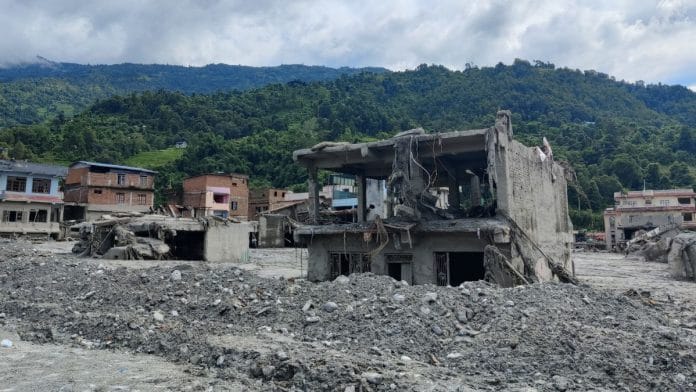

Kathmandu: It has been a week since Padam Bahadur Raut last heard from his brother. Everyday, he arrives at the Tribhuvan University Teaching Hospital in Kathmandu, with ‘missing’ posters of Krishna Raut, who was an engineer in Timure, near the Nepal-Tibet border, where a massive flood struck on 26 August in the Bhote Koshi river.
Over the last three days, he has also been reluctantly scanning the wall of photos put up by the hospital authorities, of the dead bodies and body remains recovered from the flooded zones.
A week since the deluge hit — caused by a glacial collapse in the Lhende Khola river, a tributary of Bhote Koshi — over 1,200 people have been confirmed dead, while more than 4,000 are still missing, which include around 500 foreign nationals, who were visiting Nepal as pilgrims, trekkers, and tourists.
Meanwhile, 3,500 people have been displaced by the floods and are at different relief and holding centres.
The Nepal Army and the Armed Police Force are still conducting rescue operations across Rasuwa and Nuwakot districts, the worst-hit regions, with 21,000 security personnel mobilised for the efforts. Teams from India and China have been called specially to help rescue around 900 people trapped in 12 different hydropower tunnel projects in the Trishuli river.
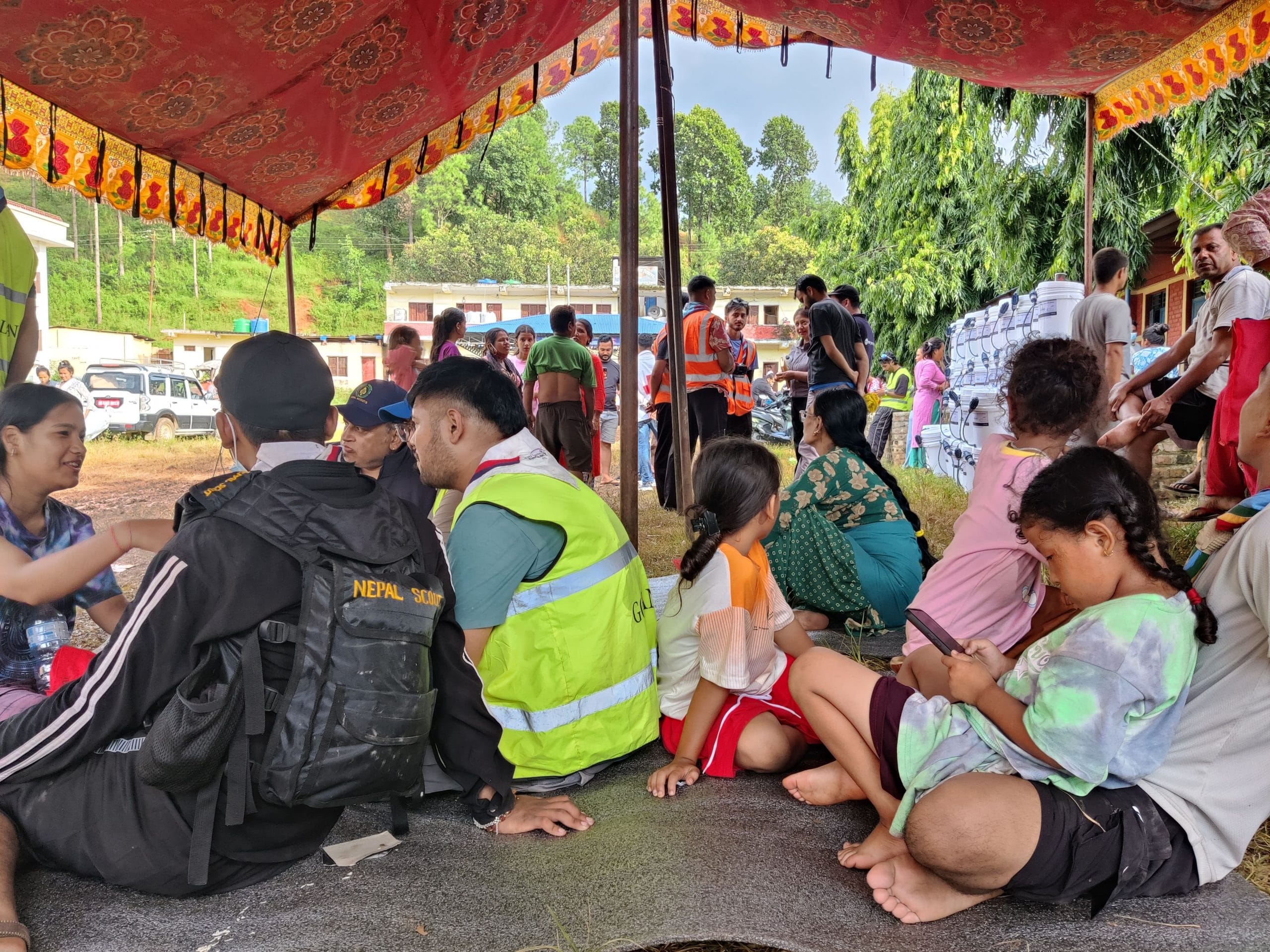
Even as some families and residents have had miraculous escapes or been rescued in time, for a large majority of people like Raut, the tragedy of the disaster continues to unfold. With each passing day, the hope of finding their relatives alive keeps diminishing.
“I keep calling him, even now, thinking that maybe one day he might pick up and it would be a miracle,” said Raut. “I’m not ready to believe that he is truly gone.”
Many feared trapped
The Nepal Army, which has rescued over 11,000 people till now, including using helicopters, is now working on its biggest challenge — the tunnel rescues. More than 900 people are feared trapped in different hydropower tunnels and underground powerhouses along the Trishuli river where the flood occurred. And despite searching for a week, the forces have only managed to recover three dead bodies from inside.
“We are still trying to open and enter all tunnels, as well as increasing the variety of methods used to go in. From drones to excavators, we’re using them all,” said Brigadier General Rajaram Basnet, the spokesperson for the Nepal Army.
At the same time, other departments of the Nepal government are coordinating with the National Disaster Risk Reduction and Management Authority (NDRRMA) to help restore the damage to over 200 communication towers, which made access to the border regions of Dhunche, Timure, and Syabrubesi impossible in the first few days following the disaster.
Early assessments by the NDRRMA and experts from the International Centre for Integrated Mountain Development (ICIMOD), and later the US Geological Survey, found that the floods were caused when a large portion of a glacier collapsed into the Lhende Khola river in Tibet, pushing up a surge of water, ice, mud, and debris into the river, which then travelled downstream at the speed of around 150 kmph.
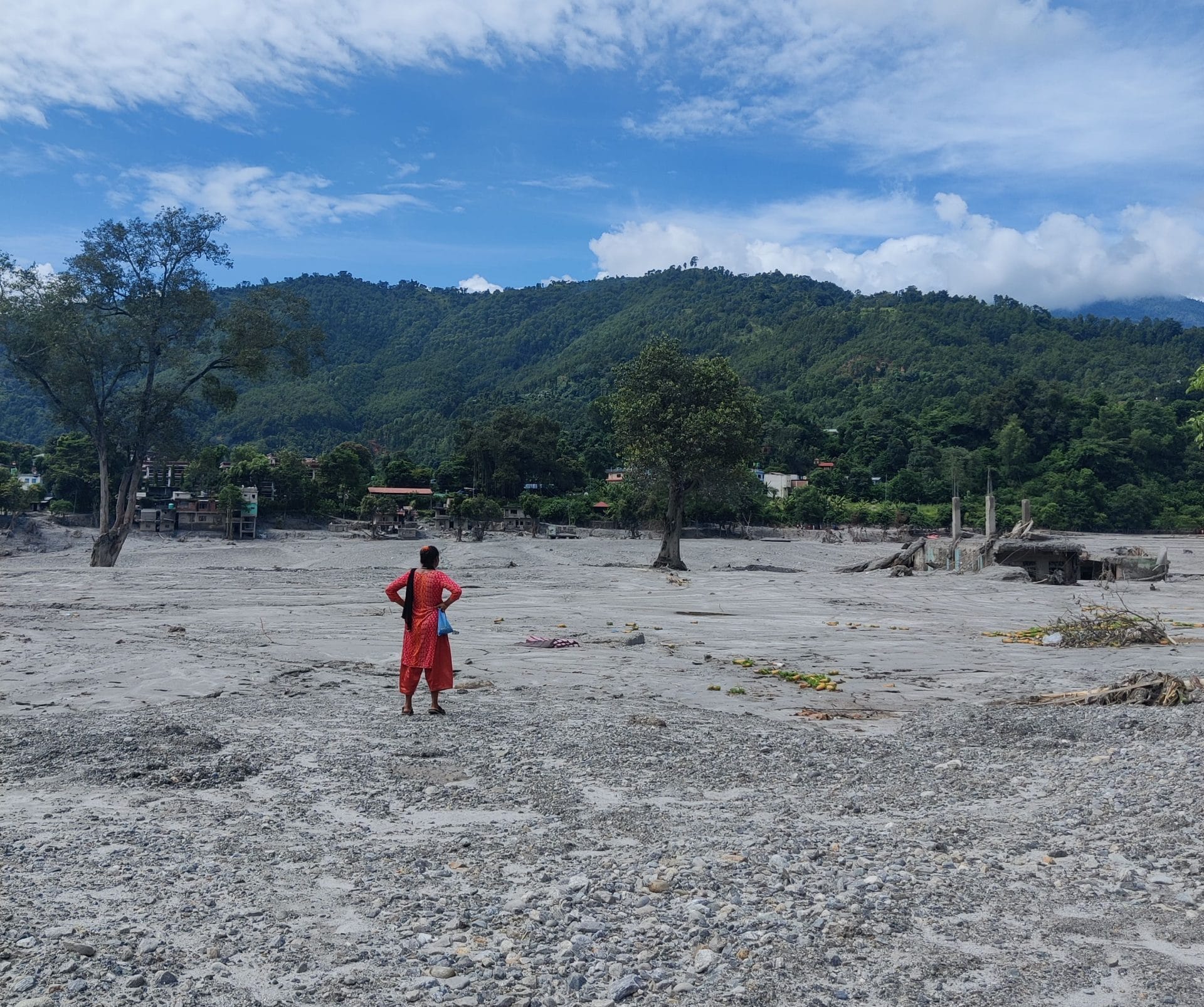
Eyewitness accounts said that the event happened so quickly that there were no warning or alert systems, especially for people in the border region of Rasuwa.
The Kathmandu Post on Wednesday reported that Nepal PM Balen Shah said in Parliament that authorities acted on the floods as soon as they received information, and that the scale and timing were too large to be able to effectively warn everyone.
Still, in the course of a week, Nepal and Chinese authorities have had conversations to improve communications and shared information regarding glacial monitoring and flood warnings, given the fact that Nepal is downstream from Tibet, and several Nepal rivers originate from Tibet.
Also read: How Devighat town police officer saved 350 people in Nepal floods
Long road to reconstruction
At Devighat, one of the regions in Nuwakot district inundated by the floods, residents returned on 1 September to mud, silt, and the stench of buried animal carcasses. Security personnel managed to clear the main road of the Devighat bazaar using excavators, allowing some of the people to recover their belongings from their denuded houses.
More than 400 Devighat residents had run to safety a few minutes before the floods struck their town because of the quick thinking of local policemen. Now, staying in a relief camp in a nearby school, the residents — while grateful that their lives were saved — lament the loss of their houses, shops, and entire livelihoods.
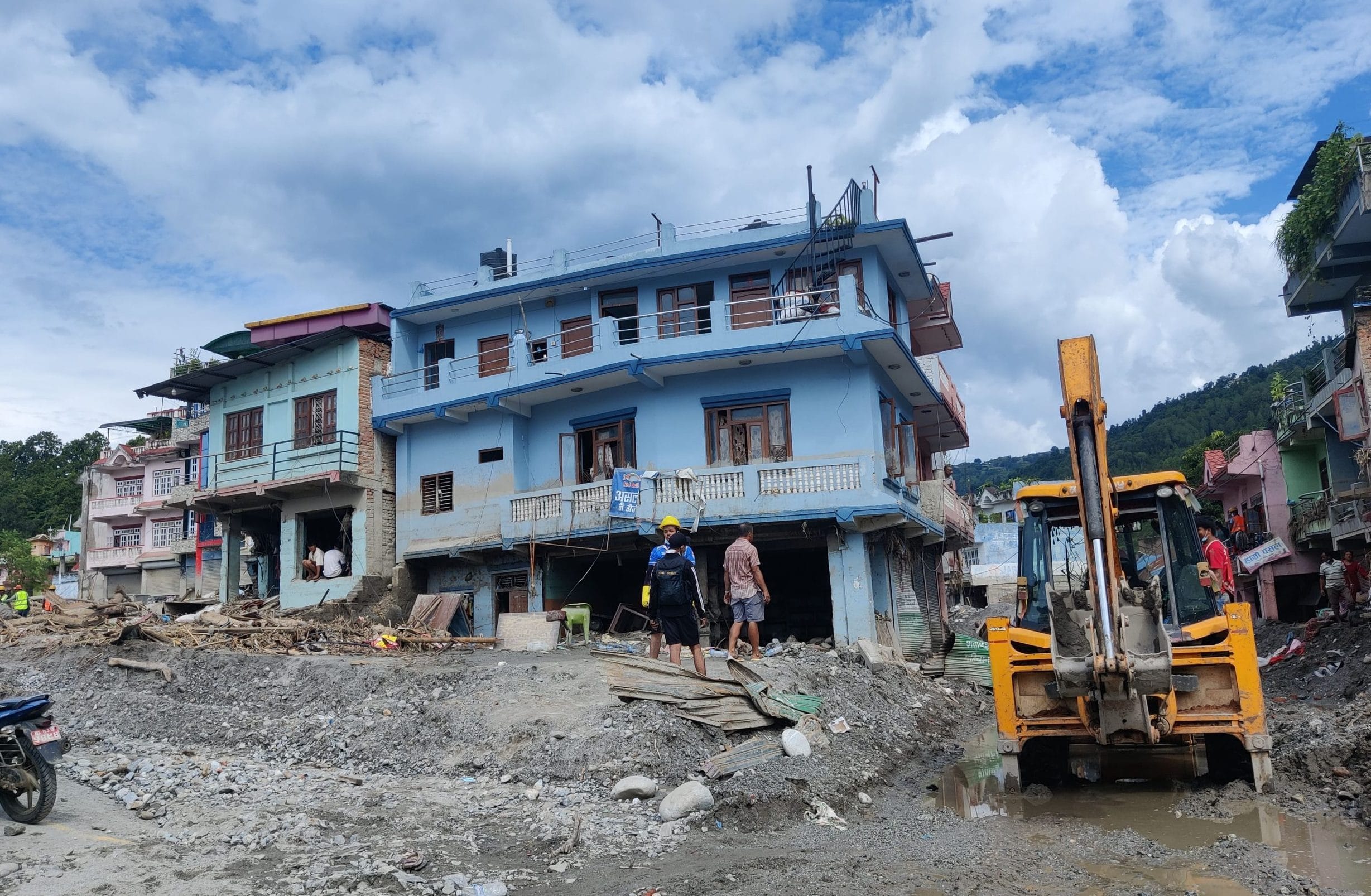
“My house was washed away — everything I had earned, spent my whole life building, was taken away in seconds,” said Nabin Shreshta, a shopkeeper whose house and shop were both extensively damaged in the floods.
The Nepal government initially estimated that the total loss from the floods was between $4-5 billion, which amounts to around 10 per cent of the country’s economy.
For the citizens directly affected by the floods, however, the loss is immeasurable.
“For 30 years, I’ve seen Devighat being built and developed with my own eyes. I saw the buildings, the shops, the highways, the bridges and electricity lines,” said Jeevan Prasad Saini, a 75-year-old resident of the town. “It took 30 minutes to destroy all that. Will I be alive another 30 years to see it go back to normal?”
(Edited by Aamaan Alam Khan)