





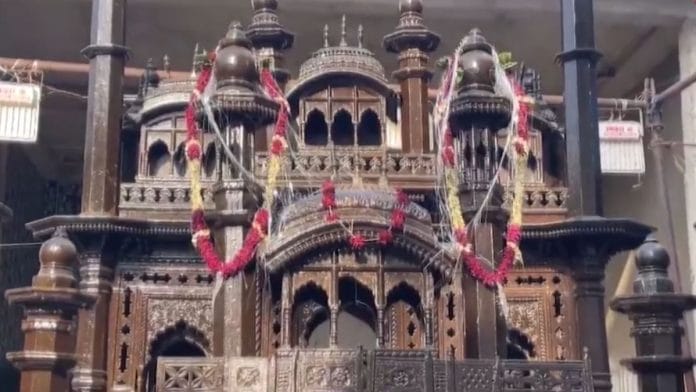


New Delhi: As the Shia community observes the Muharram month, a centuries-old wooden ‘tazia’ has drawn devotees to Prayagraj. The tazia, a miniature replica of the mausoleum of Imam Hussain, is made up of Kashmiri walnut and Burma teak wood.
The tazia is one of its kind. It is entirely fastened with wooden pegs instead of metal nails. The artefact, embedded in Shia Muslim culture, reportedly dates back to the reign of Sher Shah Suri. The locals believe that the tazia has existed for at least 300 years, spanning four to five generations, making it a unique example of community-maintained heritage.
Talking to PTI, a resident of Prayagraj said, “It was established by Sher Shah Suri along with the Imambara and the masjid, and has been going for centuries. This tazia has been there since my childhood, and generations have passed, taking care of it.”
The tazia has been made using ‘akhrot ki lakdi’ (walnut) in a foldable manner, he said, adding, “After the Muharram ends, it is carefully dismantled.”
Given the delicate condition of the tazia, it is kept stationary to preserve its structure.
Also read: Bihar’s biggest recruitment drive has brought excitement, worries, conspiracy theories
A mourning tradition
The history of Tazia is deeply rooted in the mourning tradition in the Islamic month of Muharram. Muharram is marked by Tazia processions. Tazias are constructed to be a part of the procession on the day of ‘Ashura’—the tenth day of the month of Muharram, when Imam Hussain is believed to have died.
Muharram is observed to commemorate the martyrdom of Imam Hussain, the grandson of the Prophet Mohammad and his followers martyred in the Battle of Karbala in Iraq.
The period of Muharram constitutes solemn Majlis (mourning gatherings), the rhythmic Matam (chest-beating), and the heartfelt recitations of Marsiyas and Nawhas.
Tazia in Prayagraj can be traced back to Sher Shah Suri only through Oral history and a community understanding. The old tazia lives in memory rather than records.
(Edited by Saptak Datta)