





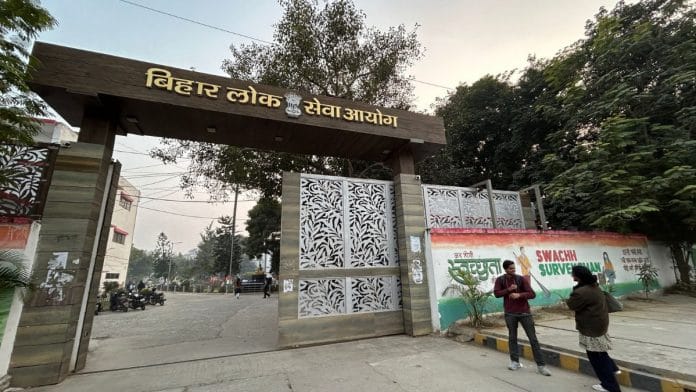


New Delhi: The Bihar Public Service Commission is on a recruitment overdrive. The recent announcement of the results of the 70th BPSC examination has created a buzz in the state departments and among the thousands of jobless youth and aspirants.
The state’s biggest-ever civil services batch has unleashed unprecedented excitement among jobseekers, but it has also sparked concerns among serving officers over promotions, seniority, and the changing nature of recruitment through the BPSC.
A total of 2,027 candidates who cleared the 70th Combined Competitive Examination (CCE), advertised in 2024, have now been allotted various state services and will soon join the Bihar government. More candidates were recruited under the 70th BPSC exam than the combined vacancies advertised in the 67th, 68th and 69th examinations. The 67th exam, after multiple revisions, advertised 802 vacancies, while the 68th and 69th exams had 324 and 475 vacancies, respectively.
As Bihar prepares to absorb its largest-ever batch of civil servants, it is both a landmark opportunity for aspirants and a source of anxiety for those already inside the system because of bunching of services and lack of clarity in roles.
“A total of 2,027 candidates have been selected through this batch. Traditionally, BPSC recruitments used to be in the range of 500-600 posts. Even the recent examinations had around 1,100-1,200 vacancies,” said Satya Prakash Sharma, Secretary, BPSC.
The scope of the exam has been widened.
“What has changed is that the Combined Competitive Examination is no longer limited to the traditional Bihar Administrative Service (BAS) and Bihar Police Service (BPS) cadres,” Sharma added.
Starting with the 70th BPSC, CCE was made part of the recruitment process for several new services.
“Over the years, several new services and Level 7 posts have been brought under its ambit, including cadres such as minority welfare, SC/ST welfare, Panchayati Raj, and other departmental services. As a result, the examination now caters to a much wider pool of government posts than it did earlier, which has significantly increased the number of vacancies,” Sharma said.
While the state continued to advertise higher-than-usual vacancies in subsequent examinations, the numbers have been considerably lower. The 71st BPSC notification, issued in 2025, advertised around 1,250 posts, while the 72nd, released in 2026, announced 1,171 vacancies. The record 2,027 vacancies in the 70th exam remains unmatched in the Commission’s history.
Nervous anticipation
Government jobs are categorised into different levels according to the Seventh Pay Commission. Generally, higher pay levels come with greater administrative responsibility. For example, Level 9 includes senior executive posts such as Deputy Collector (BAS) and Deputy Superintendent of Police (DSP), while Level 6 and 7 include posts such as Block Welfare Officers, Supply Inspectors, and Rural Development Officers (RDO).
Candidates recruited through earlier BPSC exams and officers already in service now say that the sudden influx of new officers across multiple cadres could affect their seniority, promotions, and career progression.
“Even in the existing system, we are getting delayed promotions. It’s like we are in a sinking ship and the government is putting more and more people in it,” said a 28-year-old posted as RDO in Bihar.
Historically, the exam was dominated by positions such as Deputy Collector (BAS), DSP (BPS), Sub Registrar and services such as State Tax Service, Planning Service, and Election Service.
But in the 70th BPSC exam, out of the 2,027 recruitments, 393 were for RDO, 287 for Revenue Officer, 233 for Supply Inspector, 200 for BAS, 168 for State Tax Assistant Commissioner, 136 for DSP, and 125 for Block SC/ST Welfare Officer.
This clubbing of new positions in the public service exam system inflated the numbers but also created nervous anticipation and speculation of a probable overhaul in Bihar bureaucracy, role, and hierarchy.
Also read: Muzaffarpur’s Mango Man has made a variety heavier than football. He’s not telling how
What’s behind the vacancies?
It didn’t come out of the blue.
Over the years, the state government has brought several Level 6 and 7 cadres under the BPSC umbrella, including posts in minority welfare, SC/ST welfare, Panchayati Raj, revenue administration, and rural development.
“Some of these posts were earlier filled through separate recruitment processes and agencies. BPSC conducts recruitment according to the requisitions sent by the state government,” a senior BPSC official said, adding that the exams were likely clubbed because the government believed the BPSC would conduct them more responsibly.
The shift is visible in the vacancy composition. Of the 2,027 candidates selected through the 70th BPSC exam, only 336 were allotted to the Bihar Administrative Service and Bihar Police Service, while the majority were selected for cadres such as RDO, Revenue Officer, Supply Inspector, State Tax Assistant Commissioner, and welfare-related services.
In the 68th BPSC exam, the government didn’t notify vacancies for BAS, so those who got double–digit or single–digit ranks were allotted as RDOs.
For many, this shift doesn’t quite add up. It is smashing the hierarchy in government services. And that’s making many who qualify for top–tier services nervous.
“I have a friend who got a double-digit rank, but there was no vacancy in BAS, so he became RDO. Now, the government has advertised 200 BAS posts. What happened in only two years?” asked the RDO.
Presently posted RDOs complain that the recent decentralisation in lower bureaucracy has created chaos on the ground. Tasks haven’t been clearly designated, and nobody knows how to go about their work.
“It’s all going with a temporary system. There is so much confusion about who will do what, and there are enough officers on the ground. We need more clerks than officers, but the government keeps hiring officers. In my office, I have four designated clerk posts, but only one has been recruited,” said the young officer.
The staggering numbers of vacancies continue to fox many. And everybody has a theory to explain this. Retired officers say that the government sought to lure the youth with more vacancies ahead of the 2025 elections.
“The 2,027 vacancies were advertised before elections. The number is shockingly high, but the breakdown of the posts answers the questions. The state service exam was supposed to hire for Level 9 and Level 10 experience, but in the 70th BPSC, Level 6 posts were also advertised,” said a retired IAS officer in Patna on the condition of anonymity.
(Edited by Prasanna Bachchhav)