





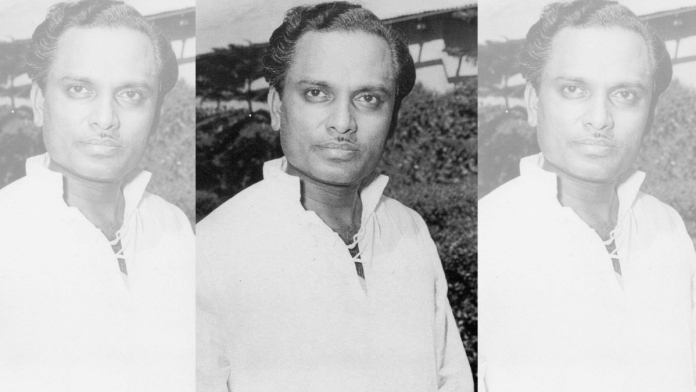


New Delhi: Anil Biswas introduced orchestral music and the choral effect to Hindi cinema. A master of Western symphonic music, Biswas is widely regarded for blending the elements of Indian classical music with folk traditions, especially Baul and Bhatiyali, in most of his compositions.
His most popular films include Roti (1942), Kismet (1943), Anokha Pyaar (1948), and Tarana (1951). But what he did in Roti was truly experimental. Biswas used countermelody in the film’s score by employing the Western technique of cantata, where one melodic line overlaps another in counterpoint. He applied this in the recitative prose of the songs ‘Rehan Na Khana’ and ‘Roti Roti Roti Kyon Ratta,’ both sung by Ashraf Khan.
Biswas retired from composing music for Bollywood in 1965, with more than 100 films to his credit. But his love for music never stopped. That same year, he became the President of the National Orchestra at All India Radio. He was also among the pioneers of playback singing and dubbing songs through professional singers such as Mukesh, whom he gave his first break in the film Pehli Nazar (1945) with ‘Dil Jalta Hai Toh Jalne Do.’ He also brought the ghazal singer Talat Mehmood to Mumbai and created the iconic ‘Aye Dil Mujhe Aisi Jagah Le Chal’ from the 1950 film Arzoo.
Atal Bihari Vajpayee often praised Biswas’s compositions as a rare balance between the classical purity of music and its popular appeal. His love for music is well known among both the industry and audiences, but before becoming a legendary composer, he was a revolutionary in his teenage years, fighting against the British. He was jailed several times and eventually had to leave East Bengal, now Bangladesh, for Calcutta, where he began his journey to become the “Bhisma Pitamaha” of the Indian music industry.
After mastering musical composition, Biswas made his debut in Hiren Bose’s film Dharam Ki Devi (1935). He not only composed for the film but also acted in three different roles. In recognition of his immense contribution to Indian music, he was awarded the Sangeet Natak Akademi Award in 1986.
(Edited by Insha Jalil Waziri)