







New Delhi: The United States is grappling with its most significant measles resurgence in decades with confirmed cases surpassing 2,200 by early July 2026. Public health officials are concerned that the country is set to record its highest annual total in 35 years due to declining vaccination rates that led to the re-emergence of a disease eradicated in 2000.
As of 9 July, 2,231 measles cases have been confirmed in the country, according to the US Centers for Disease Control and Prevention (CDC). US is set to surpass the total number of measles cases for the entire year of 2025 (2,289), the largest outbreak in more than three decades.
The rise in cases has led infectious disease experts to categorise the outbreak as a severe public health setback.
“This is a grim milestone and one that could have been avoided, as we have a safe and highly effective measles vaccine that is widely available in the United States. It is tragic that misinformation about the vaccine is getting in the way of keeping people safe,” Dr William Moss, a pediatric infectious disease specialist, said in a statement through Johns Hopkins University, released on Newswise.
He noted that the measles virus has made its way back into the community due to an erosion of vaccine coverage. But there is a catch.
“The protective efficacy of measles vaccines, although very high, is not as absolute as infection with wild-type virus,” he wrote in a 2018 paper published in the Oxford Academic.
Also Read: Measles kills 100s of children in Bangladesh
What you need to know about measles
CDC data indicates that more than 1,100 measles cases occurred in children and teens from ages 5 to 19. According to the CDC, 93 per cent of all confirmed measles cases reported were unvaccinated, or their vaccination status was unknown.
Although there have been 140 hospitalisations related to measles but no deaths have been reported so far this year.
The US states with the highest number of reported measles cases this year are South Carolina (670), Utah (516), Texas (182), Virginia (176), Florida (141), and Pennsylvania (103).
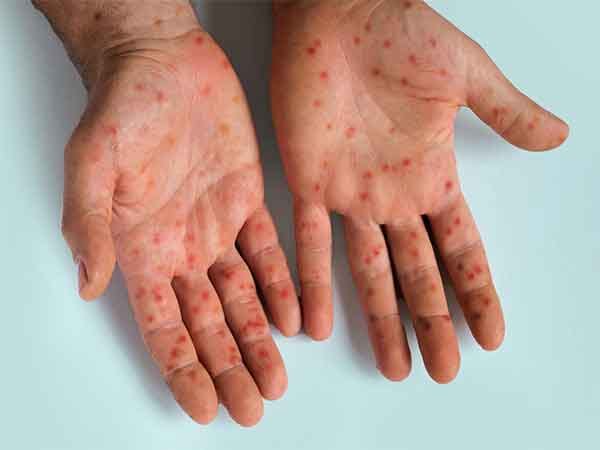
Measles was once considered one of the world’s most contagious viruses. It spread through coughs and sneezes and could remain in the air and on surfaces for up to two hours. Symptoms typically include high fever, rash, cough, runny nose, and red, watery eyes that develop 10 to 14 days after exposure to the virus.
Public health officials continue to strongly recommend the MMR vaccine, the only vaccine capable of effectively protecting against measles. The vaccine is approximately 97 per cent effective at preventing the disease after a standard two-dose schedule and 93 per cent effective after a single dose, according to the CDC.
(Edited by Stela Dey)