





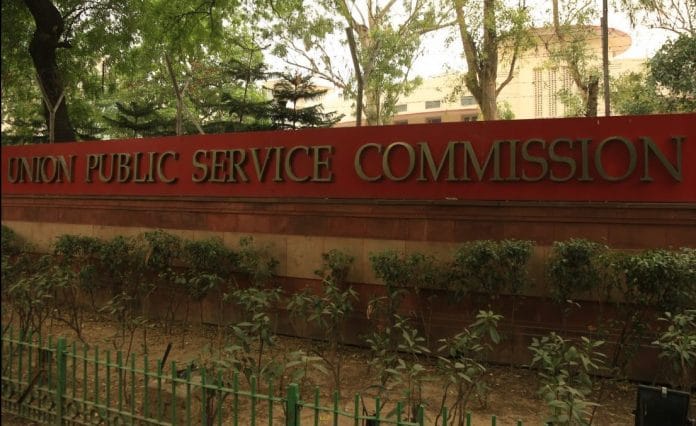


New Delhi: Nearly half the candidates who appear for the Union Public Service Commission’s Civil Services Examination are first-timers, according to the 74th UPSC annual report. In 2022 the civil service examination, the latest for which data has been made available, 48.2 per cent of candidates were the first-timers. Of the total applicants, only 6.2 percent cleared India’s most competitive exam on their first attempt.
The data shows that the selection rate is highest at the third and fourth attempts. Almost 12.6 per cent cleared in the second attempt, 21.9 per cent in their third attempt and 22.0 per cent in the fourth attempt.
In 2018, 54.2 per cent of candidates who appeared in the exam were first-timers; among those only 7.9 per cent cleared it.
Further, in the second, third and fourth attempts, the percentage of recommended candidates was 18 per cent, 24 per cent and 19.5 per cent, respectively, in 2018.
The third attempt appears to be the “sweet spot” of success, accounting for 24 per cent in 2018, 19.7 per cent in 2019, 20.5 per cent in 2020, 22.5 per cent in 2021, and 21.9 per cent in 2022.
This pattern also strengthens arguments made by several reform committees that the exam increasingly favours candidates who can afford years of preparation and repeated attempts.
In the last few decades, many committees that reviewed the CSE have recommended reducing the number of attempts and the upper age limit for aspiring candidates.
The Kothari Committee in 1976 reshaped the examination pattern and recommended that attempts for the general candidates should be reduced to two.
In 2004, the PC Hota Committee recommended reducing the upper age limit and restricting attempts to attract younger candidates into the bureaucracy. The Second Administrative Reforms Commission, headed by M Veerappa Moily in 2008, also argued for fewer attempts and an age limit. It stated that long preparation years were affecting the efficiency and youthful profile of the civil services.
More recently, the Baswan Committee in 2015 discussed rationalising attempts and age limits amid concerns over candidates spending many years in the exam cycle.
(Edited by Insha Jalil Waziri)