





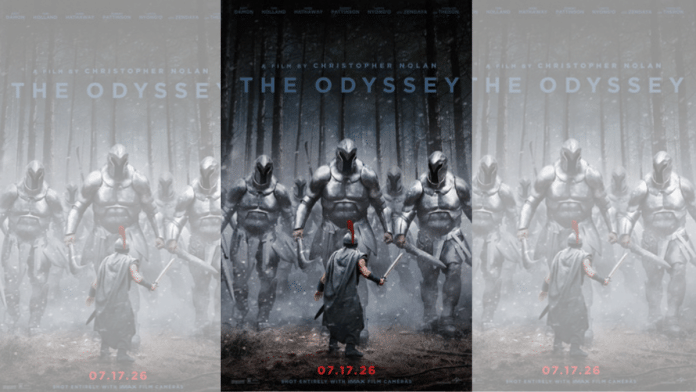


New Delhi: Christopher Nolan’s three-hour-long sword-and-sandal epic The Odyssey is on its way to rewriting box office history. While the film has just begun its theatrical run, it has already broken Nolan’s personal record by delivering the biggest opening weekend of his career.
The Odyssey earned an estimated $264.1 million worldwide in its debut, surpassing the opening weekends of Nolan’s previous hit films such as Oppenheimer (2023), The Dark Knight (2008), and The Dark Knight Rises (2012), reported Variety.
In India, too, the film made a strong debut. After collecting over Rs 20 crore on its opening day, The Odyssey earned an estimated Rs 61.91 crore net in its first four days at the Indian box office. According to BookMyShow trends, ticket sales on 19 July dropped by around 20 per cent compared to Saturday, but the film continued to attract audiences across premium formats.
The Odyssey is also one of the costliest films of Nolan’s career. The film was produced on a reported budget of $250 million, while production house Universal is estimated to have spent another $125 million on its global marketing campaign, taking the overall investment to nearly $375 million.
The film’s box office performance comes despite India having fewer IMAX theatres compared to the United States. Universal had also included India as one of the stops on the film’s global promotional tour, with Christopher Nolan, Matt Damon and Tom Holland visiting Mumbai ahead of the release.
Christopher Nolan’s recent films have consistently performed well at the global box office. Oppenheimer grossed nearly $976 million worldwide, while The Dark Knight Rises earned over $1.08 billion and The Dark Knight crossed the $1 billion mark after its re-release. Inception (2010) collected more than $839 million globally, Interstellar (2014) earned over $730 million during its original run before crossing $800 million through re-releases, and Tenet (2020) collected over $365 million globally despite releasing during the Covid-19 pandemic. The Odyssey now adds to Nolan’s string of commercially successful films.
(Edited by Insha Jalil Waziri)