







Bengaluru: San Francisco licensed more first-time dogs than it registered newborn babies in 2025. This data point was made public by The Dogs of San Francisco, a project that tracks the city’s dog population through official registry records. The city issued 7,123 first-time dog licenses that year, edging out the roughly 6,970 babies born, per California Department of Public Health data cited by the project.
The gap looks narrow. But San Francisco Animal Care & Control’s licensing data covers only a fraction of the city’s actual dog population. By the project’s estimate, licenses captured about one in two new dogs in 2025, up from roughly one in four earlier in the decade. That would put new dogs ahead of new babies by close to two to one.
California’s fertility rate has fallen to a historic low, below even 1906 levels, when the state was rebuilding after the San Francisco earthquake, according to the Public Policy Institute of California. Eric McGhee, a senior fellow at PPIC, told Mercury News that the causes of the decline are not entirely clear, though birth rates are falling nationwide.
A May 2026 PPIC report attributes much of the shift to delayed marriage: The average age at first marriage for California women has climbed from 19 in 1960 to 31 in 2020, with more than half of the state’s fertility decline since 2008 traced to women marrying later.
Local child care agencies have pointed to San Francisco’s cost of living as the reason many families leave before having children, with raising a single child in the city running close to double the national average.
Brianna Rodriguez, 27, a San Francisco native quoted in Mercury News said he and her boyfriend are putting off marriage and children because it’s too expensive.
“At this point,” she said, “I’m just going to keep getting more pets.”
Also read: Mumbai to Mexico—world’s birth rates are in freefall. And no, feminism didn’t cause it
The average San Fran dog
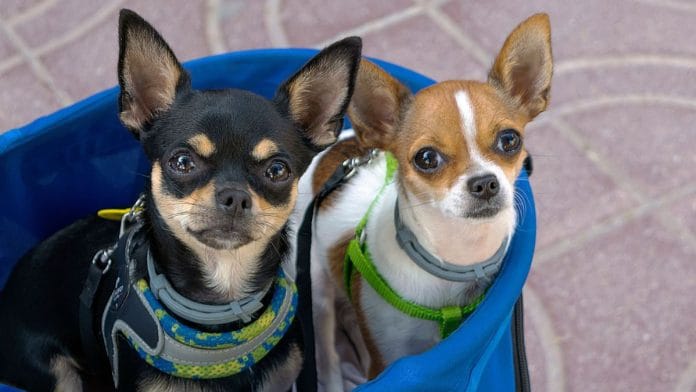
The registry’s other headline finding is about who’s winning San Francisco’s breed wars. Chihuahuas still lead the city’s dog population, but their share has fallen by more than a quarter since 2017. Golden Retrievers, Poodles and French Bulldogs are climbing the charts as the city gets “bigger and fluffier” by the year.
Names follow their own logic. Charlie topped San Francisco’s dog-name charts in 2017, but Luna took over in 2018 and has held the number one spot every year since 2020.
Purebred dogs still edge out mixes. About 62 per cent of licensed dogs carry a single-breed label, with designer crosses making up most of the rest. Poodle sits at the centre of nearly every popular cross in the city.
More than one in four licensed dogs in the city is black, followed by white and brown. Four in ten dogs wear two colors, here black-and-white leads.
According to the registry, the most typical dog in San Francisco is a six-year-old female black Chihuahua from the Mission district named Luna.