





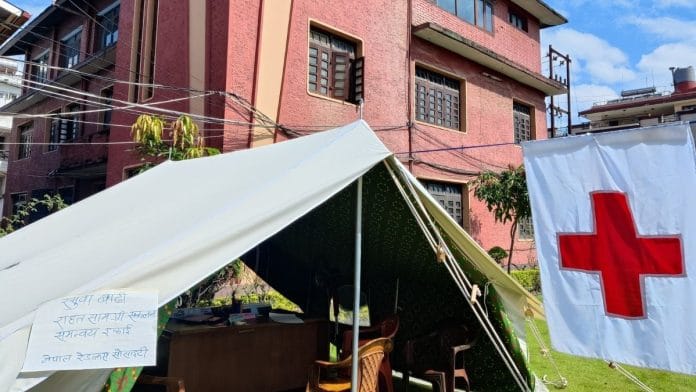

Kathmandu: Nepal Red Cross chairperson, Bishal Kumar Bhandari, reached Nuwakot three hours after the flash floods. He was one of the first responders with food and relief materials. What he saw there is something he said he will never forget.
“It was like the world had paused for them – the people; their faces were vacant. The area was quiet, completely covered in mud. No one knew what to do or how to even begin rescuing people,” said Bhandari, 45, returning to Kathmandu after three days in the flood-affected regions.
The first volunteers of the Nepal Red Cross Society, along with Bhandari, arrived in Nuwakot with a plan: set up temporary shelters, buy immediate relief supplies on the way, and most importantly, work with the local government handling the rescue operations. Having left Kathmandu merely an hour after they learned about the flood, Bhandari and his colleagues did not even know the extent of devastation before they reached Bidur, the capital of Nuwakot.
Here they saw that the access road up to Rasuwa, the border district where the floods first hit from Tibet, was cut off. Moreover, there was no way to even contact their Rasuwa district chapter members, with no phones and no electricity. In Bidur, which was the closest region a civilian could go before the roads were blocked, they saw homes, schools and hospitals covered in mud and debris, with no place to even pitch tents for temporary first aid and food distribution.
“We brought people to nearby hospitals, uphill schools, and some large community halls which were safe from the floods,” said Bhandari, who attended to over 2,000 rescued and evacuated people in Nuwakot in the first two days of the floods.
A mountain of grief post-disaster
As a veteran relief worker and the chairperson of the 63-year-old Nepal Red Cross Society, Bhandari was trained for emergencies. He knew the first step was to ensure people were in a safe space, had food and water, and had a place to sleep for the night. What he wasn’t prepared for, he said, was the people he met and the questions he was asked.
“These were people that until that morning had a full life, had houses and assets and families and plans,” he said. “But by afternoon, it was like they were refugees. They had lost everything. They had lost each other. What could we say to them? Their trauma was too huge to fathom.”
Even as the Red Cross brought tarpaulins, ready-to-eat food packets, mats and water to the evacuated and rescued people, they knew immediately that it wouldn’t be enough.
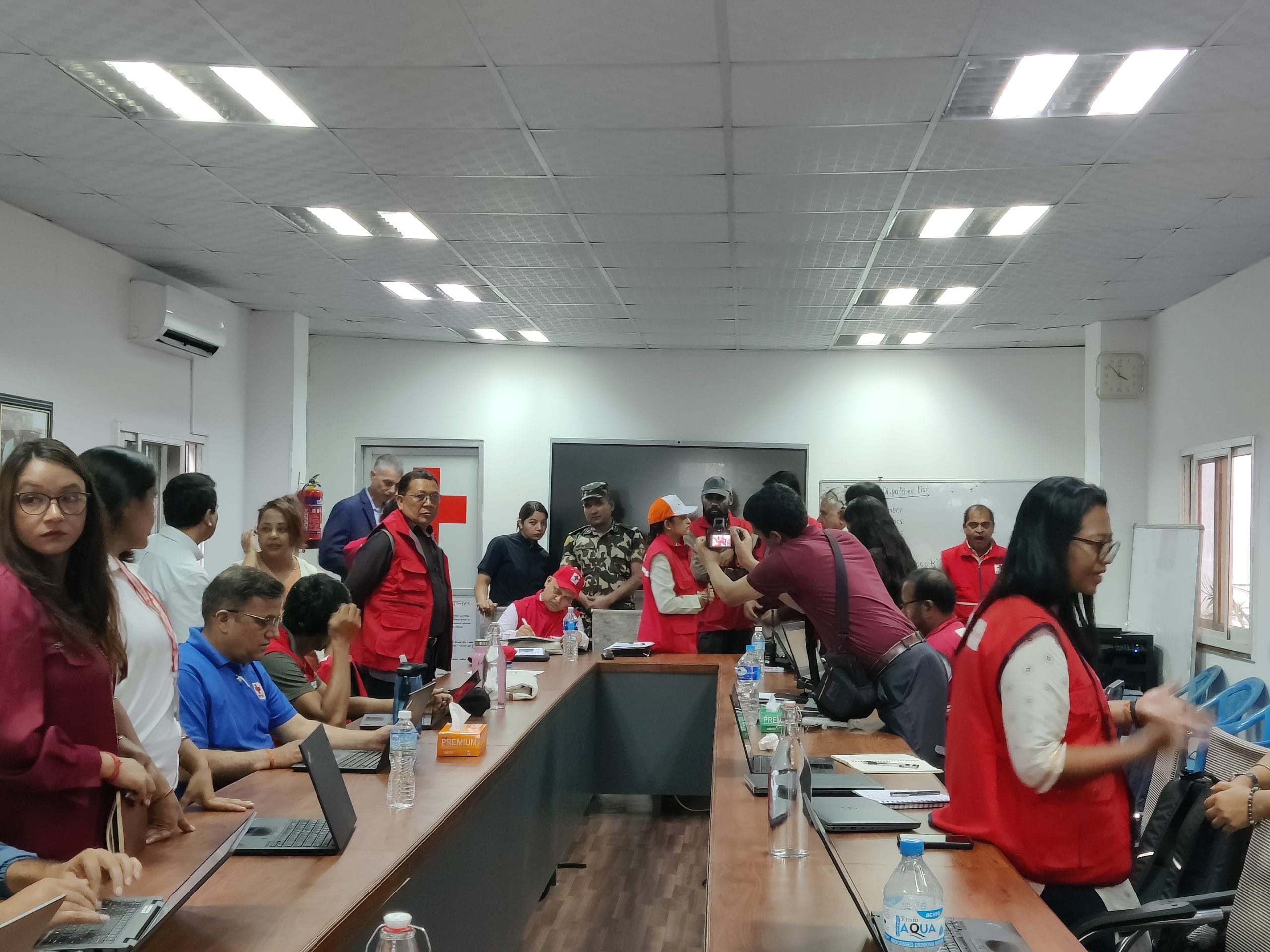
Back in Kathmandu, Bhandari had asked his colleagues to set up an Emergency Operation Centre to coordinate with all district chapters. They mobilised over 1,000 volunteers across the country to step in and aid operations in Nuwakot, Rasuwa, Dhading, and Chitwan districts, where the Nepal government and the Army were working on rescuing stranded citizens, recovering dead bodies, and hunting for missing people.
In tune with its global operating procedures, the Nepal Red Cross also began helping by providing first aid and primary health support, and setting up Restoring Family Links helpdesks to allow people to contact their missing relatives and friends. By 30 August, they had provided more than 6,000 hygiene kits, 2,000 mattresses, 2,000 tarpaulins, 2,000 blankets, and hundreds of ready-to-eat food items.
The International Federation of Red Cross sent 1 million Swiss francs in assistance, and Bhandari’s team has sent out a public appeal for 25 million more to aid relief and recovery work later.
The days after the floods went by in a haze for Bhandari. He would work till 1 am, ensuring every rescued person in the shelters had enough to eat, clean clothes and a place to sleep. After filing reports on the day’s work back to the headquarters and coordinating with international Red Cross teams for assistance, he would crash for a few hours in the shelter before getting up at 5 am again to begin the next day’s operations.
For him, the most heartbreaking thing, though, was the questions from mothers who were separated from their children after the floods.
“I met mothers in Nuwakot who were desperate to reach their children – they were stranded on the other side of the Trishuli River. They kept asking me, ‘My children are alone. Can you somehow get us there? But I had no way to get them to their children. I didn’t know what to say,” he recalled.
Work in the years ahead
Now back in Kathmandu, Bhandari said he feels a pang of guilt for not being in the affected districts, directly with the people. But he knows that the work is far from over; in fact, for the Red Cross, it is just beginning.
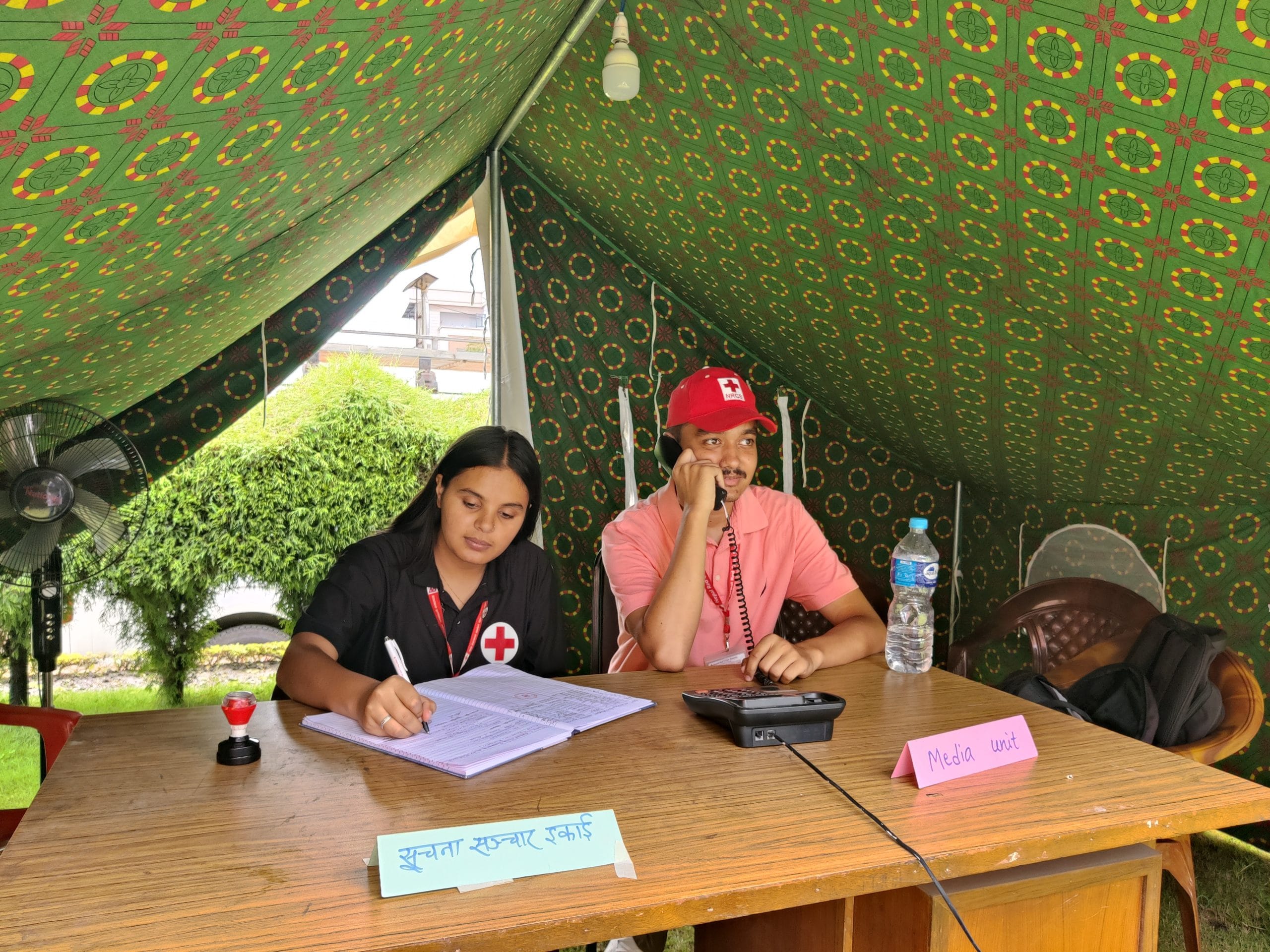
At their Kathmandu headquarters, young college volunteers have set up desks to manage calls to the Red Cross helpline and collect donations of food, clothes and relief materials dropped off by residents.
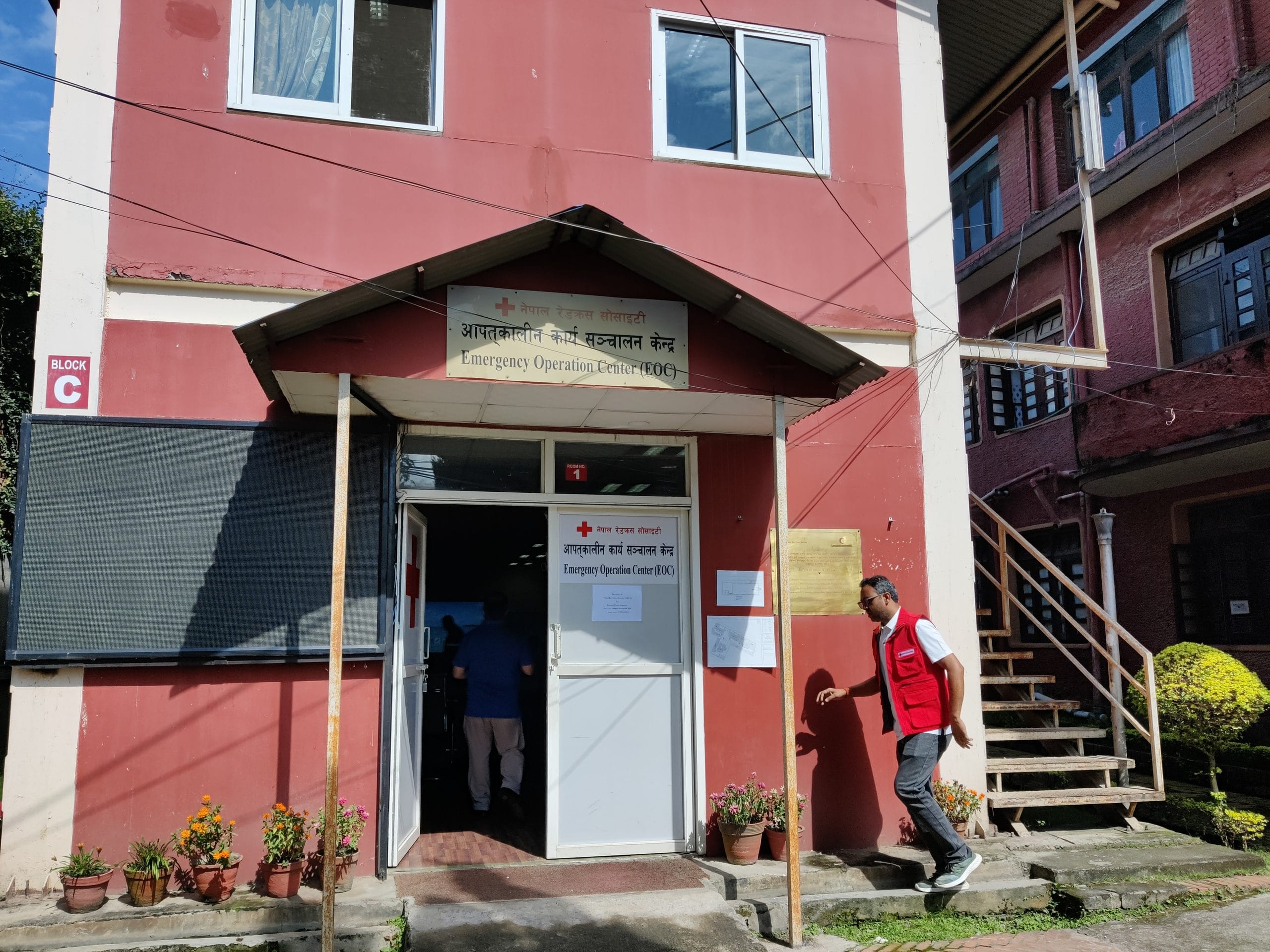
Moreover, Bhandari and the Emergency Operations Committee are working on a long-term plan, covering 45-60 days of relief provision, three to six months of recovery operations, and almost two years of reconstruction work, covering schools, hospitals, livelihoods, and hygiene facilitation.
“Right now, people need immediate food and clothing supplies. In a few days, once they have facilities for cooking and semi-permanent shelters, we’ll provide them with groceries and materials to set up camp,” explained Bipul Neupane, Director of Humanitarian Value at the Nepal Red Cross.
After wrapping up a meeting in Kathmandu with Nepal government officials on rescue updates and the different needs of affected districts, Bhandari went on to receive his international Red Cross colleagues from the Netherlands, arriving to provide technical assistance.
Soon, he will head back to the field, armed with a new batch of relief materials and some much-needed resilience.
“The disaster has devastated not just houses and buildings but entire communities. We have to build them back, and it will take time. We’re ready for it,” he said.
(Edited by Ratan Priya)