


Way before Namit Malhotra’s VFX spectacle based on an age-old epic, Subhash Ghai’s Khalnayak (1993) reinterpreted the Ramayana by showing another side of Ravan. It was a film that interrogated notions of good and evil. Unlike other Ramayana adaptations, such as Ramanand Sagar’s television series (1987) or Ramayana: The Legend Of Prince Rama (1993), where Ram was good and Ravan was bad, everything was presented in black and white.
With Khalnayak, Ghai asks the audience to look beyond the idea of Ravan as pure evil and question what makes him the villain of the story.
Like the epic, the story revolves around Ram, Sita and Ravan. Here, Ram, played by Jackie Shroff, is an inspector. He is righteous and rigid. Then there is Ganga, played by Madhuri Dixit, who reinterprets Sita as a loyal woman. Ballu, played by Sanjay Dutt, is the Ravan of the story.
The film starts with Inspector Ram, the idealistic police officer, whose major victory comes when he captures the state’s notorious hitman, Ballu. The perpetrator has had a traumatic childhood, dealing with poverty, family tragedy and exploitation by corrupt politicians. At an early age, he meets Roshan Mahanta, who grooms him into a ruthless assassin. The jail bars could not keep Ballu inside for long. He escaped, and everyone started questioning Ram. The inspector’s reputation is destroyed, from the media to his seniors. Unlike the Ramayana, where Ram is the unquestioned hero who defeats Ravan, here Ram’s first major victory is short-lived, and he is left struggling to fix his reputation.
Also read: Saaransh saw Anupam Kher and Rohini Hattangadi, both 28, play a couple in their 60s
Tragedy of a villain
Ganga enters the story to clear her fiancé’s name and restore his honour. Also a police officer, she goes undercover as a dancer and enters Ballu’s Lanka. She does it for Ram. During her mission, she discovers the man behind the khalnayak (villain): someone who grew up without maternal love and now seeks that affection in her. Even after discovering that she is an informant, Ballu does not harm her but keeps her captive. Unlike Ravan, who holds Sita captive against her will, Ballu’s relationship with Ganga is more complicated, driven by his longing for the love he never received.
Subhash Ghai has also explained that he wanted to explore the transformation of Ravan rather than simply portray him as a villain. And For Ghai, Ballu was not just an antagonist but a man whose circumstances shaped him into one, and whose conscience eventually leads him toward redemption.
“When Ravan in a character turns into Sri Ram because of his own consciousness. This theme clicked in my mind before I started writing the script of Khalnayak. It was a story of the tragedy of a villain,” he said.
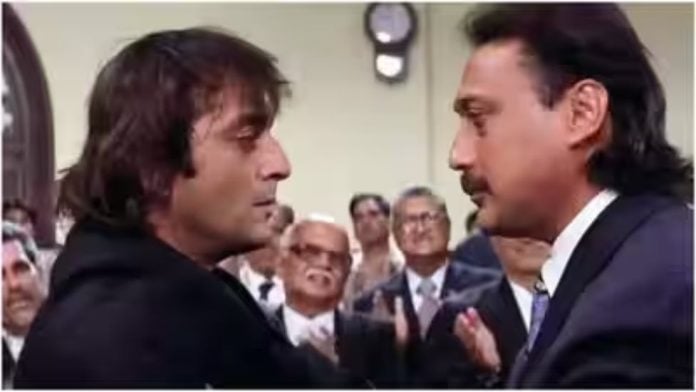
Ghai challenges society and the people who question Ganga’s character, assuming she has compromised her honour. Even Ram is forced to doubt her purity. The most intense scene in the film is the final courtroom one, where Ballu confesses to his crimes to save Ganga’s honour. Like the original Ramayana, where Ravan is portrayed as a fallen king, in this film he goes to jail as a transformed human being.
(Edited by Ratan Priya)