





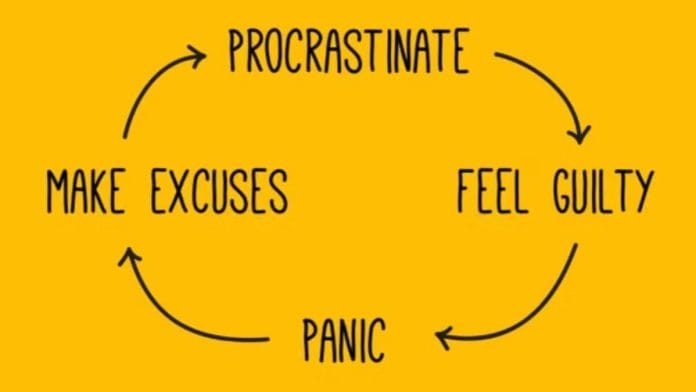


New Delhi: Procrastinators or procs—as PhD scholar Joseph Ferrari calls them—need therapy, not time management training. Ferrari has studied the behaviour for 40 years and he’s dishing some hard truths about the repeat delayers.
The scholar has found that 20 per cent of human beings procrastinate, which is higher than the percentage of people who abuse drugs, alcohol, suffer from depression, phobias and panic attacks, according to a Washington Post report. “For 20 percent of people, they’re missing life. Life is too short. You need to get things done,” he said.
One of the main reasons people delay doing something is lack of self-confidence. If one is sure to be incompetent in doing the task, they don’t put in time for preparation. “If they fail, then, they can blame the obstacle rather than themselves.”
Ferrari has also written a book called Still Procrastinating, which was released in 2010, and he teaches at DePaul University in Chicago. As someone who believes that procrastinators should be rewarded for doing the work at the right time, he gives extra incentive to students who submit their assignments early.
Here are the five things he has learned in the study of procrastination:
Secured by the paycheck
Blue-collar workers who do tasks such as plumbing, carpentry, masonry or electrical work have no luxury to sit on tasks. If they don’t get to work, they won’t be paid. However, corporate employees are secured by the prospect of a monthly salary. Naturally, the white-collar workers procrastinate more. Ferrari also said that otherwise there is nothing that makes someone more or less prone to procrastination. It’s a behaviour common in race, gender, and nationality.
Phone isn’t the culprit
The scholar, who does not identify as a procrastinator, does not buy into the excuse that technology has made humans less efficient. According to him, alarm snooze, abundance of online content, and the ease of life engineered by technology have not made it easy for people to do everything at the last minute. “Procrastinators are great excuse-makers,” he said.
Deadline doesn’t help
Most procrastinators happen to believe that pressure makes them do tasks and do them well. Ferrari does not agree. He has empirical proof. For a research paper, he did an experiment where he gave procrastinators and non-procrastinators limited time to complete tasks. Procrastinators, as expected, took longer. They also believed that they had done better than other people. The truth was that their submission was worse than people who don’t procrastinate. “I found ‘working best under pressure’ was a myth, and they failed.”
Also read: Why a Cambridge professor says UK social media ban is just a lazy fix
Way to cure
Anybody who puts off something important for their growth is on a path of self-sabotage, according to the scholar. The sense of self tends to become a bigger factor in people who complain of dealing with procrastination. No time management training can help the situation because the habit stems from emotional triggers. Instead, Ferrari said that one has to change the way they think and the way they act to make any real progress. He recommends cognitive behavioural therapy, which is goal-oriented.
It’s a cultural problem
Even though Ferrari said that nationality or race does not make one a procrastinator, he believes that the way we move in society has a lot to do with what we don’t do. People are made to feel bad for showing up late or submitting an assignment after deadline—but the appreciation for being early is lacking. According to Ferrari, we need to reward people for being early.