





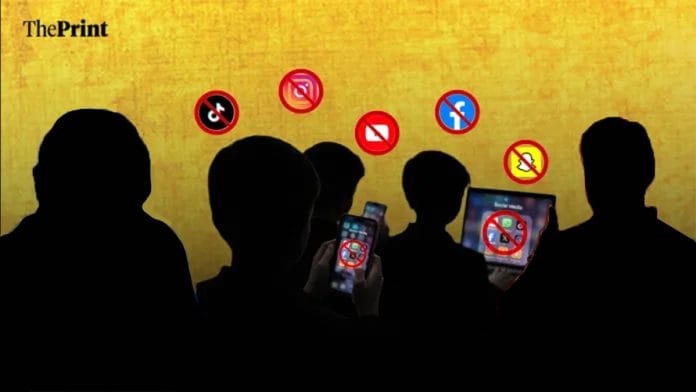


New Delhi: The social media ban in the UK has drawn mixed reactions from parents, policy experts, and children. Weighing in on the issue, Sander van der Linden, a professor of Social Psychology at Cambridge University, thoroughly analysed the new ban, explaining its pros and cons.
Linden appreciated the intent of the government to take action against disinformation and misinformation on social media, calling the move “sensible”.
“Some of the actions that are being proposed are sensible. For example, the banning of sexualized conversations with AI chatbots and messaging with strangers for young people. I think these things are wholly inappropriate,” he said.
However, he also expressed concern over a blanket ban for those under 16, saying that it takes away the rights of the children from them.
“I think the idea of a wholesale social media ban, or a social media curfew, is problematic. I think this disempowers young people and takes rights away from them, rather than keeping the focus on social media companies, their faulty products, and the need to fix and redesign the business model of social media,” Linden said.
Also read: UK bans social media for children under 16. Which other countries have or are planning to?
Bans in other countries
The Cambridge professor then turned to the initiatives taken by the Canadian government for the safety of children, highlighting how they are doing things differently.
Canada recently proposed the Safe Social Media Act through which, Liden explained, they plan to ban social media temporarily “as a strategic lever”. This is aimed at giving social media companies time to make their apps and platforms safer for children by removing functions like infinite scrolling and talking to strangers.
The intent is not to ban social media but to make it safer for kids, so that they can be back on such platforms in a way that is safe and empowers them to explore a social world and express themselves online.
Linden also underlined the loopholes in the social media ban imposed in Australia. He pointed out that 60 per cent of the kids found their way around the ban because of which “these bans are not having the intended psychological effects.”
(Edited by Aamaan Alam Khan)