



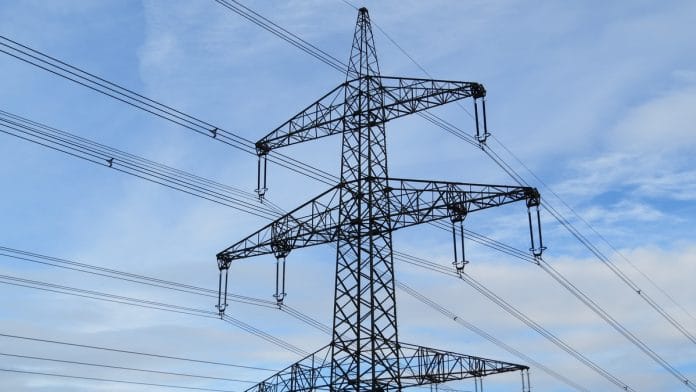
New Delhi: The Union Cabinet on Wednesday cleared the Prime Minister Developing Harmony and Accelerating Renewable Energy Access (PM DHARA) scheme, with an outlay of Rs 1.86 lakh crore, to expand renewable energy transmission and storage infrastructure across the country. The scheme will be implemented by State Transmission Utilities (STUs).
The scheme aims to evacuate, or transmit, 135 GW of renewable energy across Indian states and deploy 50 GWh of Battery Energy Storage Systems (BESS) in relevant regions.
At a press conference on Wednesday, Union Minister for Information and Broadcasting Ashwini Vaishnaw explained that PM DHARA was designed to strengthen the electricity grid to account for the variations caused by renewable energy sources such as solar and wind.
“Imagine there’s a grid where the power flows steadily, and there aren’t any variations — that’s a stable grid. But renewable energy adds variations,” Vaishnaw said at the press conference. “Solar is only there during the day; wind is there during some seasons. To handle these variations, the grid needs to be strong,” he added.
To strengthen the grid and evacuate more renewable energy, the scheme plans to build new greenfield power transmission lines through a tariff-based competitive bidding process. This will allow contractors to build, own, operate and maintain the transmission lines.
Meanwhile, the scheme also provides for upgrading existing power lines, substations and towers. This work will be undertaken on a “cost-plus basis”, under which the state utility carries out the work and is reimbursed for the actual project cost along with a guaranteed profit margin.
“The MNRE, Ministry of Power, Power Grid, and state governments will all have roles to play in implementing this programme,” Vaishnaw said. “It will be important for the country, especially to mitigate environmental issues.”
India’s transmission losses
According to Vaishnaw, the PM DHARA scheme is important as India targets 500 GW of non-fossil fuel installed capacity by 2030, a target he described as plausible. India has already installed 270 GW of such capacity and is steadily increasing it, he said.
However, transmission constraints remain a challenge for India’s renewable energy sector. A May 2026 report by Ember found that India lost 300 GWh of renewable energy in the first quarter of 2026 because of transmission constraints. The report attributed the losses to renewable energy capacity growing faster than the country’s transmission infrastructure.
The PM DHARA scheme is scheduled for completion by 2033 and has an outlay of Rs 1,86,405 crore. Of this, Rs 1,36,378 crore will be used to build and upgrade power transmission infrastructure in the states, while Rs 50,000 crorewill be used for Battery Energy Storage Systems.
The central government will provide Rs 54,000 crore and offset inter-state transmission charges to reduce the cost burden on end-consumers.
(Edited by Prashant Diixt)