



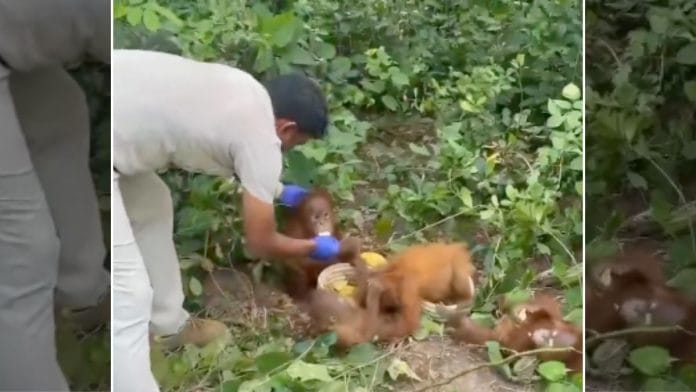

New Delhi: The discovery of five orangutan babies in Odisha has gotten every wildlife activist screaming “trafficking”. As officials chase their only clue — a black SUV near the forest where the great apes were found — Indian Forest Service Officer Parveen Kaswan was reminded of an operation three years ago where his team caught a few traffickers.
When the Wildlife Crime Control Bureau informed Kaswan’s team about an interstate wildlife trafficking syndicate smuggling wildlife from the porous borders of Moreh in Manipur, they were given one clue — a phone number.
“From that single lead, my team began piecing together the network. We tracked the phone’s movement, identified the routes, and soon realised that the traffickers were not travelling in the ways one would normally expect. They frequently flew by air or travelled in First and Second AC coaches of long-distance trains; places that attracted less suspicion and were also less stressful for transporting live animals,” Kaswan wrote on X.
Also read: Odisha orangutans are now a new Peepli Live moment. They are social media stars
‘Mizoram known for such activities’
The team finally tracked down three suspects and intercepted them while they were still on trains.
“What struck me most was their confidence. They laughed at the arrest. They claimed they would walk free within days, produce documents, and even threatened some of our staff,” Kaswan wrote.
Although the three accused were convicted and sentenced to five years in jail, Kaswan says that organised crime networks are much larger than just a few members.
Three years later, Manipur remains a state notorious for such smuggling rackets.
Wildlife activist Ajay Dubey, too, recalls that in 2022 there were Kangaroos being transported to central India via Assam and Mizoram. They were caught only because there was an accident along the way.
“The question to ask is where these kangaroos were going to be delivered. Mizoram is known for such activity. Even tiger poaching has links to Mizoram,” said Dubey.