





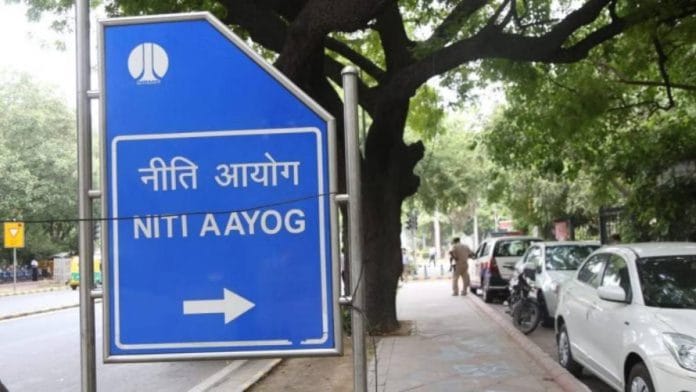

New Delhi: Lack of adequate funding from the private sector, a shortage of young talent, and long and cumbersome internal processes have been the biggest hurdles in research and development activities in India, a new report by NITI Aayog has found.
The report, titled ‘Ease of Doing Research and Development in India’, said that while the country’s science, technology and innovation ecosystem has advanced significantly over the last few decades, India’s Gross Expenditure on Research and Development (GERD) has remained well below that of leading economies.
“The findings point to a set of deeply interlinked challenges that span funding, human resources, institutional processes, translational capacity, access to resources, regional disparities, and governance mechanisms,” the report read.
Also read: What’s it like to be a Muslim in Awadh? Not everyone can ‘afford tehzeeb’
The findings
The NITI Aayog report highlighted that one of the biggest challenges faced by researchers and research institutes in India is a shortage of funds and the slow pace at which they are disbursed.
The report said that most institutes were also relying solely on government funding to continue their research. There was still a considerable shortage of funding from the private sector and philanthropic organisations.
“A central concern emerging from the analysis is the nature and utilisation of R&D funding in India. While overall allocations have increased in absolute terms, the level of investment relative to GDP remains low, and the funding ecosystem continues to be heavily dependent on public sources, with limited participation from the private sector and philanthropic institutions,” the report read.
The report also found that the hurdle of funding does not end with attracting funds, but extends to inefficiencies in the way funds are allocated, disbursed, and utilised.
Researchers faced a “complex and often repetitive” application process across multiple funding portals, long delays in proposal evaluation and fund release, and rigid financial rules that limit flexibility during project execution, the report flagged.
“The current fund flow mechanisms, coupled with accounting and compliance requirements, often result in delays, disruptions, and underutilisation of resources,” NITI Aayog pointed out, adding, “Issues such as limited overhead provisions and cumbersome procurement procedures further constrain the effective use of funds, ultimately affecting the pace and quality of research.”
Apart from funding struggles, the shortage of young research talent was also highlighted.
“Despite India’s large pool of young talent, the overall density of researchers remains low, and the system struggles to attract and retain high-quality human capital,” it read.
The report warned that the postdoctoral ecosystem in India was particularly “underdeveloped”, limiting the continuity and depth of research. It added that delays in fellowship disbursal, rigid recruitment processes, and a large number of unfilled positions in institutions further weaken the research base.
(Edited by Ratan Priya)