



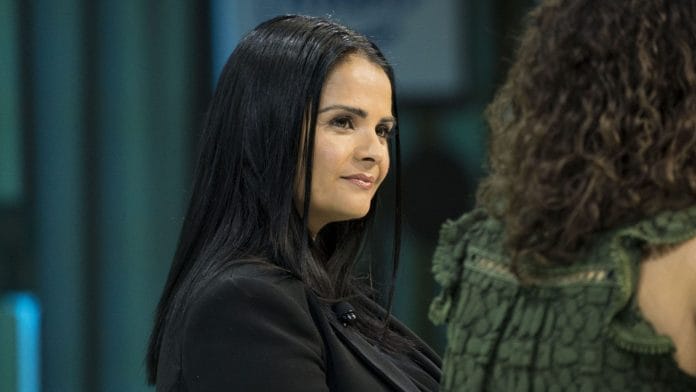
New Delhi: In a shocking turn of events, Netflix fired Bela Bajaria, its chief content officer, on 16 October. Bajaria, who is leaving the streaming company after nearly a decade, will be replaced by former Disney executive Peter Rice. He will take over the office on 26 October.
The move comes amid major layoffs and growing pressure on the streaming giant to deliver hits.
It is an abrupt ending to one of the more remarkable careers in the streaming business. But who is Bajaria, how did she get here, and how did she change things at Netflix?
The story begins far from Hollywood boardrooms. Born in London to Indian parents, Bajaria spent parts of her early childhood in England and Zambia before her family moved to Los Angeles when she was eight. Growing up as an Indian girl in America, she rarely saw people who looked like her represented on screen.
In a 2021 interview with the Los Angeles Times, she spoke about how that absence shaped her understanding of representation. She recalled feeling isolated and confused by the lack of people like herself in the stories she watched. It was an experience that would eventually inform her approach to programming: audiences everywhere had stories worth telling, even if Hollywood had not always considered them commercially viable.
Bajaria went on to become one of the executives responsible for changing what global television looked like, helping make room for stories that did not need to be translated into an American sensibility. But she did not arrive at the position as a creative. Her career was built on the less glamorous work of television development, production, and business.
Before she joined Netflix, Bajaria spent years at CBS, where she held senior positions overseeing cable programming, movies, and miniseries. In 2007, she helped create the studio’s cable division. She later became president of Universal Television, making history as the first woman of colour to lead a major television studio. There, she oversaw programmes including The Mindy Project (2012), Brooklyn Nine-Nine (2013), Superstore (2015), and Unbreakable Kimmy Schmidt (2021).
However, Bajaria was eventually fired from Universal Television amid criticism of the studio’s performance in developing successful shows for NBC. In the Los Angeles Times interview, she described the experience as painful, particularly after having built a successful studio. But she also spoke about the possibility of getting back up after being knocked down.
From television executive to global tastemaker
A 2025 Forbes article called Bajaria the “Queen Of Screens”. Titles and Bajaria have a long relationship. Back in 1991, she was crowned Miss India USA and Miss India Worldwide. Last year in October, she was labelled “Hollywood Power Player” by British Vogue.
Bajaria joined Netflix in November 2016, initially as vice-president of content. The streaming service was moving beyond licensing programmes from traditional studios and investing more heavily in original productions and partnerships. Her work included television and film licensing, co-productions, and the development of unscripted programming.
At the time, Netflix was not competing with television networks for viewers. It was trying to persuade people around the world to pay for a service that could offer some content for everyone, regardless of language or location.
Bajaria rose through the ranks, becoming head of global television in 2020 before being named chief content officer in January 2023. She oversaw Netflix’s global content operation from scripted series and films to reality television, documentaries, comedy, and live programming.
It meant her influence extended far beyond commissioning the next American drama. She was part of the leadership deciding how Netflix would compete in markets with wildly different tastes, cultures, and viewing habits.
For instance, after watching the 2017 documentary on arranged marriages in India, A Suitable Girl, Bajaria saw the potential for a reality series that could explore the family pressures, cultural expectations, and emotional stakes of matchmaking. Thats how Indian Matchmaking was born. She discussed the idea with filmmaker Smriti Mundhra, and the series became quite popular.
Another illustration of Bajaria’s strategy was Squid Game. The South Korean survival thriller became a worldwide phenomenon after its 2021 debut.
Lupin (2021), the French crime drama starring Omar Sy, and the English-language period romance Bridgerton (2020) were incredibly different in subject and style, but they offered fictional worlds that could appeal to a global audience.
For a business used to treating non-English entertainment as a niche category, this was a significant shift.
“We’ve always done well because we really have local creative executives who speak the language, come from the culture, or live there,” Bajaria said in an interview.
Also read: Shah Rukh Khan’s next big romance is with a music festival. UNIFYD lands in Abu Dhabi
Will Netflix’s bet pay off?
A streaming executive’s job is not simply to champion interesting stories. It is also to decide which projects deserve investment, which genres need more attention, and how to keep subscribers watching.
Netflix’s content operation has become increasingly expansive under Bajaria, including reality programming, live events, and sports. The company has moved into major live broadcasts and struck multiyear deals involving the NFL and WWE.
The expansion also makes the job more complicated. A company can have celebrated shows and still face questions about whether it is producing enough massive hits to sustain growth.
The streaming giant’s decision to replace Bajaria came as the company faced investor concerns about engagement and competition from platforms such as YouTube and TikTok. And there is a possibility that Bajaria has become a scapegoat.
Netflix is entering a new phase in which its leadership believes a different executive could help address its next set of challenges. Bajaria’s successor Rice brings experience from Disney and Fox, including oversight of television businesses associated with hits such as Modern Family and The Bear.
According to sources cited by Variety, however, the problem isn’t the content but the company’s subscription-dependent business model. Whether Netflix’s bet pays off will become clear with the next slate of shows from the streaming platform.
(Edited by Prasanna Bachchhav)
Have been hooked on to American sitcoms and Hollywood movies since childhood.
Never felt the lack of brown skin characters in these shows/movies as some kind of isolation or invisibility.
Some people are just too sensitive.