



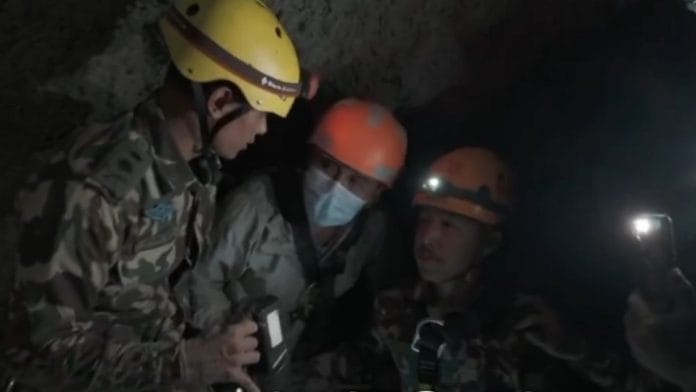
Bidur: Nepali Army spokesperson Brigadier General Rajaram Basnet told ThePrint Monday that 279 people had so far been rescued from near hydropower tunnels in flood-affected areas, but none from inside the tunnels.
“We have rescued a total of 279 people from around and nearby the tunnels like Upper Trishuli 1, Rasuwagadhi, Mailung Khola, and Devighat,” said Basnet. “From inside some tunnels, we have recovered dead bodies. Others are being searched right now. Operations are ongoing.”
As search and rescue operations entered the sixth day in Nepal’s Rasuwa and Nuwakot districts after the floods of 26 August, the Nepal Army and other security personnel, along with specialised Indian and Chinese teams, are working to access 12 hydroelectric project tunnels on the Trishuli river that were flooded during the disaster.
According to the Independent Power Producers Association of Nepal (IPPAN), around 897 people are still missing across the 12 tunnels on the Trishuli river — six in Rasuwa district and six in Nuwakot district. While the Nepal Army has been working to dig through the debris with specialised equipment since the floods occurred, progress has been limited.
A report from IPPAN said 576 people were initially reported missing from the Upper Trishuli-1 Project, the largest number from any project. Of them, around 254 who had managed to reach safety were evacuated from near the tunnel, Basnet said. There are still around 300 expected to be inside the tunnel, and the Nepal Army is working with excavators to clear the mud and debris to reach them.
However, as more time passes, experts say the chances of rescuing tunnel workers alive are diminishing, mainly because of the nature of the flood and the lack of contact.
“We haven’t established contact with any people within the tunnels, because firstly the network won’t work inside and even if it did, by now their phone batteries would have died,” said Uttam Bhlon Lama, vice-president of IPPAN. “But we are still hopeful, and want the workers to be rescued swiftly.”
Also Read: What Nepal floods tell us—warming Himalayas, weak warning systems, no cross-border plans
Why rescue is difficult
The Nepal government has asked for technical assistance from a specialised 11-member Indian team to help with tunnel rescue at the Chilime powerhouse in Rasuwa. They also have the support of Arnold Dix, an Australian geologist and engineer who helped with the Silkyara Tunnel rescue in India’s Uttarakhand in 2023.
However, the main difference between the Silkyara rescue and the current rescue in Nepal is the nature of the floods and the conditions in which the tunnels have been found.
“This was not a normal flood with water; this was a deluge with mud and debris. Usually, hydropower projects and tunnels are built with resilience for 1-in-100-year floods, but this is a 1-in-1000-year deluge,” said Ganesh Karki, a Nepal-based hydropower entrepreneur.
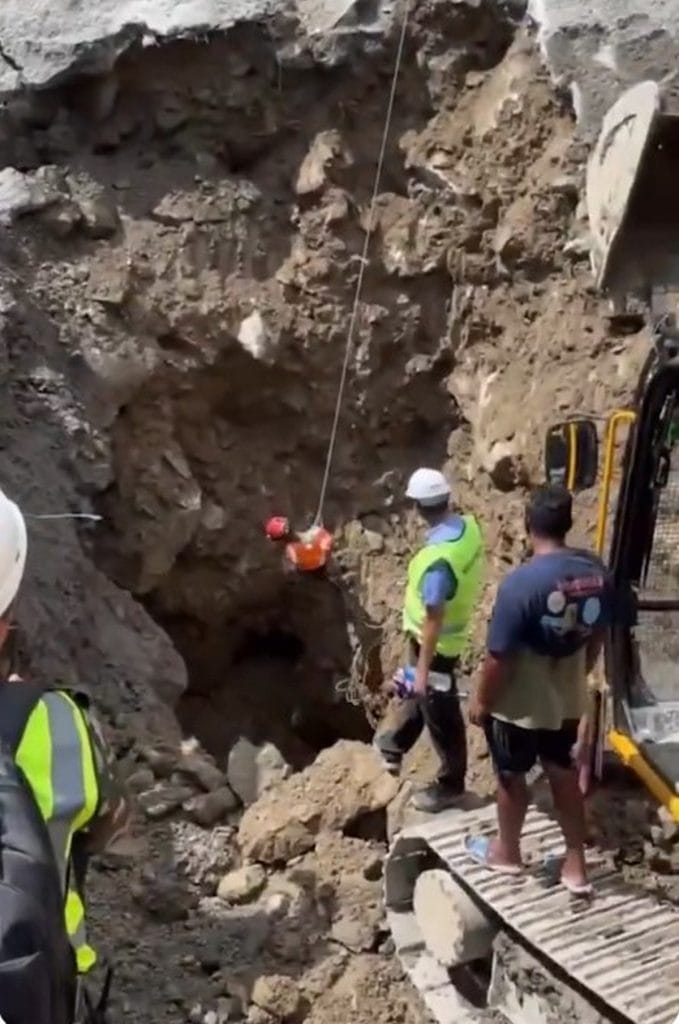
Since the floods covered the tunnels with mud and rocks, the biggest challenge for the army is to remove the silt and mud and find the entrances. The mud-covered tunnels pose another challenge for anyone trapped inside — the lack of oxygen supply.
“We are hopeful, but the thing is, this is a mud flood. If it was only water, there is still some possibility of people surviving for 7-8 days inside. With mud, we can’t be sure what the condition is. No one knows what it is like inside the tunnels,” said Karki.
On Monday afternoon, the Nepal PM Secretariat said the Army returned from the Rasuwagadhi Tunnel Project without finding anyone inside. The tunnel was expected to have 93 missing people, but the Army searched it with a rescue team and drones without finding any trace of them.
At the Trishuli 3A and Trishuli 3B projects, excavation is still ongoing and the army has not managed to enter the tunnels. Meanwhile, two bodies were recovered from the Chilime Project with the help of the Indian Army, and one from the Upper Trishuli 1 project. Search and rescue operations are still ongoing.
(Edited by Asavari Singh)