





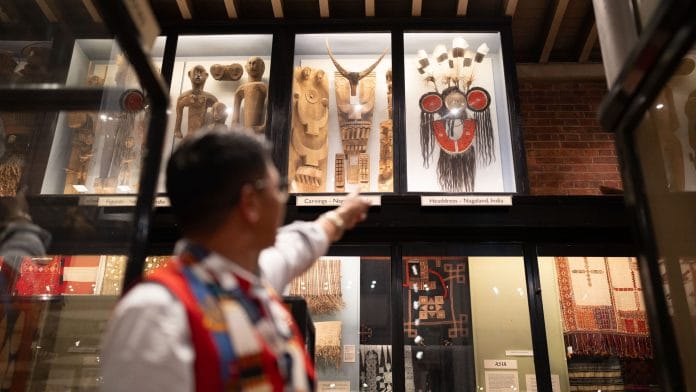

Guwahati: The skulls lay in a row on a long table at an Oxford museum. Dressed in his tribe’s traditional jacket, NT Thamlong Phom examined them one by one. Then, he began to talk to them.
“O, our beloved forefathers. What happened to you? How did you lose your life?” he asked in the Phom dialect. “You have your own home, your own land, your ancestors, and your descendants. Leaving all this behind, how did you land in this strange, lonely foreign land?”
When he finished, Phom bowed his head and whispered a prayer. It was a mark of respect to the remains of his ancestors from Nagaland, taken away from their place of rest by colonial administrators more than a century ago, carried to Britain, and eventually displayed in a museum.
A year later, on Saturday, the decks were finally cleared for the remains of Phom’s ancestors to return home. It’s the culmination of a six-year-long repatriation process that the Nagas describe as a key step toward “healing and wholeness” and “justice and dignity” for the community. It’s the first such effort by an indigenous community in India.
“On 13th July 2026, the University of Oxford Council formally agreed to return 39 Naga ancestral remains kept in the Pitt Rivers Museum, UK,” stated a press release jointly issued by the Naga Tribe Hohos, the apex bodies representing Nagaland’s many tribes, and the Naga group facilitating the repatriation process, Recover, Restore and Decolonise (RRaD). Launched in 2021, RRaD is a specialised team created by the Forum for Naga Reconciliation (FNR), comprising Nagas from all walks of life, including historians, activists, and community leaders.
“For the Nagas, it is not simply about bones and ancestral remains finding their way back to the land, but importantly, it is about memory returning to where it belongs,” the statement said.
The ‘Naga Model’
It was in June 2025 when Phom, a community leader of the eponymous Phom tribe residing in eastern Nagaland’s Longleng district, first encountered his ancestors at Oxford’s Pitt Rivers Museum. The museum houses over 5 lakh objects acquired during almost two centuries of British rule.
Among them is also the world’s largest Naga material culture, comprising at least 6,500 objects. They comprise clothing, agricultural tools, weapons, basketry, and ceramics, as well as human ancestral remains, including skulls and bones. A large section of these items was collected by two colonial administrators, John Henry Hutton and James Philip Mills, in the early 1900s.
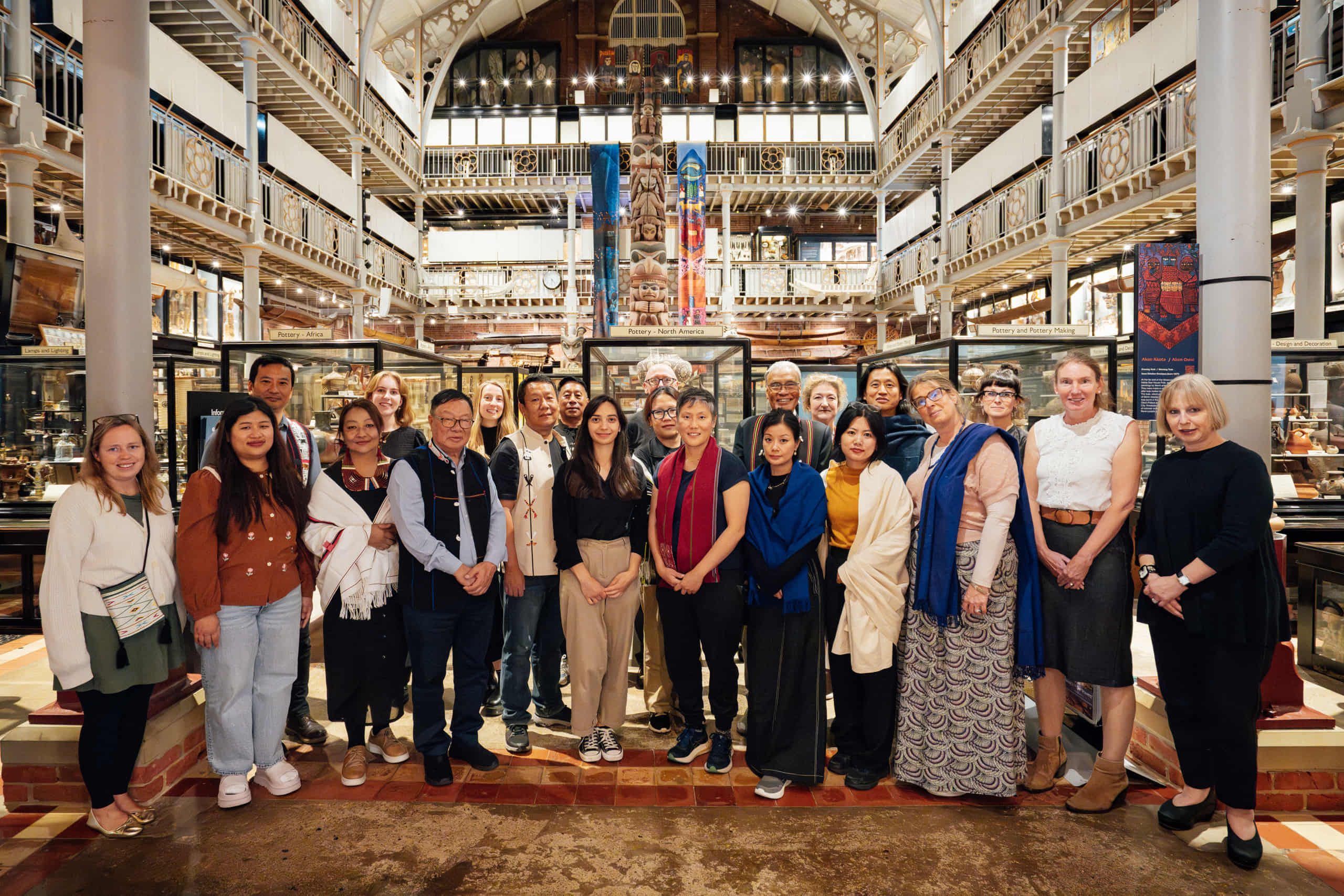
Phom was at the museum as part of a delegation of Naga tribesmen to make a formal appeal to the museum authorities to repatriate the remains of his ancestors.
He had come to know of their existence two years ago when the RRaD reached out to him.
Since 2021, the volunteer-driven RRaD has worked across Nagaland to raise awareness about ancestral remains and build support for formally initiating a repatriation process.
The seed was sown by US-based Naga anthropologist Dolly Kikon when she heard that the Pitt Rivers Museum was planning an overhaul of its collection as it reopened after the Covid-19 pandemic. The museum in 2020 put out a statement acknowledging that many of its exhibits sourced during the colonial era reinforced stereotypes of cultures as “savage and primitive”, announcing plans to return them to their original homelands.
Kikon, a Lotha Naga professor then based in Melbourne, wasted no time in writing to the museum’s director, Laura Van Broekhoven, setting the wheels in motion.
“The question to ask the world is how dare you get away thinking it is okay to display Naga ancestral remains like this, ridiculing us and dehumanising us for centuries,” Kikon told ThePrint. “No ancestral remains should have been treated like this in the first place.”
Kikon teamed up with Arkotong Longkumer, a fellow Naga anthropologist based in Edinburgh, to chalk out the road ahead. They eventually handed over the reins to the FNR.
“Throughout the process, we followed the Naga model,” said Kikon. “We actually went to the people, each tribe was consulted, and we moved ahead only with their consent and advice.”
In many cases, people were shocked to hear of it.
“It was shock, it was sadness, it was anger. Many of them asked, ‘How did our ancestors end up there in that manner,’” said Reverend Ellen Konyak, coordinator of the RRaD and a member of the FNR.
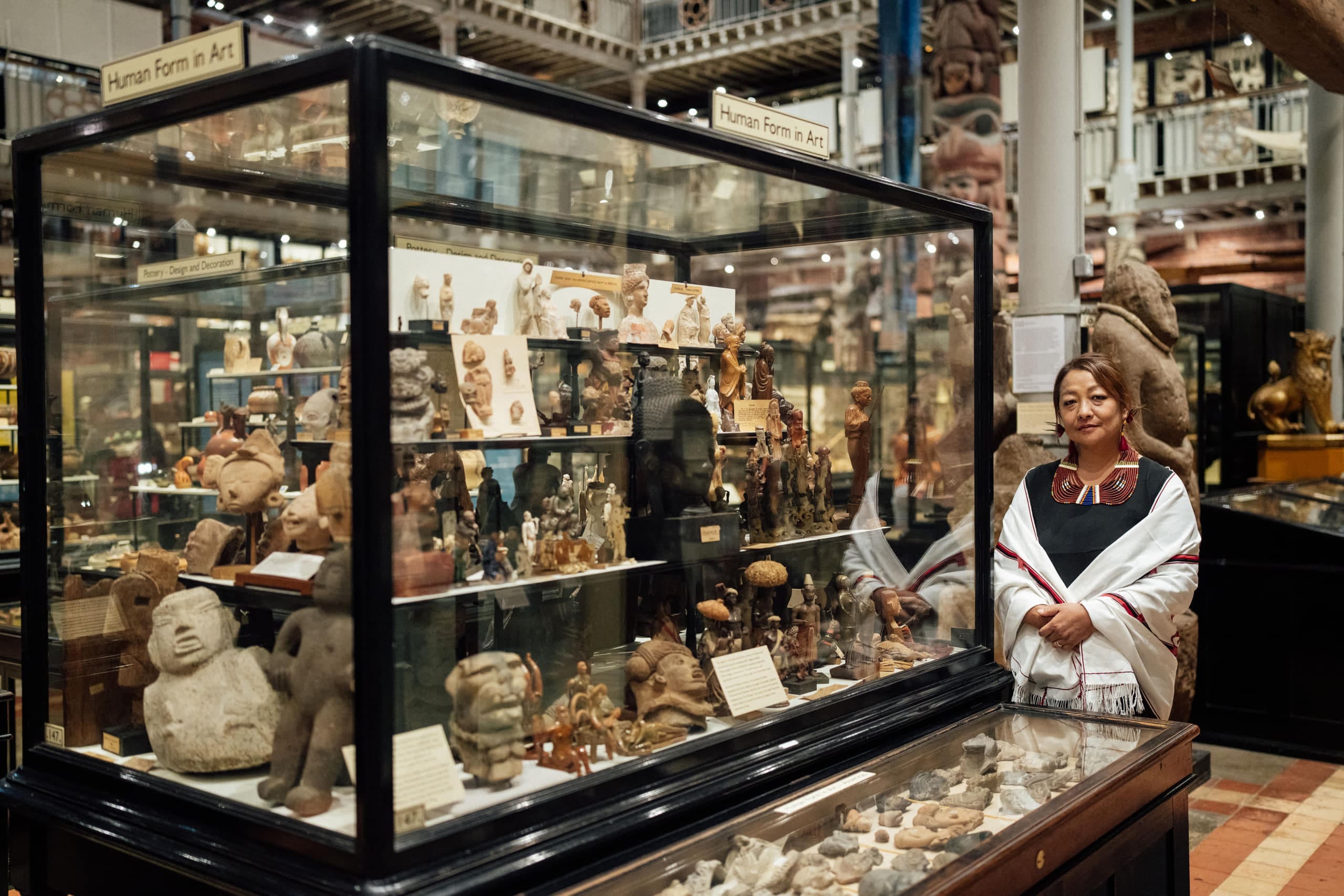
Phom, who is the vice president of the Phom Peoples’ Council, was among those who resolved to bring back the remains. “I had no idea about it before, but from that moment on, I knew they had to come back,“ he said.
Also read: Nepal’s climate compensation call tests UN Loss and Damage Fund
At rest, at peace
The handover will be the single-largest one-time repatriation of human remains from the Pitt Rivers Museum.
Such repatriations of colonial museum exhibits are often long-drawn affairs that run into years, if not decades. But the process of the return of the Naga ancestral remains moved relatively fast. This was due to a number of factors, but most importantly, it was the FNR and the RRaD’s role, said museum director Broekhoven.
“This was a very unique combination of exceptional leadership and collaborative effort all working toward a shared vision of reconciliation, peace and healing,” she said.
The RRaD members travelled across Nagaland, raising awareness of the issue and building consensus among the various sub-tribes that form the Naga identity. They also made trips to the UK, as Broekhoven did to Nagaland.
“We did our own research, talking to historians and community leaders to understand the geography of where these remains could be from,” said RRaD coordinator Jamir.
The time and effort the group invested in the exercise reflects its importance: for Naga communities, it is not merely a physical transportation of bones and skulls, but a restoration of dignity to their ancestors.
Naga groups will soon travel to the UK to reclaim the remains and bring them home, after which they will be laid to rest together at a single site in the state.
Last June, when Phom boarded the flight to Heathrow from Delhi, along with tribal representatives of other Naga tribes such as the Ao, Angami, Sumi, and Konyak, he said he “was anxious, angry, and at the same time, emotional.”
But today, he feels relieved.
“Our traditions say that we find solace and grace only when we rest in our homeland,” said Phom, “Finally, my ancestors will be at peace.”
Tora Agarwala is an independent journalist covering India’s Northeast. Her X handle is @ToraAgarwala, and she is on Instagram @toramatix.
(Edited by Prasanna Bachchhav)