





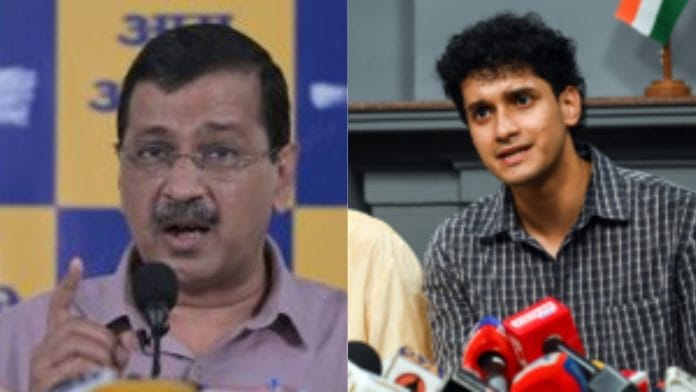


New Delhi: Days after the Indian government summoned Meta’s global head of public policy over the removal of Prime Minister Narendra Modi’s video on Facebook, several prominent accounts, including those of former Delhi CM Arvind Kejriwal, fact-checker Mohammed Zubair and CJP spokesperson Saurav Das, have raised similar accusations, saying that Meta has restricted their Instagram content.
Kejriwal wrote a tweet on 6 August asking Meta why they have restricted his account. He further said that despite writing an email, there has been no response.
“Hi @Meta @metaindia. Why have you restricted my account? Verbal enquiries at your India office revealed that my account has been restricted in India and is unavailable in India. Why? No one in your office is giving any reasons,” said Kejriwal in a tweet.
Fact-checker Mohammed Zubair also posted a screenshot of his Instagram account reading “Your photo is unavailable in India.”
Questions on free speech
The restrictions have triggered concern over whether Meta is bowing to government pressure to limit content from critics of the Prime Minister. This has raised questions about the role of social media platforms in protecting freedom of expression, shedding light on the larger debate on transparency in content moderation.
Another group on X, Yes, We Exist, which has around 8,000 followers, has termed the restrictions a “Modi-Meta” crackdown, alleging that they target criticism of the BJP. They said their posts on students’ protests were also blocked.
“The Modi-Meta crackdown on criticism of BJP now extends to journalists, activists, fact-checkers, satirists, and politicians, including the former Delhi CM whose entire Instagram account is now restricted in India. Last week, our Insta posts on the student protest were blocked too.”
The Software Freedom Law Centre (SFLC), which strives to protect civil liberties, user privacy and free speech in India, has said that the affected posts were restricted pursuant to the “legal requests” received by the platform.
“In many cases, users are provided little or no meaningful explanation about the legal or factual basis of the restriction or what steps they can take to challenge the decision…This is especially concerning where the affected content relates to political expression, criticism of public authorities, or peaceful protest, all of which occupy a central place in democratic discourse.”
(Edited by Maryam Hassan)