



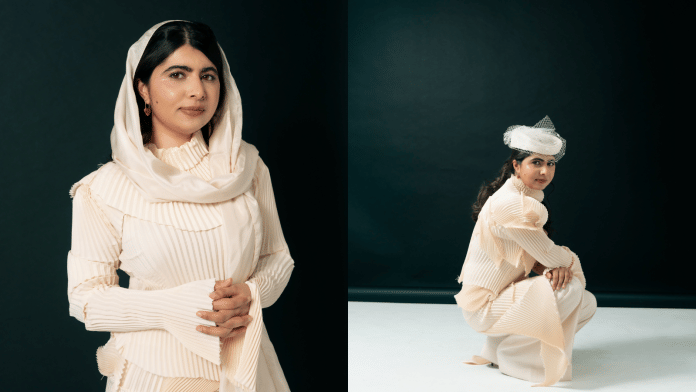
New Delhi: Malala Yousafzai has ditched luxury labels for her latest fashion shoot, instead choosing pieces by student designers and up-and-coming creatives.
The Nobel Peace Prize winner appears in an editorial with Diet Paratha, the London-based creative platform celebrating South Asian talent. The piece showcases three distinct looks — an architectural cream ensemble, a contemporary bridal-inspired outfit, and a dramatic red look. While the project centres on young designers, it also gives Malala a more experimental fashion moment.
The choice marks a clear departure from her previous high-profile fashion appearances, which typically featured established designers. Her 2025 British GQ cover, for instance, included pieces by Richard Quinn, Critter and Anneli Tammik, photographed by Elizaveta Porodina.
This time the focus is not on big-name luxury houses but on rising talent. According to reports, Malala’s friends introduced the young designers to the project, giving their work a chance to reach a wider audience.
The cream look
First up is a cream ensemble built around sculptural pleats, layered panels and a matching headpiece. The monochrome palette keeps the outfit restrained, while the structured construction gives it a contemporary edge.
The look remains within the modest styling Malala is known for, but introduces more volume and polished shape. It relies on texture and construction rather than heavy embellishment to stand out.
The bridal-inspired look
The second look takes a different direction. The white bridal-inspired ensemble features sheer layers, lace, floral appliqués and a dramatic veil.
It draws on the visual language of bridalwear but avoids the heavily embroidered aesthetic often associated with traditional wedding fashion. Instead, volume, layering and texture define the look.
The bold red look
The strongest statement comes in the form of a crimson pleated dress, paired with glossy black opera gloves and a sheer veil.
After the soft cream and white looks, the deep red creates a sharper contrast. The combination of colour, pleating and accessories makes this the most daring outfit in the editorial and the biggest departure from Malala’s usual, more subtle fashion choices.
Why the choice matters
Beyond the clothes themselves, the young designers gain something valuable: visibility. When an internationally recognised figure wears their work, it draws attention to creators who are still building their names.
The editorial stands out not only for its departure from Malala’s typical fashion aesthetic but also for prioritising up-and-coming designers over established labels.
In the end, the story is less about the luxury brand behind the outfit and more about the young creators behind the idea.
(Edited by Maryam Hassan)