



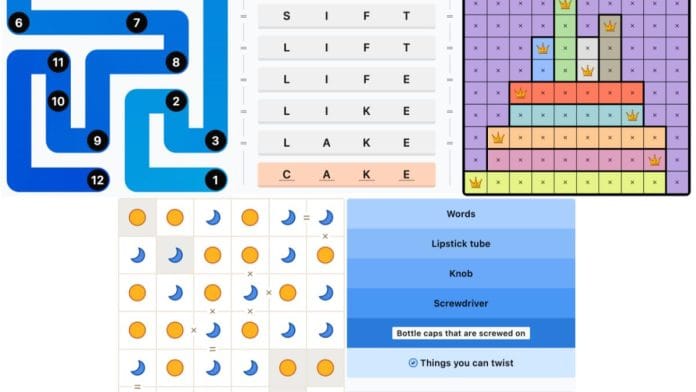
Bengaluru: Linkedin hired a three-time world Sudoku champion as its first-ever “principal puzzlemaster” in October last year. He’s running LinkedIn’s daily brain-teasers—a property they launched in 2014. It has users hooked.
Eighty per cent of users who play a LinkedIn game return to play again the next day, according to figures cited by the company and reported by Business Insider. That number explains why a professional networking site now runs eight daily puzzles, from the grid-path game Zip to a grid-filling game called Patches.
The man behind the puzzles is Thomas Snyder, a Harvard-trained chemist who spent over a decade in biotech before quitting to build puzzles full-time. He joined LinkedIn as a consultant when it launched games in 2024, and moved in-house in October. Snyder said he wants the games to function like “morning coffee”—a daily brain warm-up that spills into office small talk, Business Insider reported.
“LinkedIn isn’t a games company, but we are a workplace connection company, and games as a means of fun are a way to really get some of that dialogue,” he told Insider.
Also read: US, Five Eyes allies warn Chinese spies using LinkedIn, other job platforms for espionage
The pull of a puzzle
What makes a two-minute logic grid so sticky? Yu Dong, a product data scientist who has logged 500 consecutive days on LinkedIn Games, mapped the mechanic onto the “Hooked Model” used across the tech industry—trigger, action, reward, investment.
A streak notification or homepage nudge (trigger) leads to a low-friction puzzle (action), which pays out with a new challenge, a badge, or a leaderboard rank (reward). Each day played adds to a growing streak that a user doesn’t want to break (investment). Dong wrote about her learnings in a Towards Data Science essay published in December 2025.
It’s not a new model. New York Times has implemented it most effectively with their games including Wordle, Connections, Spelling Bee, the Mini Crossword and more.
Games-industry analyst Michael Pachter told Business Insider the appeal lies less in the puzzle itself and more in the score attached to it. Beating your network on the leaderboard, he said, confirms that the time spent “was well spent.”
Also read: Elon Musk calls LinkedIn ‘cringe’ yet again. Many users push back with job letters
What LinkedIn gets out of it
The business logic sits one layer beneath the fun. LinkedIn earns most of its revenue from recruiter subscriptions, advertising, and premium memberships—all of which depend on a large, active user base. Games are designed to chip away at the platform’s biggest threat to that base: User churn, Dong argued.
Every game result page nudges players to share scores, challenge connections, or unlock bonus puzzles by inviting others—each function pulls more users back into LinkedIn’s orbit. Laksh Somasundaram, LinkedIn’s senior director of product, told Insider that the games are part of a “very intentional path.”
“When we look at the world’s best workplaces and how connections and bonds are formed between colleagues, fun is always a core part of that,” he said.
One-year streak-holder Joshua Lee, a software engineer, put it more simply in a LinkedIn post of his own: Solving a puzzle and shipping good software, he wrote, both come down to patience and “the relentless desire to wake up and tackle a new problem every day.”
That, in the end, is the trade LinkedIn is betting on—that users come for the games and stay at least a few more minutes engaging with the platform.