



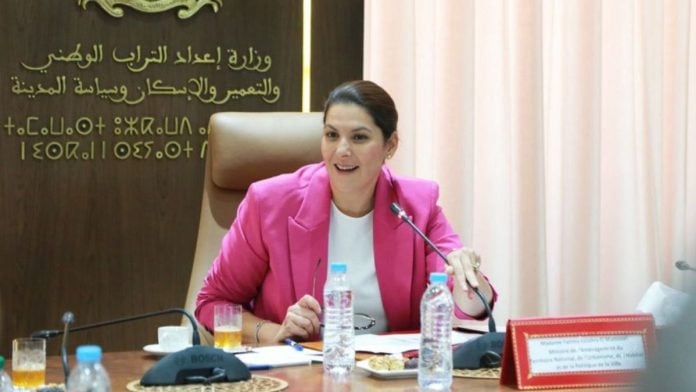
New Delhi: Fatima Ezzahra El Mansouri of the centrist Authenticity and Modernity Party was appointed as Morocco’s prime minister on Tuesday, making her the first female in the country to hold the post. The appointment, announced by King Mohammed VI, came after the party won the most number of seats in the country’s parliamentary elections, completed last week.
In a win which she called a “historic moment”, El Mansouri marked herself as the third woman to hold the prime minister’s post in the Arab world, after Tunisia’s Najla Bouden and Sarra Zaafrani Zenzri.
“This is a historic moment because for the first time in our country’s history, a woman has been appointed head of government,” said El Mansouri in her victory speech. “This is a source of pride, and not just for me, but for all the women of our country”.
Her party was founded in 2008, by Fouad Ali El Himma — a friend of the king — as a counterweight to the Islamist Justice and Development Party (PJD). It primarily advocates for social modernisation and secular-leaning views.
PAM secured 97 of the 395 seats in the House of Representatives — Morocco’s lower house of parliament. Falling well short of the 198 seats required to win with an outright majority, El Mansouri’s party will need to build a coalition in order to govern the country.
The King selected El Mansouri over Fouzi Lekjaa, the country’s football chief and a leading politician from the same party, to serve as PM. PAM has been led by a collective leadership since 2024. Its recent victory created a rare situation for the King to pick a leader for the PM post. In the past, such appointments have largely been formalities, as most Moroccan parties are led by a single secretary general.
Morocco is a constitutional monarchy, although most power remains with the king.
El Mansouri’s journey to the PM post
El Mansouri, 50, was born in Marrakesh in 1976. She studied law, obtaining a diploma in advanced studies from the University of Montpellier, France, and a diploma in Anglo-Saxon business law from New York University, US.
She entered politics in 2008 when PAM was founded. In 2009, she became the first female Mayor of Marrakesh, and served the office for over a decade.
In 2021, she entered national politics, serving as a minister in a coalition government. She was appointed Minister of National Spatial Planning, Urban Development, Housing and Urban Policy. The portfolio was associated with several key files, such as the direct housing support programme, reforms linked to urban planning and spatial development, and the file on rehousing those affected by the Al Haouz earthquake, according to Al Jazeera.
Economic, domestic, and foreign policies
El Mansouri’s rise to power came amidst growing frustration among young people over the country’s economic conditions and lack of job prospects. In September 2025, Moroccan youth had come out onto the streets over anger surrounding public healthcare, education, jobs, and living conditions. Morocco’s High Commission for Planning reported earlier this year that unemployment among Moroccans aged 15-24 rose from 36.7 per cent in 2024 to 37.2 per cent in 2025, Al-Monitor cited.
Similar socioeconomic frustrations had also driven tens of thousands of mainly young Moroccan migrants to the Spanish enclave of Ceuta, a crisis that saw significant global attention.
Addressing these issues, El Mansouri said during her election campaign, “Young people are going through a crisis and we must provide them with answers.”
“We want to restore their hope, not only through speeches, but through concrete solutions”.
Her party centered its election campaign on the issues of employment and household purchasing power. They promised 1 million new jobs over five years, an annual economic growth of 5 per cent, inflation of two per cent, and greater investment in healthcare, education, social protection, and wages.
Her government is also expected to pour in significant investment into infrastructure projects surrounding the 2030 FIFA World Cup, which will be jointly hosted by Morocco, Portugal, and Spain.
In terms of women’s issues, El Mansouri has historically taken a quieter approach, refraining from taking strong public stances on gender inequality or women’s rights. This comes amidst ongoing debates in Morocco over equal inheritance rights for men and women, and whether polygamy should be banned.
While domestic policy lies under the jurisdiction of the elected government, foreign policy will largely remain the prerogative of the country’s monarchy, which holds authority over foreign affairs and defence.
Also read: Trump calls Sundar Pichai ‘a monster’ at AI summit, signs a ‘morally binding’ pact
What’s next?
While PAM has expressed its willingness to work with all parties in forming a coalition government, some parties, including the Justice and Development Party (PJD) and Federation of Democratic Left, have announced they will remain in the opposition, said the Al Jazeera report.
Other major parties that won significant seats in the elections include the National Rally of Independents (RNI) and the Istiqlal Party. Led by the RNI, the two parties had formed the outgoing government along with PAM.
El Mansouri’s party had earlier ruled out the possibility of continuing a coalition with the RNI, trading blame surrounding policy shortcomings. PAM has shifted its stance since coming to power.
On Thursday, El Mansouri said that her party would have no “red lines” when it came to negotiations. “We have turned the page,” she added.
(Edited by Aamaan Alam Khan)