





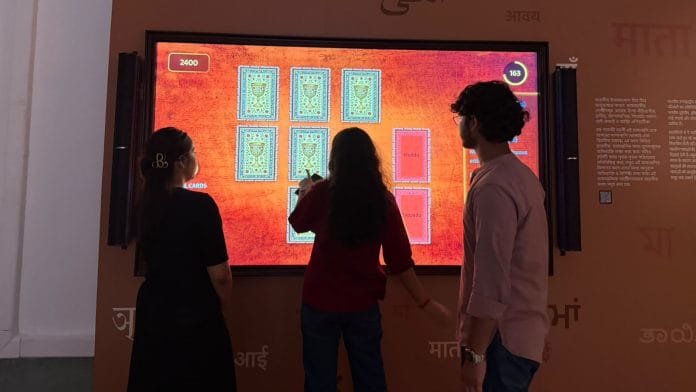


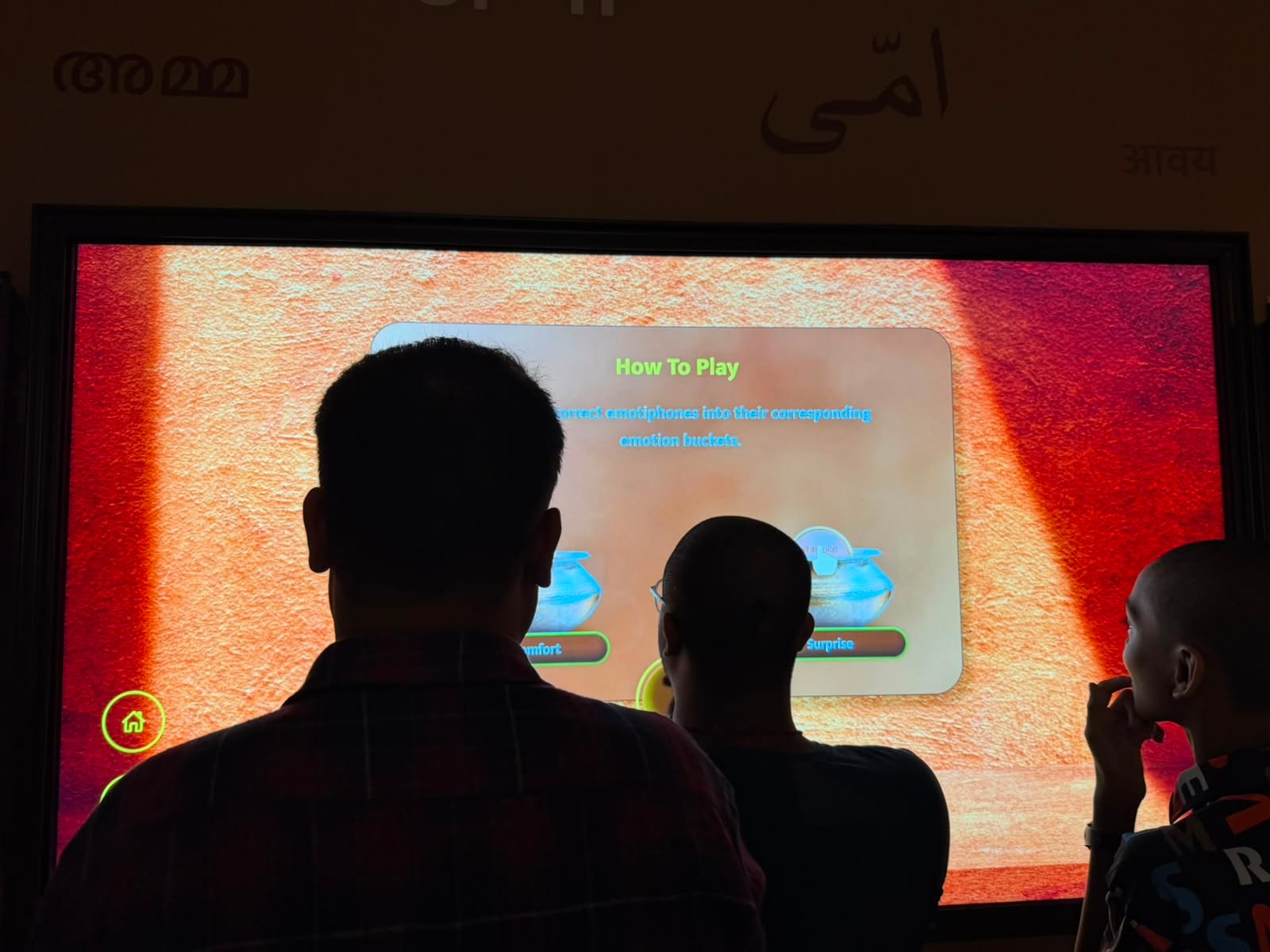
Kolkata: The first thing visitors do at Kolkata’s newest Museum of Words is not read or look at the exhibits, but play. In one gallery, youngsters match words with emotions on giant digital screens. There are words in multiple languages—from Urdu to Bengali, from Manipuri to Telugu. They drag the words into virtual pots marked with different emotions.
The museum is filled with many such quizzes. The young love that this isn’t like any other museum. You can hear, smell, touch, see, and interact with language—engaging all five senses. Next to the quiz board three college students race against a countdown clock, flipping illustrated cards to match words from different Indian languages.
In another gallery, visitors are compelled to think about the very first word they ever spoke. A wall glows softly with the word mother—Amma, Maa, Aai, Aayi, Ami—written in dozens of Indian scripts. Immersive projections transform a simple linguistic exercise into an emotional one. The exhibit quietly argues that language begins not with grammar but with relationships.
In the Museum of Words, language is not the same as what was taught in the classrooms. It is almost tangible.
“This is the first time in India that a museum is dedicated entirely to language at this scale, bringing together its origin evolution, and future in one immersive space,” said Partha Sarathi Das,” Library and Information Officer.
India’s first immersive museum
The museum, opened last month under the aegis of the Union culture ministry, has nine immersive galleries. It traces the evolution of language from its earliest sounds to modern communication. Visitors have the option to explore interactive digital exhibits, rare manuscripts, and installations such as From Nothingness to Sound and the Word Pole, while learning about nearly 380 Indian languages, including the 121 recorded in the 2011 Census. The museum also highlights India’s oral traditions, classical languages, and the journey of scripts from ancient Indus symbols to the Gondi Gunjala script through immersive 3D displays.
India’s first immersive museum dedicated entirely to language, the Museum of Words is housed in the historic Belvedere House on the National Library campus in Kolkata, and spread across nine galleries. It traces the evolution of the 380 indigenous languages and dialects from oral traditions to stone inscriptions to artificial intelligence and digital communication.
The response has surprised even museum officials.
Around 350 people visit every weekday, they say. On weekends, that number climbs to nearly 500, with families, tourists and school groups making up much of the crowd. Until 15 August, entry has been kept free to encourage visitors.
Unlike conventional museums, where a reflective silence is expected and enforced, this one is filled with conversation. Children shout answers at interactive games. Parents test each other on regional words. Elderly visitors pause before inscriptions they cannot read but instinctively recognise as fragments of India’s past.
19-year-old Camillies, a law student, chose a museum over the movies.
“I didn’t expect the museum to be this nice. It wasn’t a boring or heavy experience. You can play a quiz, and have fun while learning about languages. I came here with my mother and thoroughly enjoyed it,” said Camilliea. She spent nearly two hours at the museum.
A mix of history and technology
The museum’s largest gallery immediately sets the tone. Chandeliers hang above polished wooden floors inside the restored heritage building, while rows of galleries line either side beneath towering white columns.
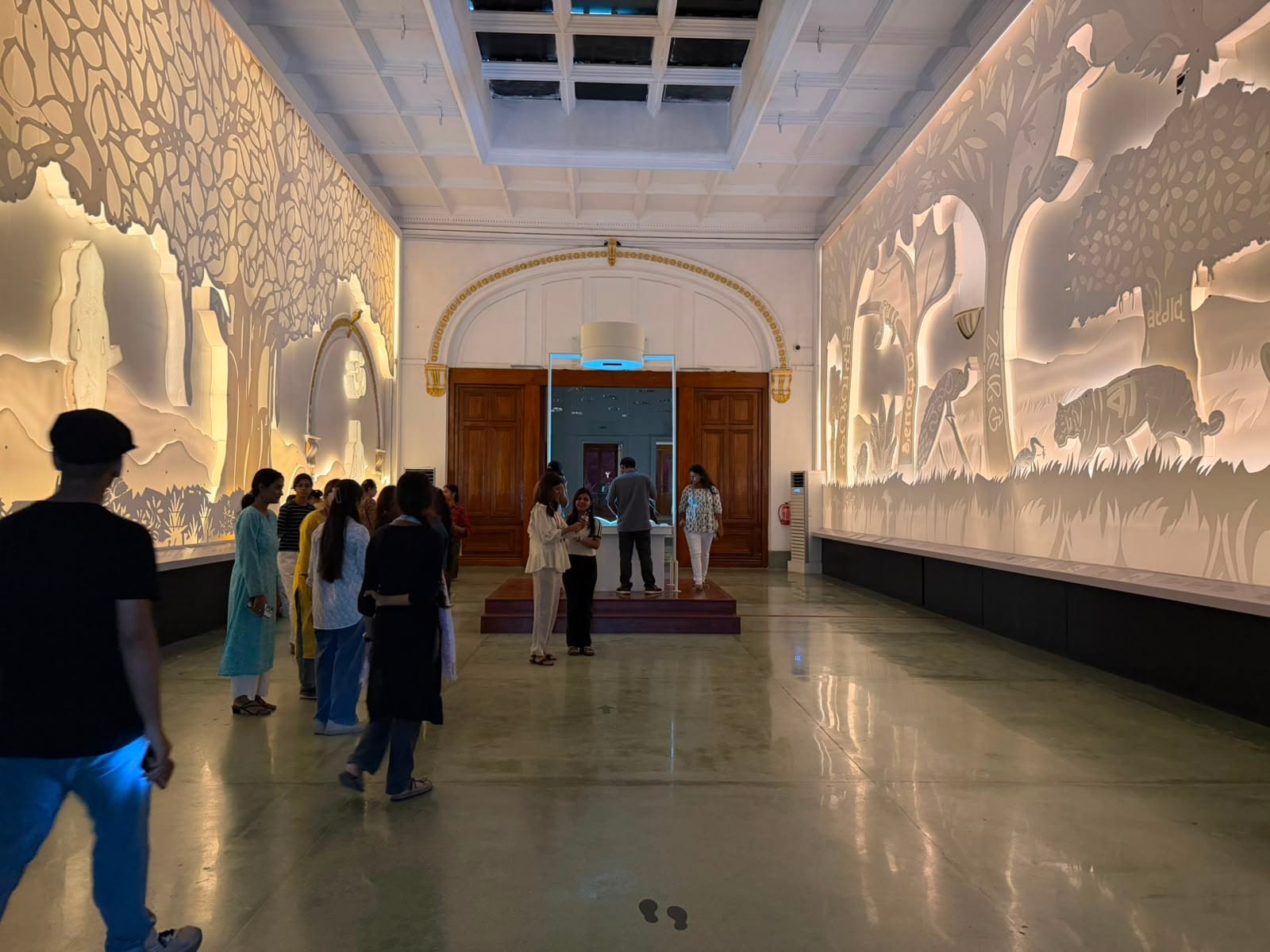
Instead of paintings or sculptures, visitors find stories about alphabets, scripts and sounds on the walls and on the screen. The grandeur of the colonial architecture contrasts with an exhibition celebrating India’s multilingual identity.
Further ahead, technology takes over.
A giant touchscreen becomes a playground where visitors sort emotions into buckets, match vocabulary across languages and solve memory puzzles based on Indian words. Children instinctively crowd around the screens, but adults soon join in. In one corner, a grandmother helps her grandson identify a word in Bengali. Nearby, a young couple competes to finish a language game before the timer runs out.
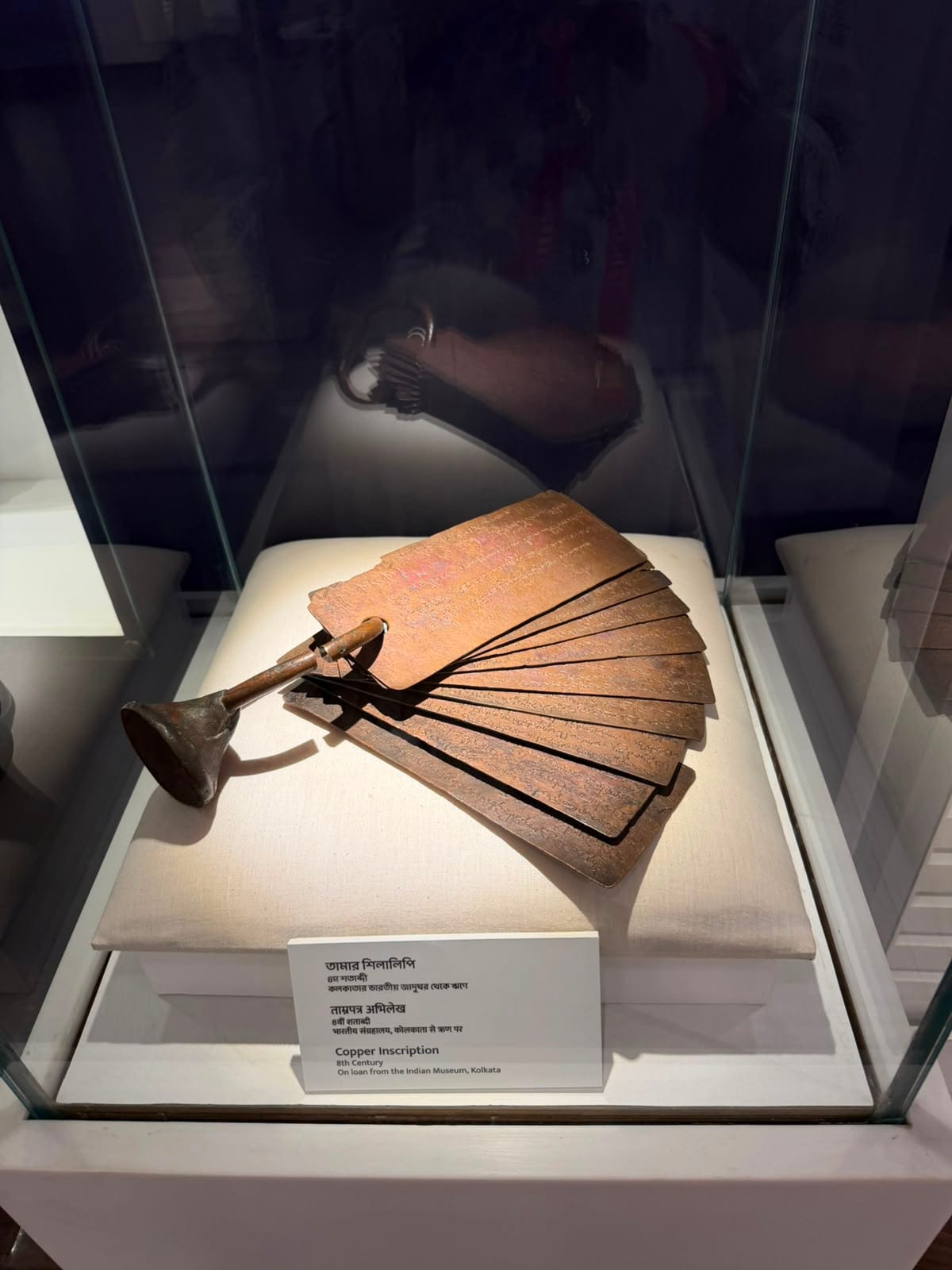
The museum transforms the experience into one that requires active participation. That said, history still forms the core of the museum. Among the digital screens, there are stone inscriptions carved over a thousand years ago. Nearby lie copper plate grants, carefully preserved under glass.
(Edited by Aakriti Handa)
Calcutta has had a glorious legacy in language and linguistics. Hope the children are inspired to delve deep into words and we get a second Suniti Kumar Chatterjee in the near future.