


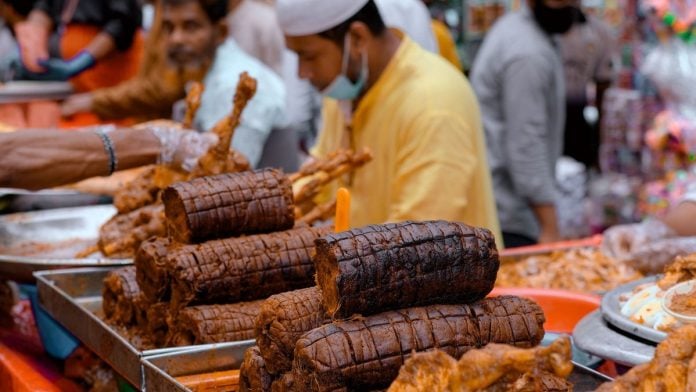
New Delhi: Two months ago, Firdous Ahmad was cooking wazwan at a house in Srinagar for a wedding. He had been working non-stop for four hours, kneading and pounding meat, shaping it into pieces and preparing it for cooking. Drenched in sweat, he could no longer hold it and rushed to a nearby mosque to use the washroom.
“Forget having a place to sit; we are not even provided a washroom when we go to cook at weddings. There is no bathroom or washing space for wazas (chefs). We are forced to look for toilets elsewhere, sometimes in nearby mosques,” said Firdous. “This is humiliating.”
This is not an isolated incident. Firdous, whose father was also a waza, says the lack of basic facilities for chefs and working hours at weddings has been a longstanding problem. And now, the wazas are not keeping quiet.
The Kashmiri Waza Association has announced that the guests will no longer be served wazwan at Kashmiri weddings if they do not arrive on time. Wedding chefs, colloquially known as wazas, have said that they will not serve food if the baraat and guests arrive after 10 pm. They have also set a deadline for lunch. The lunch will not be served after 3 pm, the association said.
“The groom is usually expected to arrive between 7 pm and 8 pm, but he and the guests often turn up around 1.30 am. After cooking and serving the food for hours on end, we reach home around 5 am, only to make preparations for another feast,” said Ahmad, another member of the Kashmiri Wazwan Association. “We don’t get time to even sleep.”
Also read: Exclusive: Dancing Girl is back at National Museum, but not in her original spot
‘Someone had to take first step’
Wazwan, a traditional multi-course Kashmiri feast, is integral to Kashmiri weddings. And Kashmiris are coming out in support on X.
“It’s a good decision. Someone had to take the first step. This time it’s Wazas,” read a comment on X.
Firdous says that abnormal timings that affect their work and health won’t be tolerated in the upcoming marriage season. He says, wazas will simply leave the venue if the guests and the groom don’t arrive on time.
“I have almost 10 workers with me who do the pounding, cutting, and separation of meat. It’s a lot of physical work, and they require sleep. Otherwise, they won’t be able to work at another wedding,” said Firdous.
In case of any unforeseen delays, the association has said it wants accommodation at the wedding venue so that wazas can rest and recover before resuming work the next day.
(Edited by Saptak Datta)