



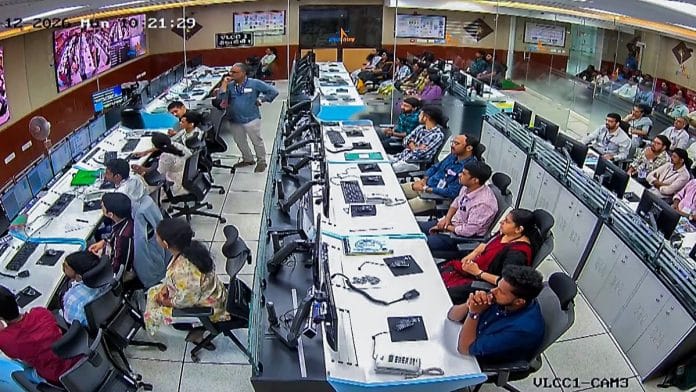
New Delhi: Indian billionaire industrialist and RPG Enterprises chairman Harsh Goenka reignited the debate over public sector pay disparities by questioning whether top public servants are fairly compensated for their responsibilities. His social media post Monday, comparing the pay of the ISRO chief with that of a news anchor at India’s public broadcaster, has once again put the spotlight on the challenge of financially rewarding public service.
“If Prasar Bharati can spend Rs 15 crore a year on a DD News show featuring a star anchor, while the ISRO Chairman’s basic pay is about Rs 27 lakh a year, shouldn’t we rethink our priorities? If India wants to conquer space and attract our finest scientific minds, our rewards must match our ambitions,” he posted on X.
India’s national priorities have come under intense scrutiny, particularly regarding how the nation values the scientists and engineers driving its crucial space missions and technological advancements. The massive pay gap raises fundamental questions about whether a country aiming for global leadership can sustainably fuel its development by relying on the patriotism of its brightest minds rather than offering them competitive financial recognition.
In October 2023, ISRO chairman S Somanath said that a vast majority of premier IIT graduates walk away from national space agencies because entry-level salaries cannot compete with corporate or tech startup paychecks.
“The ISRO team was presenting the career opportunity (at IIT) and the type of work ISRO does. The students who were sitting there saw the highest pay that they could ever get in ISRO. After seeing the presentation, 60 per cent of people walked out,” he had said.
According to a 2014 response to a Right to Information (RTI) request, only 2 per cent of ISRO’s technical workforce graduated from IITs and NITs combined.
Also read: Neha Bora to MA Baby, what India’s Left said on Lula’s victory over Brazil’s far right
‘This is not nation-building’
Goenka’s post has divided social media, fuelling a debate between deep outrage over the low financial rewards for India’s top minds and a defence of government-backed perks and institutional prestige.
Ravi Kumar Gupta, a former DRDO scientist, commented on Goenka’s post, claiming that he became eligible to travel by first-class AC trains after 14 years of service.
“Having joined DRDO as a Group A Officer in 1979 after PG in Polymer Tech from IITKGP, I became eligible to travel by 1st AC after about 14 years of service. Met a young boy in the compartment on the way from Delhi to Kanpur with lesser qualifications, working on polymers in a pvt company with less than three years of service, getting three times more salary (than me). At that time, I was eligible for air travel only on long-distance journeys, that too if funds were (available),” he posted on X.
Meanwhile, several X users took a dig at the Narendra Modi government over the pay disparity in Indian public sector jobs.
“Narendra Modi’s government pays Sudhir Chaudhary crores to shout propaganda on public television while the scientist leading India’s space dreams earns a fraction. This is not nation-building, but it is funding loudspeakers and starving real talent,” one X user posted.
Another X user took a sarcastic dig at the ruling government.
“The ISRO Chairman just has to put satellites into orbit. But a star anchor has the really tough job of justifying the five advantages of a falling rupee while ridiculing his own past statements—with absolute confidence. So, Prasar Bharati is rightly rewarding him for this Herculean task—ridiculing his own past statements with unwavering confidence. Truly, a job that requires extraordinary talent,” he posted.
Nonetheless, a few social media users talked about the joy of working in such prestigious organisations irrespective of the salary.
“Sorry, being a Scientist myself with CSIR, the biggest drive is solving unsolved problems and the unparalleled joy after that as a reward. Salary is good enough for us to keep us focused on our love for research,” one X user posted.