





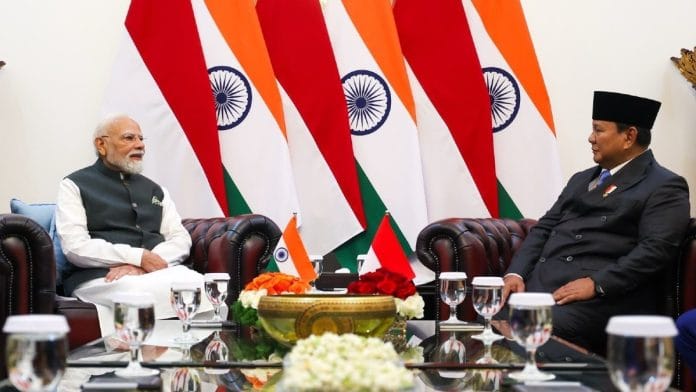


New Delhi: Prime Minister Narendra Modi’s visit to Indonesia received surprisingly muted media coverage in the country, with many online questioning why. This, despite India and Indonesia signing a raft of agreements, including on critical minerals, agriculture, and defence deals for the BrahMos cruise missile system.
In strategic circles, the lukewarm coverage has sparked questions about China’s growing influence in Jakarta’s media and communication ecosystem.
As part of its broader diplomacy strategy, China has expanded media cooperation with Indonesia. The two countries have signed content-sharing agreements between China’s state-run Xinhua News Agency and Indonesia’s Antara News Agency. Beijing has also launched journalist exchange programmes, and organised sponsored visits to China for Indonesian journalists, editors, and social media influencers.
This is not new. Beijing has been making inroads in Jakarta’s media landscape since 2023.
“China’s media efforts in Indonesia reflect a wider regional ambition, positioning media as a vehicle to embed Beijing’s narratives,” noted an article in the independent multimedia news portal China Global South Project. “With Indonesia at the heart of Southeast Asia’s geopolitical and economic matrix, Chinese outreach aims to bolster themes of the Belt and Road Initiative (BRI), its ‘peaceful rise,’ and regional development leadership.”
A dual-edged collaboration
An analysis published on Substack in January on China’s expanding media footprint in Indonesia argues that the news industry in the country has been grappling with “mounting challenges, including economic disruption, threats to journalists’ personal safety, and growing foreign media influence”. It further notes that the shift to digital platforms has decimated the traditional revenue model, leaving many news organisations financially vulnerable.
“Into this strained environment, China’s state media apparatus has quietly expanded its engagement… Chinese state narratives have found new pathways into Indonesian newsrooms and living rooms. These partnerships, often framed as purely commercial, are reshaping what Indonesian audiences see and read about China,” the article read.
This changing landscape of Indonesian media could explain why PM Modi’s visit to Indonesia received subdued coverage. For Indonesian media organisations, China’s content-sharing strategy offers financial support but comes with concerns over its editorial credibility.
“For Indonesian outlets, collaboration with Chinese media comes with dual-edged implications. Financial incentives may offer relief in a challenging economic landscape, but alliances risk perceptions of compromised integrity,” read the article in China Global South Project.
(Edited by Prasanna Bachchhav)
Also read: One disability certificate, two outcomes for UPSC and UP government