





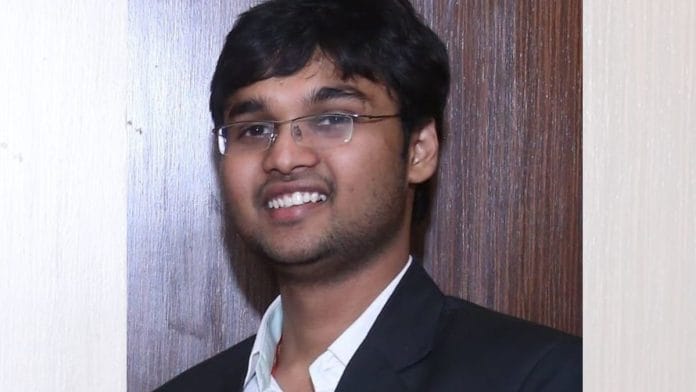


New Delhi: Two years after the Pooja Khedkar controversy put reservation claims in the civil services under unprecedented scrutiny, the Union Public Service Commission (UPSC) has it a step further by successfully challenging a candidate’s disability claim before the Supreme Court, preventing his appointment under the Persons with Benchmark Disabilities (PwBD) quota.
The case centres on 32-year-old Shubham Agarwal, currently serving as a Naib Tehsildar in Uttar Pradesh, whose claim of benchmark hearing disability became the subject of conflicting medical assessments by three government medical boards.
After he failed to complete a final medical examination ordered during the litigation, the Supreme Court ruled that UPSC was under no obligation to consider him for appointment under the PwBD category in the Civil Services Examination 2024.
Agarwal and his family, however, say he cleared the Uttar Pradesh Public Service Commission examination in 2019 and works for the state government using the same disability certificate since 2021.
“The Supreme Court has clearly asked UPSC to not consider him for appointment under PwBD category but he is still working in the UP government using the same certificate,” Ashish Gupta, Agarwal’s brother-in-law, told ThePrint. “Then he should be removed from this post as well.”
What was once largely driven by RTI activists and whistleblowers has increasingly become an institutional exercise, with the government and UPSC themselves verifying disability, EWS, OBC and caste certificates long after examination results and, in some cases, before appointments are made.
In May last year, the Department of Personnel and Training (DoPT) ordered verification of the reservation documents of 15 serving civil servants across eight states and central ministries following multiple complaints.
UPSC, too, has tightened its checks. This year, it used Artificial Intelligence to detect duplicate applications and rejected nearly 600 candidates who had exhausted their permissible attempts or crossed the age limit.
“This year, UPSC undertook a de-duplication exercise at the Prelims Examination stage to ensure that every genuine candidate is correctly identified and that fraudulent or multiple applications are detected and eliminated. The exercise relies on secure comparison with the Commission’s existing database while ensuring that candidates’ information remains fully protected,” UPSC Chairman Dr Ajay Kumar said.
PwD Quota Scam: When Fake Disability Certificates Become a Shortcut to Govt Jobs!
> Meet Shubham Agrawal.
> He got selected as Naib Tehsildar through UPPSC in 2019 using a disability certificate.
> Since 2017, he kept using disability certificates to appear in UPSC exams.
— Gems (@gemsofbabus_) July 6, 2026
Also Read: A century of UPSC. A ‘colonial tool’ rewired by protests, committees, even scandal
Three medical reports, three conclusions
Shubham Agarwal’s disability certificate, issued by the Ghaziabad Chief Medical Officer in 2016, ruled that he has 40 per cent non-progressive hearing disability. However, subsequent medical examinations reached different conclusions.
AIIMS Delhi concluded that while Agarwal had a hearing impairment, it was treatable and did not amount to a permanent disability. He challenged that finding and was referred to the Appellate Disability Medical Board at the Army Hospital (Research & Referral) in Delhi, which assessed his hearing disability at 67.84 per cent. UPSC, however, sought yet another medical examination.
“AIIMS didn’t say that I don’t have a disability. It said that it can be treated and it’s not a permanent disability,” Agarwal told ThePrint. “I challenged that report and went to court and later the Army hospital found 67.84 per cent disability.”
According to Agarwal, his hearing problems began in 2014 while he was pursuing Chartered Accountancy. He had to quit his prep for treatment.
He got his disability certificate the same year and started preparing for civil services in 2017.
He got through UPPSC in 2019 and while serving in the UP government, Agarwal appeared for the UPSC Civil Services Examination under the PwBD category. Subsequent medical tests later, the conclusion remained unchanged.
“There were no qualified people to examine me. I went through the second test but they didn’t accept that either. I didn’t want to take the third test,” Agarwal said.
When UPSC insisted on another medical examination, Agarwal challenged the process before the Delhi High Court. The matter later went before the Central Administrative Tribunal (CAT), which also directed a fresh medical examination. The dispute eventually reached the Supreme Court.
According to Agarwal, he finally agreed to undergo the third examination at Rajiv Gandhi Government General Hospital in Chennai after the matter reached the top court.
But Agarwal didn’t take the test and the Supreme Court discharged him from the PwBD reservation.
“I went to Chennai on a general class ticket by train. I was okay initially but then they were checking me for nearly five hours,” he said. “After that I fell sick and left.”
The Supreme Court order, however, records that the medical board repeatedly contacted Agarwal after he left and kept the panel available for 24 hours to enable him to complete the examination, but he did not return.
Taking note of the conflicting medical reports and Agarwal’s failure to complete the final medical examination, the Supreme Court on 22 May allowed the government’s appeal, set aside the Delhi High Court’s later order and held that UPSC was not required to consider him for appointment under the PwBD category in the Civil Services Examination 2024.
Agarwal maintains that the dispute is not about whether he has a hearing disability, but whether it qualifies as permanent benchmark disability.
“They haven’t said that I faked my disability. AIIMS says that it can be treated so I am requesting them to treat this,” he said. “They have made my life difficult. I have been hearing this from doctors that my disability is permanent but they (UPSC) aren’t believing it.”
Agarwal still claims that he has 40 per cent permanent hearing disability and claimed he went through another test in his current role in the UP government.
“I have gone through a test again recently and they have found 40 per cent hearing disability,” he said.
But his seniors say they are unaware of it.
“He is currently on medical leave and I have no idea about this medical test,” said Meerut Assistant District Magistrate Naveen Chandra.
(Edited by Stela Dey)