



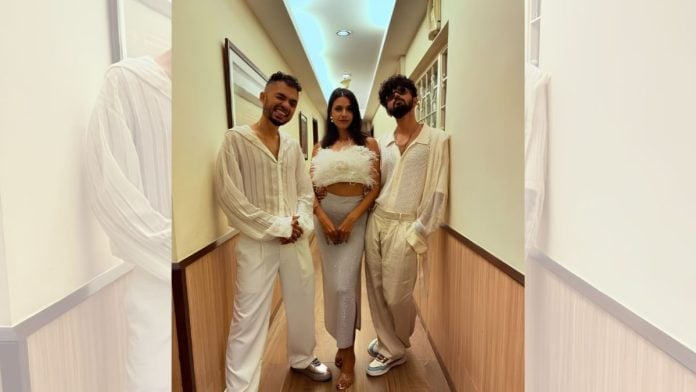
Mumbai: Electric guitars, basuri, an open floor lit in pink, blue and all the colours of the techno palette—this was how Curry, a Mumbai-based multilingual pop trio, performed a mashup of AR Rahman’s ‘Rukmini Rukmini’ and ‘Chinnamma Chilakamma’. The reel of the live show soon spread across social media. In just over two weeks, more than 70,000 people have liked the video.
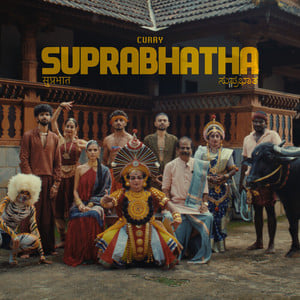
This was the latest in a run of viral moments for the band, which originated in Mangalore. Earlier this year, Curry performed at Vijay Deverakonda and Rashmika Mandanna’s sangeet in Udaipur. The group has also been releasing its own music while continuing to play at weddings and private events. Its debut EP, ‘Suprabhata’, came out earlier in September. It has four tracks, all honouring the sounds of Mangalore, nostalgia, and regional identity with a distinct pop energy. This is what Curry has been doing since it started performing, blending classical sounds with contemporary, high-energy performances.
“We always knew what we wanted. The vision goes very far. Plus it’s something we really love. So it doesn’t feel like work, even though we are working seven days a week,” Ashish Palanna, the singer-songwriter and co-founder of Curry, told ThePrint. He goes by the stage name Sheesh.
Palanna, Ria D’Souza, whose stage name is Ryo, and Sumanth Shetty, aka Kanasue, have known each other since their school days in Mangalore. Back then, D’Souza and Palanna were already singing and taking part in music competitions. They had also grown up performing at church. Shetty, meanwhile, was listening to heavy metal.
“I had nothing to do with any music. No musical foundation at all,” he said. He picked up the guitar in class 11 and fell in love with it. The guitar eventually led him into composition and production, which also broadened his playlist beyond heavy metal.
The trio spoke to ThePrint at Shetty’s 17th-floor apartment in Madh Island, with mangroves on one side and the sea on the other. Inside, there was warm wooden furniture, colourful cushions, plants and knick-knacks all over. D’Souza, Palanna and Shetty were all casually dressed, with the easy familiarity of three friends hanging out at home.
“Once you get into that rabbit hole, you can’t stick to one genre of music. You automatically start listening to a lot of other music,” Shetty said. He moved to Mumbai in 2016 to look for work in music production. In the last decade, Shetty has done many television projects, such as The Voice of India.
D’Souza and Palanna followed him about a year later. They began performing at weddings, parties and small-scale concerts. At the time, however, there was no plan for the trio to work together or form a band.
None of them had any formal training in classical music, but they had always been surrounded by Carnatic music. The traditional sounds of Karnataka eventually found their way into Curry’s music.
The influence even made its way into the band’s name. While looking online for Indian names and Carnatic ragas, Shetty came across a raga called Kari. The word also sounded close enough to Curry, a name that was instantly recognisable as Indian.
By 2020, their paths began to overlap. D’Souza and Palanna knew Shetty was in Mumbai and went to see what they could make together. What started as three old friends jamming soon evolved into music for ad films and other professional projects.
“We realised we have good chemistry, the three of us,” D’Souza said. It showed. They joked with each other, interrupted occasionally and often finished each other’s sentences.
At that point, Curry was not yet a formal project. All three were still trying to make a living from music.
For D’Souza and Palanna, that meant five-star hotel brunches and dinners on weekends, weddings and private gigs. Much of it was simply to pay rent.
“That month, you’re buying extra chicken,” D’Souza joked about the better-paying private shows.
Shetty’s version of the struggle looked different. He was working in music production, sometimes getting home at one or two in the morning, while watching friends in other fields earn far more.
“You’re literally seeing your friends earn lakhs and you’re earning fifteen thousand rupees a month. And I have an engineering degree. None of this makes any sense. Why am I doing this?” he said. In his head, he said, he quit every three months.
The work was repetitive for D’Souza and Palanna too, but it bought them time. “We just had to be patient to scale up what we were doing,” D’Souza said. The idea was to keep performing until they were no longer “constantly in survival mode” and could make space for their own music. By the time Curry took shape around 2020, original music was already the goal.
“We always wanted to make original music,” Shetty said.
But original music needed money too. The weddings were effectively helping fund that ambition. Making music videos required a crew, equipment and other expenses, all of which had to be paid for.
“You need to fund that from somewhere. So we do end up taking a lot of wedding gigs for that reason,” Shetty said.
Their first single, ‘Marigold’, came out in 2024. By then, Curry had spent several years figuring out what it wanted to sound like. The ingredients were scattered across their own histories: church music for D’Souza and Palanna, heavy metal and other genres for Shetty, and the Carnatic music and ragas all three had grown up around.
Also read: Smit Machchhar’s Ghatkopar neighbours are proud, yet worried. ‘Won’t wish this pride on anyone’
Marriage marketing
Forming as a band at weddings became more than just about paying the bills for the Curry trio.
“It’s extremely heartwarming. To see people come together and actually dance to your music. It feels really good,” Shetty said.
There was an intimacy to wedding performances that a conventional concert did not have. Over three days, D’Souza said, the band would speak to the hosts, get to know families and sometimes stay in touch long after the event was over. And increasingly, more and more couples were discovering Curry, and so there were more wedding gigs for the band.
D’Souza said that earlier, an event planner would give a family a few bands to choose from. Curry wouldn’t necessarily be on the list.
“That has changed. Now people call up an event planner and tell them, ‘We want Curry,’” she said.
Vijay Deverakonda and Rashmika Mandanna were one of the most famous couples to invite them. Curry performed at their sangeet earlier this year after Deverakonda found the band on Instagram.
“They used to listen to us on Instagram. That’s what Vijay told us,” Shetty said. After the event, the band went up to the couple for a photograph. “He said, ‘I found you guys on Instagram and really wanted to accommodate you in some event of this wedding.’”
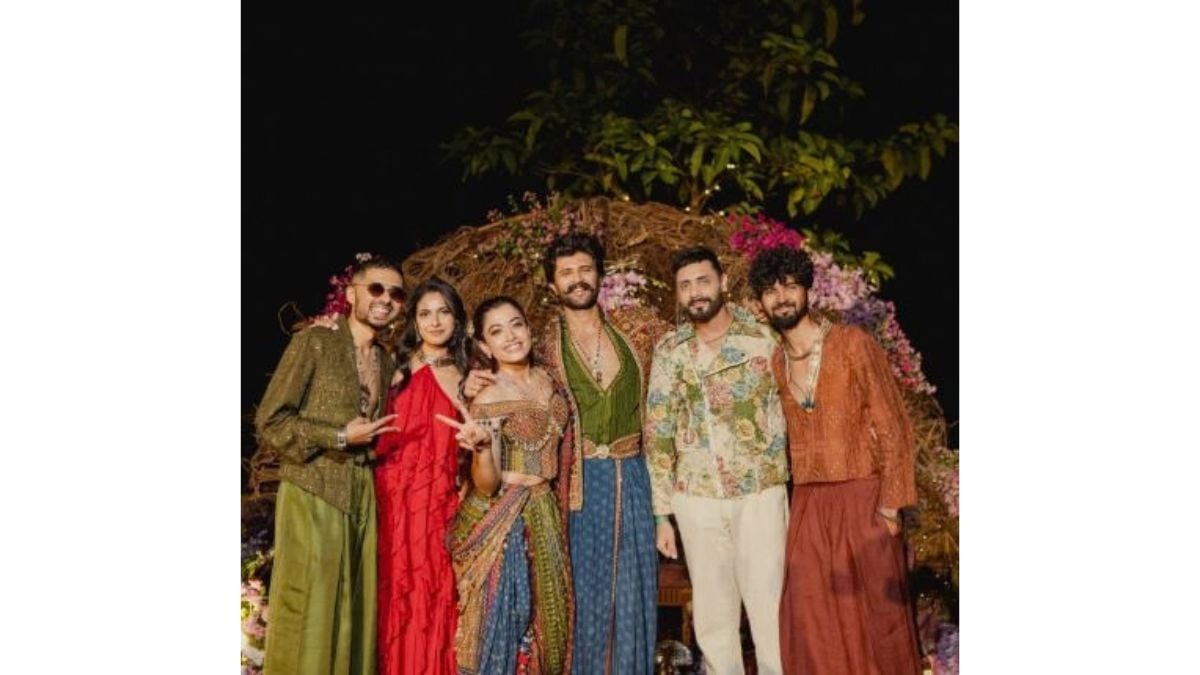
The photograph travelled much further than Curry members expected. The official handle of the band had simply posted it with a congratulatory caption. “People took it to places. We didn’t have to do anything.”
Instagram had also changed how musicians promote their work. Curry films and records much of its own content, Shetty said, and doing that repeatedly taught them what a frame should look like, what they should wear, and what audiences responded to.
“Eventually, that moves into things like, what am I wearing? How do I improve that?” Shetty said.
The band is as ambitious about what comes next.
D’Souza hopes a filmmaker or production house will one day approach Curry for an album without first giving the band a brief. “I want them to say ‘We’ll use your songs just as your songs in our movies’. I would like for someone to like our music and take it on board into a big project like that,” she said.
Palanna wants to go big: a stadium with 50,000 to one lakh people who have come only for Curry.
“A concert, just us. People know Curry, and they’re coming for Curry. It’s not part of a festival. Everyone knows our songs. That’d be amazing,” he said.
(Edited by Ratan Priya)