






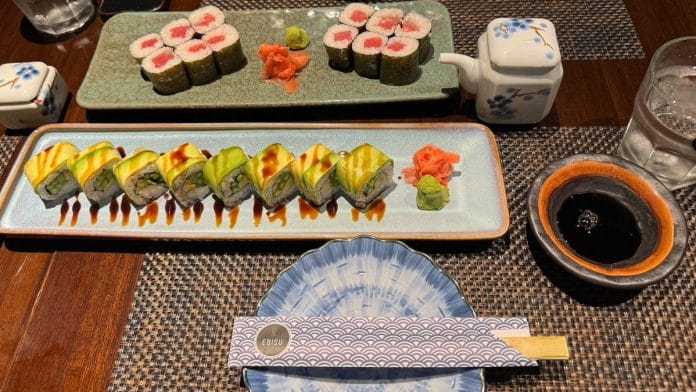


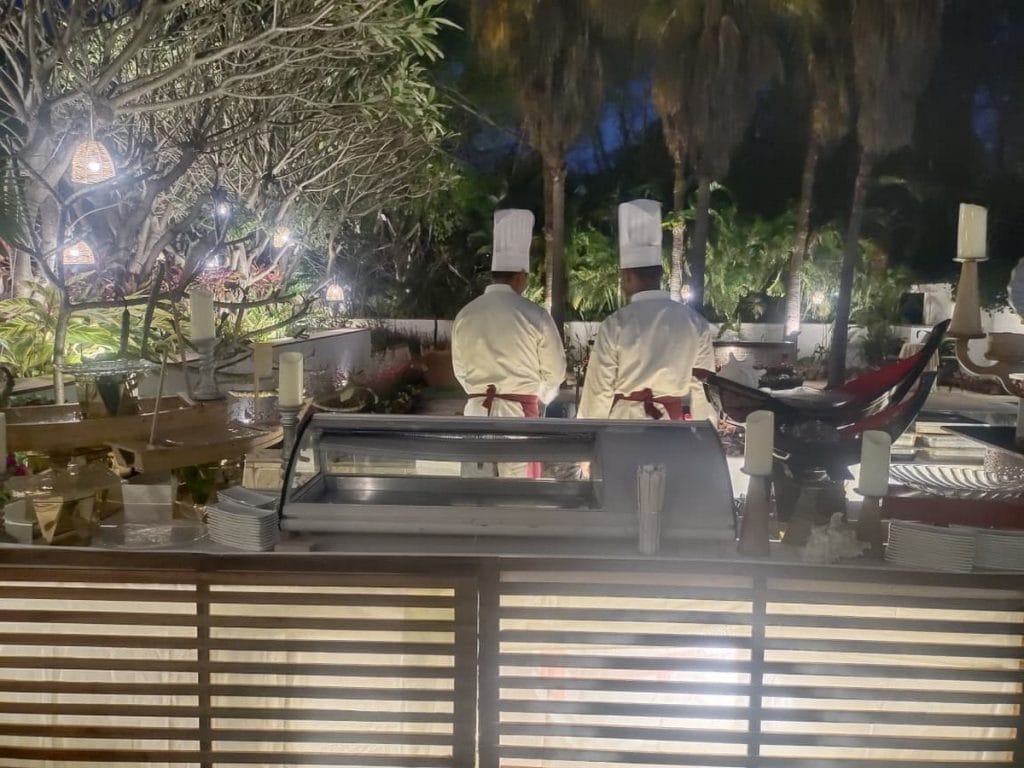
At the private wedding of an elite Meerut businessman, the most coveted territory was no longer the kebab counter or the open cocktail bar, but the minimalist glass-fronted sushi station.
A catering team from Delhi had brought a full setup and a chef, who carefully rolled tuna and apportioned a strict two pieces per mini wooden boat. “Can you put in two more?” an auntie ordered. The chef gave her a look that said: this is art, not tiffin. Armed with soy sauce and what she may have assumed was mint chutney, she dunked the roll, took a bite, and froze as the wasabi hit her throat.
From Jabalpur to Meerut, the arrival of delicate raw fish in the scorching heat of India’s heartland is not just a marker of taste. It is the visible sign of a country that has built cold-chained highways from the coast to the hinterland, and then turned that infrastructure into a stage for a new kind of class theatre.
The sushi counter hosted a long, excited crowd of first-time eaters, committed to their Instagram captions. A young woman in a saree was changing poses with the same plate against three different backdrops, using chopsticks as dandiya-style props. Her Instagram story: #SushiShadiAndSaree.
This time, the wedding ribaldry swirled around the word ‘maki’, phonetically indistinguishable from a popular Hindi slur. On the other counter, the ghee-soaked shami kebabs grew soggy as they sat untouched.
Also Read: Delhi-NCR restaurants are caught in a cut-copy-paste mode, and a monopoly of consultants
Raw fish at 45 degrees
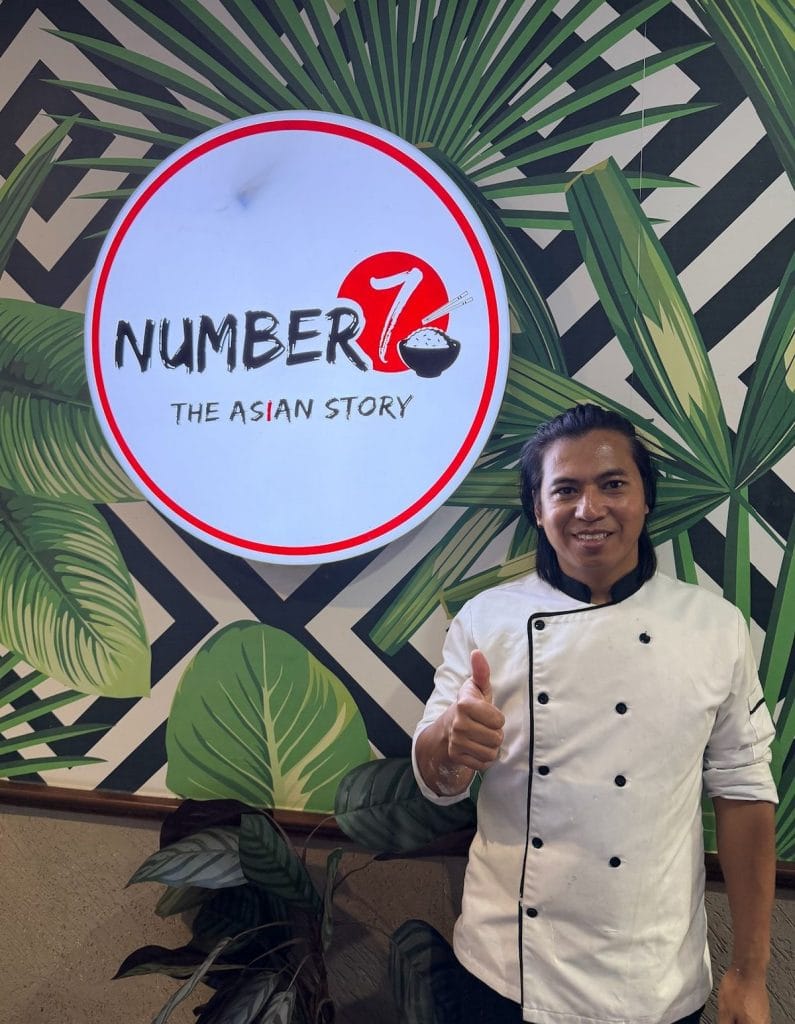
The real sushi story, however, is playing out 900 kilometres south of Meerut, in the thronging sun-soaked streets of Jabalpur. Here, a pan-Asian restaurant called Number 7-The Asian Story is catering to the aspirational appetite.
“Spicy salmon sushi and mango avocado roll are our top-selling items,” said its owner Shivam Bhaskar.
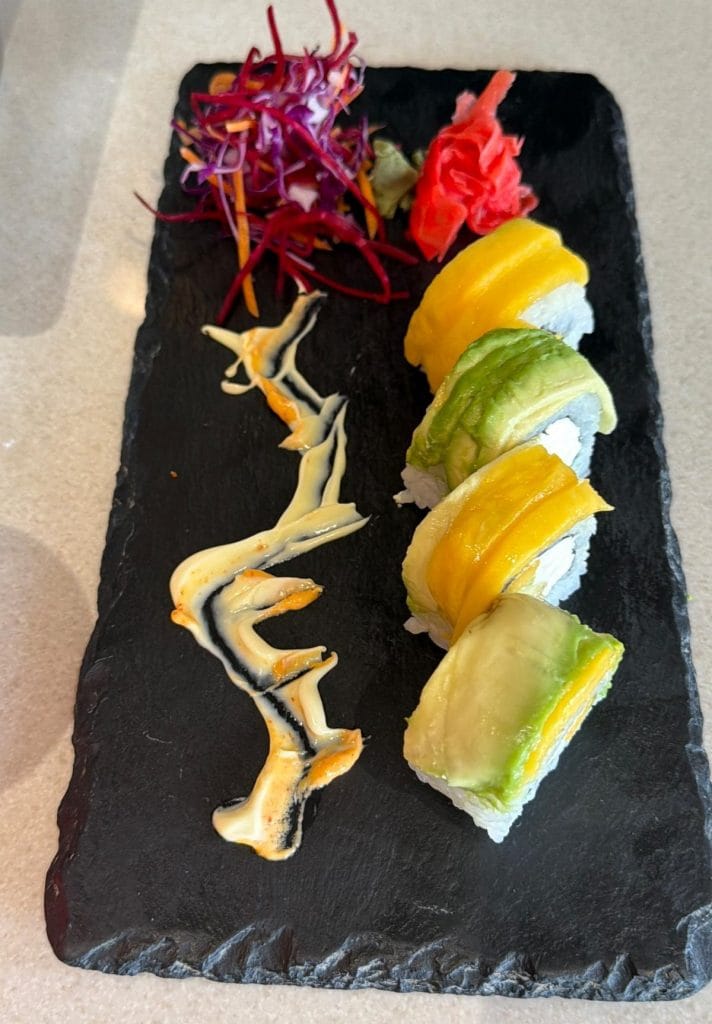
Serving raw fish in a 45-degree Celsius climate, far from any coastline, is a logistical miracle and also a metaphor for India’s economic ascent. Norwegian salmon arrives via Mumbai or Delhi suppliers and is stored in the restaurant’s cold kitchen with round-the-clock power backups. The restaurant’s success is made possible by India’s rapidly expanding cold-chain network, now estimated at USD 12.6 billion and growing in Tier-2 hubs such as Jabalpur.
According to Bhaskar, katsu curry and ramen ease first-timers into the menu before they graduate to maki rolls with raw fish. Gen Z grandchildren ferry their grandparents for their first bite of Japanese cuisine. The older initiates are walked through the ritual: gari (pickled ginger) to cleanse the palate, then soy sauce. Wasabi sometimes shocks the grandparents.
“Cameras eat first,” Bhaskar chuckled.
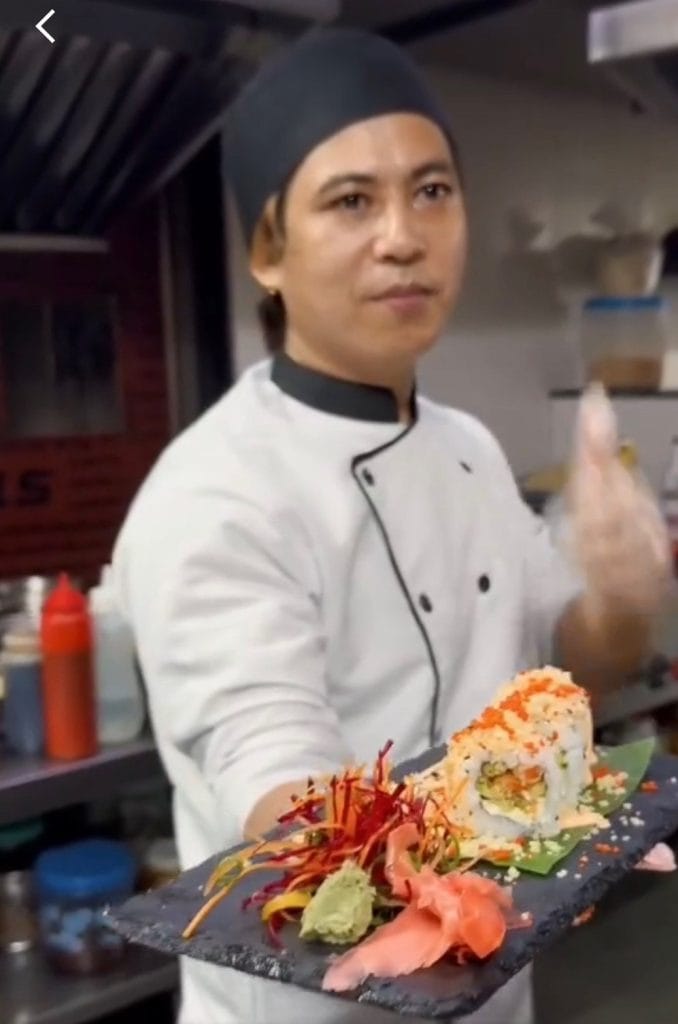
The person responsible for the food itself is Raj Kumar, the restaurant’s sous chef. He arrived in Bhaskar’s kitchen seven years ago as a helper, washing dishes. Today, armed with authentic Japanese knives, he rolls sushi rice with togarashi chilli mayo and plates of nigiri that Japanese expats in Delhi would happily tuck into. He earns above Rs 50,000 a month. In a skill-starved tier-2 town, Raj built his own opportunity at a prep station. Number 7 is not just feeding hinterland elites. It is feeding hinterland ambitions.
Bhaskar now has his eye on Bhopal, Raipur, and Indore for expansion of his brands.
“Tier-2 spots make sense,” he said. “Setup costs beat the metro madness, and cold storage and ingredient sourcing are now available at minimal cost.” The rise of sushi in the heartland is an infrastructure-enabled aspiration. It is also the birth of a new social currency.
The sushi shibboleth
Sushi’s journey as a class marker is not new. In 1980s New York, Wall Street yuppies used raw fish to signal Reaganomic swagger. Robert De Niro’s investment in Nobu Matsuhisa’s Tribeca outpost made it the era’s altar of aspirational dining. Today, a version of that playbook is pulsing through the air-conditioned dining rooms of provincial India.
For India’s newly affluent provincial population, a plate of maki is more than dinner. It is a class shibboleth — a highly photogenic way to signal distance from one’s local tribe and provincial past. Call it the Marie Kondo-ification of the Indian palate: a psychological departure from the maximalist, calorically dense abundance of the traditional thali toward the aesthetic restraint of a minimalist platter. The empty space on a sushi board is deliberate. The newly affluent are trading the loud opulence of litti for the quiet discipline of umami.
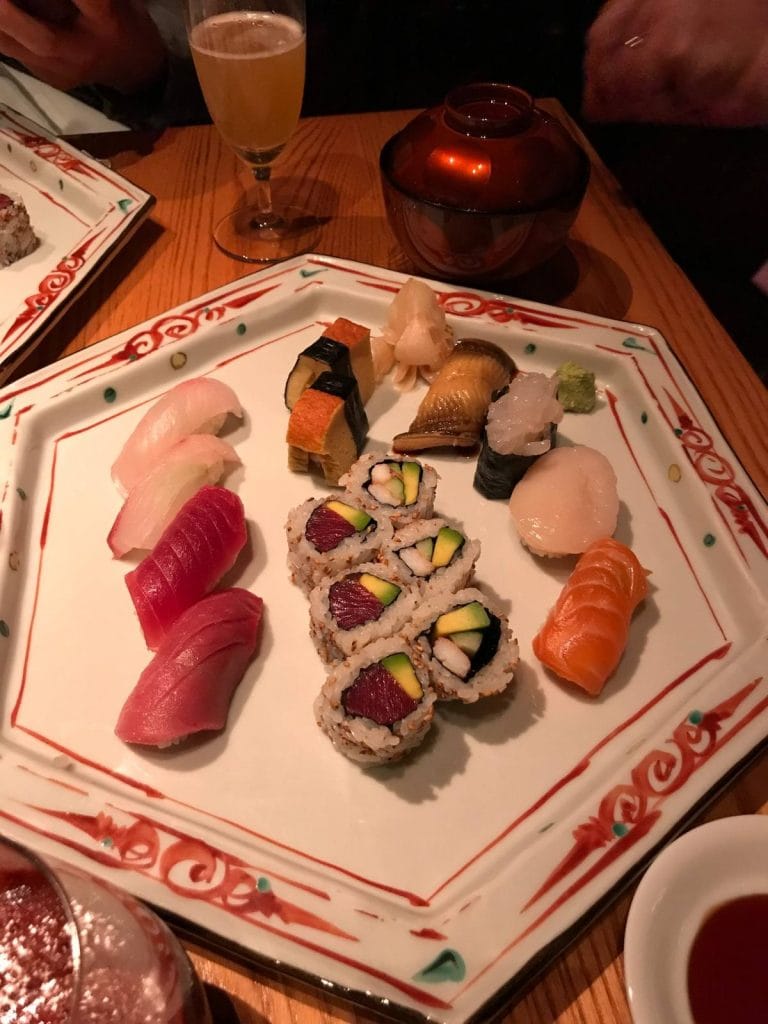
But the provincial elite who can afford a California roll don’t always know how to eat it. Sushi etiquette has become one of India’s new gatekeeping mechanisms — an invisible velvet rope separating established wealth from the new.
Consider two types of diners at the same sushi counter. The first ones arrive armed with Instagram Reels and YouTube tutorials. They fumble with a double-chopstick grip. They drown the nigiri in soy sauce before the fish has had a chance to speak. The experience is high-stakes, exotic, and anxious.
The second type of diners requires no tutorials. They are jet-setting veterans who’ve frequented Tokyo for board meetings. They grew up with Japanese expats and kept Nobu on speed dial. They are fluent in Japanese sophistication. They tap only the fish-side of the nigiri against the shoyu, applying wasabi with the faintest fingertip dab. There is a terrifying finesse to their dining, an effortless sense of belonging that simply cannot be replicated from a screen. If a clipped Stephanian English accent was India’s social filter of the last decade, the effortless handling of a bluefin tuna nigiri does that job today.
In Delhi, where industrial wealth is being replaced by service‑sector capital, the sushi counter is a miniature audition hall.
The soy-sauce swim
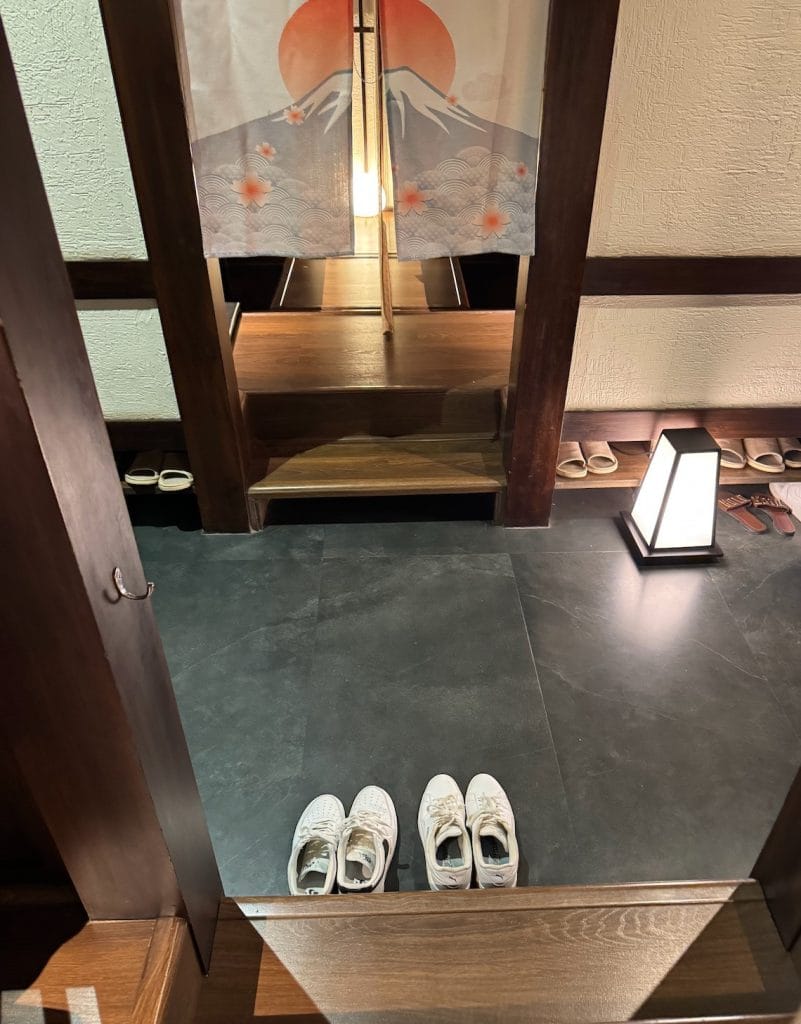
At Ebisu, a fine-dining Japanese restaurant in south Delhi, the experience begins before the first nigiri crosses the counter. Shoes come off at the entrance, and places are taken at the koagari platforms. The servers, several of them from northeast India, are fluent in the fine grammar of Japanese service. They glide between the tables while carrying stacked sake cups. Japanese expats perch at the highballs, murmuring in their own language, creating a bubble that makes you forget which country you are in.
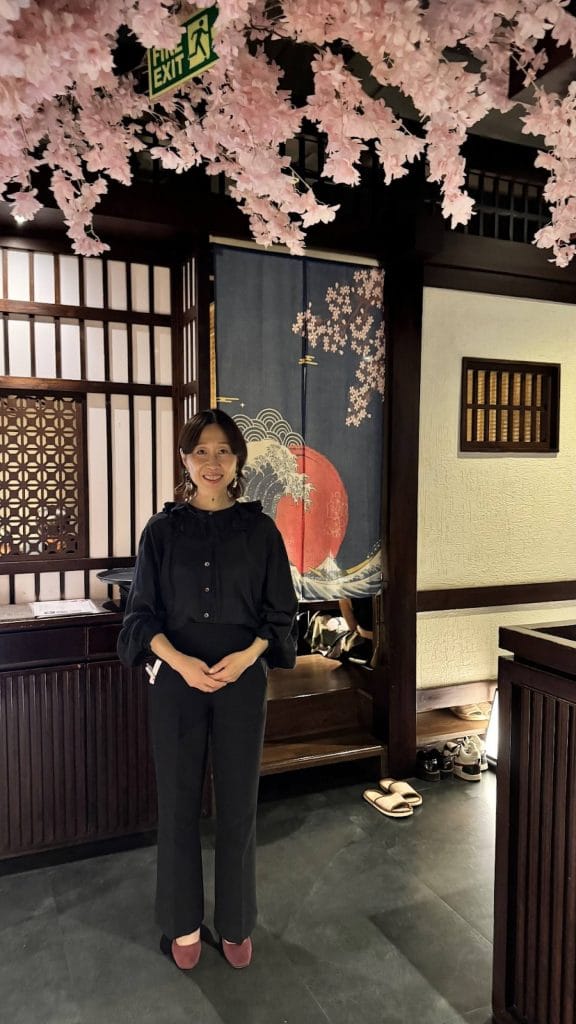
Chiharu Nakaoka, the restaurant’s project manager, has a phrase for the way many Indian diners eat nigiri— the “soy-sauce swim”. The chopsticks descend; the whole nigiri vanishes into the bowl of soy, swims for a moment, then resurfaces. The subtlety of the rice, the nuance of the fish, the delicate balance of flavour are all swallowed by the tide of soy.
But to dismiss this as a failure of etiquette is to miss the flex of culinary navigation at play. By demanding that their nigiri behave as loudly and unapologetically as any Indian appetiser, the diner is refusing the quiet submission of Zen minimalism. They are not getting sushi wrong. They are getting it Indian.
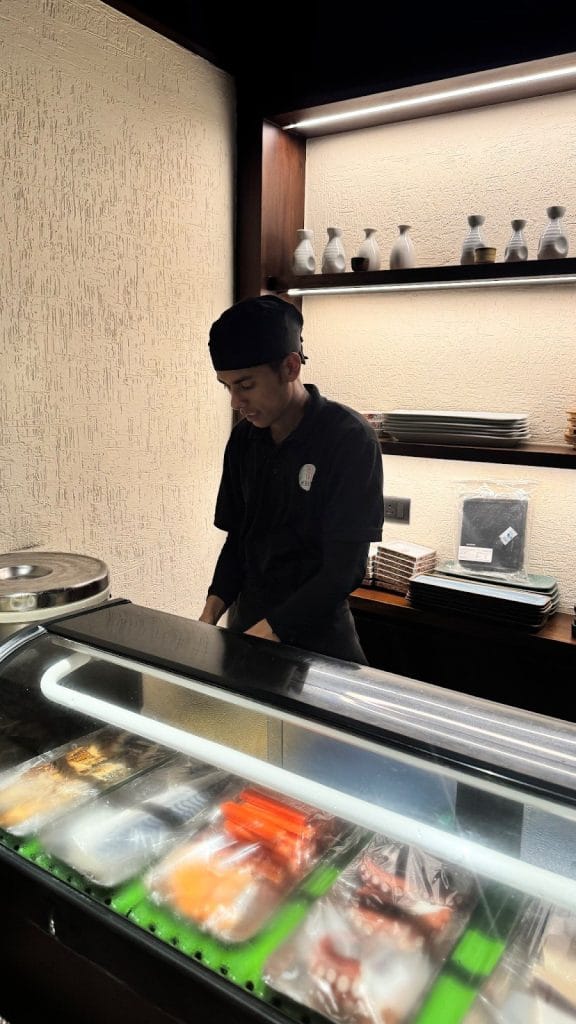
Behind the counter, the sushi is made by a chef from Uttarakhand. His creations are a hit among the Japanese expats at Ebisu, who find in them a taste of home. When asked whether he might one day open a sushi restaurant back in Uttarakhand, he replies, “Hopefully”, with a smile that conveys both ambition and humility.
As you step out, the staff gently turns your shoes, so the toes face the exit — the way they do in ryokans in Kyoto. Nakaoka calls this omotenashi: the Japanese art of anticipatory hospitality. Her shiawase (utmost joy) comes in the moments when she sees an Indian customer genuinely savour the taste of her native culture, not merely photograph it.
Also Read: Manipur to Ghaziabad — why Indians are drawn to K-pop
Refrigerated highways
The sushi at Ebisu and the sushi at Number 7 in Jabalpur mirror the same desire: a hunger for sophisticated global culture that is no longer merely the privilege of those born into it.
As the last plates are cleared at the Meerut wedding, the forgotten shami kebab and the empty sushi boats sit side by side as artefacts of two competing civilisational timelines. The kebab, anchored by its layered, slow-cooked richness, belongs to a feudal past of landed abundance. The half-eaten maki is imported, chilled, and presented like an art installation: the edible manifestation of a hyper-connected, logistically ruthless future.
India’s hinterland isn’t just hungry. It is hungry for the world.
Varun Sharma is a commentator and private equity professional from Tokyo. He explores the intersectionality of food, culture, class and economics. Views are personal.
(Edited by Asavari Singh)
Varun captures a fascinating evolution: India isn’t just “eating” sushi; it’s translating it. While the Edomae purist in me might flinch at a spicy mayo drizzle, the Indian in me is cheering. Varun’s piece highlights how Tier-II cities are stripping away the “elitist” baggage of raw fish, replacing it with local ambition and accessible flavors.
It’s a reminder that culture isn’t static. Whether it’s a high-end counter in Ginza or a cloud kitchen in heartland India, the spirit of the craft—the curiosity to try something new—is exactly the same. Varun’s story proves that the soul of a dish doesn’t just live in its origin, but in the joy of the people discovering it for the first time.
Varun Sharma’s exploration of this phenomenon captures a pivotal moment: sushi is no longer an “imported” luxury; it has been invited into the Indian heartland, adapted with respect, and served with a side of local flair. It is a testament to the fact that the Indian palate is no longer bound by geography, but fueled by an appetite for the world.
This article represents great experience and culture.Sushi is not only a food but combination of efforts and innovative thinking.#SushiShaadiSaree is key to the world of happiness.Really beautifully written by Varun Sharma.
This is brilliant. Maki rolls at a Meerut wedding, a dishwasher turned sushi chef in Jabalpur, cold chains as a metaphor for economic ascent — only Varun would connect these dots this way.
Fascinating read. This is exactly where India’s next wave of F&B growth is coming from. Tier 2/3 cities are no longer “emerging markets”—they are high-intent consumption hubs with lower costs and faster ROI for businesses.
Sushi in Meerut isn’t just a novelty—it’s proof that aspiration, affordability, and localisation can unlock entirely new demand curves.
A really engaging piece that shows how sushi in small-town India is more than just food—it reflects changing aspirations and lifestyles. I liked how it connects everyday dining to bigger shifts like infrastructure and cultural adaptation. Thoughtful and insightful read.
It is genuinely refreshing to see the culinary landscape of India evolve through the Varun Sharma’s lens. His exploration of “India’s Small Town Sushi Story” highlights a fascinating cultural shift where global flavors are no longer confined to metropolitan hubs. Absolutely incredible.
Very well done.
Loved this article. So simple, yet so impactful. The writing flows beautifully and keeps you hooked till the end. A perfect mix of insight and light humour-really enjoyed it.
Really enjoyed reading this.Loved how u kept it so simple yet said so much. The sushi-at-a-wedding scene was both funny and super relatable 😄 The way you connected it to changing tastes in tier-2 cities was very cool. Easy, fun, and made me think-such a fresh take.
would love to read more on such topics.
Really loved this piece! It’s sharp, layered, and genuinely fun to read. It almost reads like an ethnography of everyday globalization, but in such an accessible and engaging way.
I especially enjoyed your use of humor!! The small moments, like navigating wasabi or figuring out how to order, felt so real and made me laugh a lot. It shows the very human process of trying something new while still holding onto your own habits. The “auntie figuring it out” moments were especially spot on.
I’d honestly love to read more pieces like this—or even better, see it turned into a comic or a Netflix series!
Great article. It’s witty and the analysis is on point. Fruits of India’s economic success bear the challenges of inequality. Great effort.
Hilarious and incisive article. We all have been in that place of a Meerut aunty. I loved how he dissected nuance about class and sushi. Great one 🙂
Very well written…Enjoyed reading it
Great work Varun✨✨💫
Hope to see more soon
A wonderfully written article that captures both the essence of sushi and the spirit of small town growing food scene. Your observations and presentation make it a compelling read—truly appreciate the effort and creativity behind this.
Such a well-observed and engaging piece. I really enjoyed reading it.
Huge congratulations! So proud to see your work out there.
Absolutely incredible OPED and soo apt. Very valid points on Sushi culture in India . An eye opener for many.
Absolutely spectacular writing and great use of words