


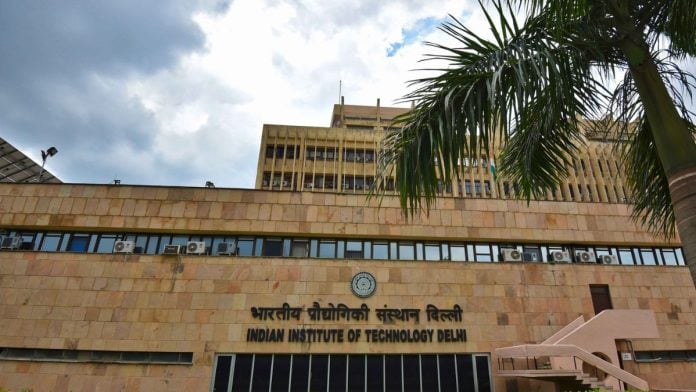
New Delhi: IIT Delhi has entered the global top 200 in the QS World University Rankings: Sustainability 2027, moving up 11 places to 194th from 205th last year. It is the highest ranked Indian institution in the latest edition, published on 17 November, which assesses more than 2,000 universities across 107 locations on their environmental and social impact.
IIT Kharagpur is the second highest ranked Indian institution at 224th, followed by the University of Delhi at 237th. IIT Bombay stands at 267th, while VIT Vellore is ranked 293rd.
Globally, Sweden’s Lund University has retained the top position for the second consecutive year. ETH Zurich has climbed to second place, while the University of Toronto, which topped the rankings in 2024 and 2025, has slipped to third.
The US has the largest representation in the rankings, with 214 universities, followed by mainland China with 149, the UK with 105 and India with 99.
Also read: Robert Pattinson once said he would make a ‘pretty bad’ James Bond. ‘Big shoes to fill’
The global top 100
The UK has the highest number of universities in the global top 100, with 30 institutions, including seven in the top 20. Australia has two universities in the global top 10: the University of New South Wales at fifth and the University of Melbourne at ninth. Melbourne also ranks first globally for social impact, while RMIT University leads the equality indicator.
The QS Sustainability Rankings assess how universities contribute to positive change for people and the planet. The evaluation is based on eight indicators divided into two broad categories: environmental sustainability and social impact.
Environmental sustainability measures include sustainable institutions, sustainable education and sustainable research. The social impact category covers equality, knowledge exchange, educational impact, employability and opportunities, and quality of life.
The rankings therefore look beyond universities’ environmental footprints to assess how they incorporate sustainability into teaching and research, promote equal opportunities, support student wellbeing and contribute to wider society.
Apart from Lund, ETH Zurich and Toronto, other universities in the global top 10 include the University of British Columbia, the University of New South Wales, Stanford University, the University of Cambridge, the University of California, Berkeley, and the University of Melbourne.
The top 10 has seen some changes since the 2026 edition. While Lund retained its position, Toronto, which was second last year, moved to third. UCL, the University of Edinburgh, the London School of Economics, Imperial College London, McGill University and the University of Manchester, which featured in last year’s top 10, have made way for new entrants.
ETH Zurich’s rise from 11th place last year to second in 2027 is among the biggest improvements at the top of the table.
In Asia, South Korea’s Seoul National University is the highest-ranked institution, at 41st globally. It is followed by the National University of Singapore at 67th and the University of Tokyo at 73rd.
Among Indian institutions, 38 per cent have improved their positions, placing the country among the strongest performers in Asia. IIT Delhi’s latest performance marks an improvement over its 205th position in 2026. The institute was also the country’s highest-ranked university in the 2025 edition, when it stood at 171st globally.
Among other Indian institutions, IIT Bombay has slipped from 235th to 267th, while IIT Kharagpur has improved from 236th to 224th. The University of Delhi has also moved up from 241st to 237th. IIT Madras, which was ranked 305th last year, does not feature among the five highest-ranked Indian institutions in the 2027 edition.
(Edited by Janaki Pande)