



New Delhi: The earliest evidence of habitual drug use among humans has come from Indonesia, Science Sphere reported. Published in Science Advances, the study noted evidence of psychoactive substances in skeletal teeth.
The researchers from Griffith University, Australia, said that the teeth belonged to two preagricultural foragers from Sulawesi, Indonesia. While one of them lived 25,000 to 16,000 years ago, the other lived 7,600 to 6,300 years ago.
Both sets of teeth showed irregular dental wear patterns, with deep, rounded tooth grooves, which researchers claim to be caused by regularly sucking whole betel nuts.
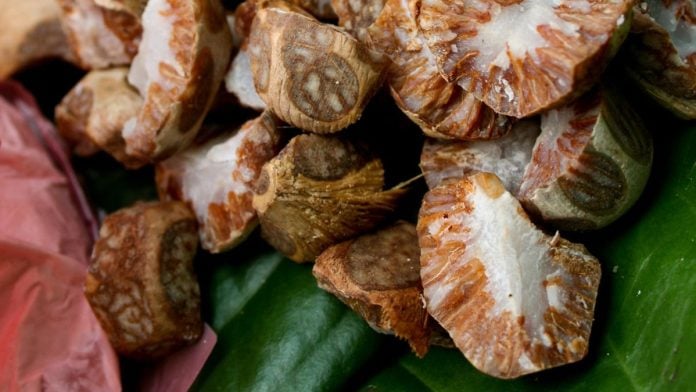
Betel nuts, the seeds of the areca palm, give rise to a sense of mild euphoria and heightened awareness when consumed. They contain arecoline, a neuroactive compound with pain-relieving properties.
Researchers also found biomolecular evidence in the teeth consistent with this form of betel nut use.
Professor Adam Brumm, who led the research, told the BBC, “Although poorly known in Western societies, it is the world’s fourth most widely used psychoactive substance, after alcohol, caffeine and nicotine.”
The study proposes that foragers most likely sucked on whole betel nuts to relieve toothache, which caused further dental damage, giving rise to a painful cycle of dependence on the substance.
Also read: India’s top sudoku solvers rev up for world tournament — IIM student, analyst, NTPC staffer
Misconceptions surrounding ancient drug use
Until now, it was believed that drug use began with the advent of farming, beginning with fermented alcohol drinks about 13,000 years ago. However, Brumm contends that the theory “fails to account for the possibility that very ancient drug-taking lies at the roots of our most commonly used psychoactive substances.”
“By identifying the ancient practice underlying betel-nut chewing as we know it, the study implies that some modern drug-taking behaviours are deeply rooted in forager traditions,” he said.
In the modern era, the drug is widely consumed in South Asia. Here, the processed seed of the betel nut is mixed with slaked lime and other ingredients to form a “quid,” which is then chewed. According to research, simply soaking betel nuts in saliva releases enough of the psychoactive compounds to alter brain functions.
However, the research does not prove ancient people were using drugs in the modern way. It simply shows that humans were consuming mind-altering substances long before agriculture.
(Edited by Ratan Priya)