





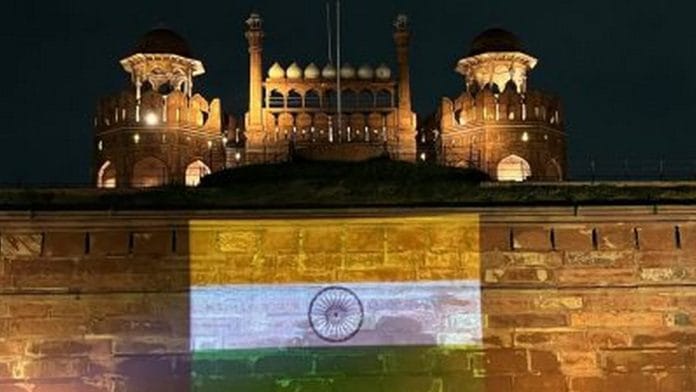


New Delhi: The transformation of Red Fort’s colonial-era barracks into a museum complex has prompted a parliamentary panel to recommend that the Ministry of Culture replicate the curation model at other heritage sites across the country.
“The Committee notes with appreciation the curation of the Red Fort complex and recommends that the Ministry document this model and examine the feasibility of replicating it at other major heritage sites,” reads the 23 March report of the Parliamentary Standing Committee on Transport, Tourism and Culture.
The Ministry of Culture informed the committee, led by Rajya Sabha MP Sanjay Jha, about the curation of the Red Fort complex with new museums and galleries.
“The Ministry stated that all barracks are now curated and the complex functions as a cultural hub,” reads the report.
The Red Fort in Delhi is a centrally protected monument under Archaeological Survey of India (ASI). The conversion of British-era barracks into a museum complex began around 2018, as part of a larger restoration effort linked to the Monument Mitra project launched in 2017. ASI had first announced a decision to renovate the Red Fort and bring it to its “former glory” in 2014.
Also Read: ASI moves 70% of antiquities from Purana Qila to Red Fort. ‘They will no longer gather dust’
Red Fort model
A 17th-century Mughal building and UNESCO World Heritage site, the Red Fort has undergone an overhaul over the last decade.
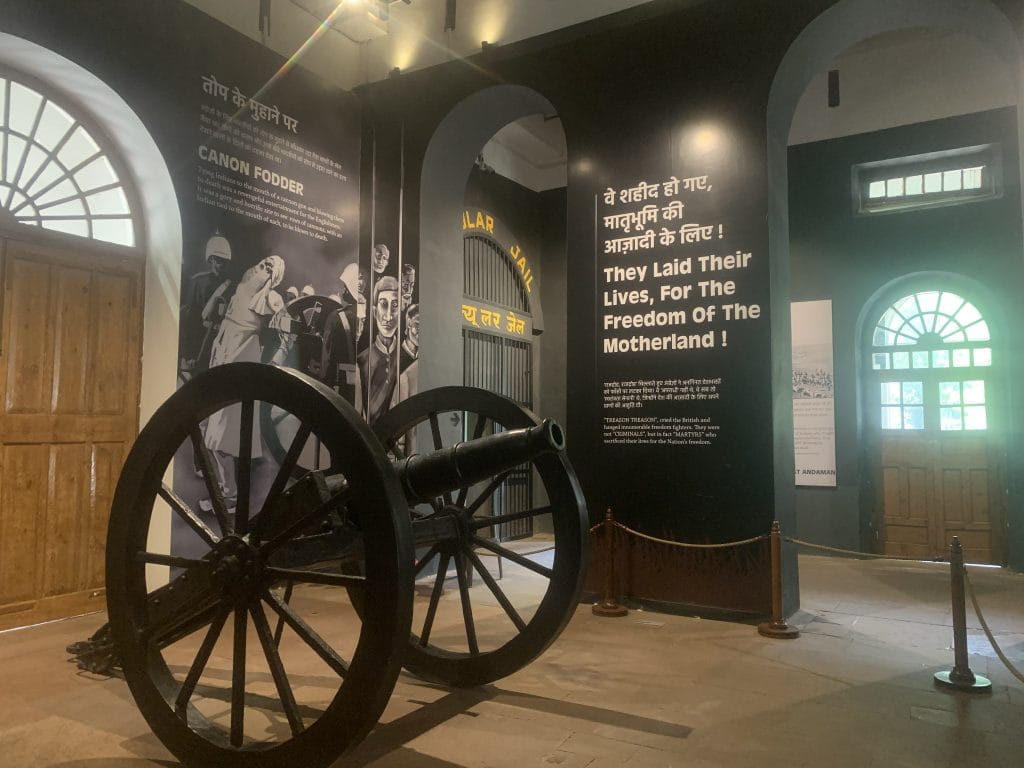
The barracks at the complex have been converted into a museum complex known as Kranti Mandir, dedicated to India’s freedom struggle. The effort, led by ASI, features exhibits on the 1857 revolt, the Indian National Army (INA), Drishyakala (a painting gallery) and Yaad-e-Jallian (focused on the 1919 Jallianwala Bagh massacre).
The British built the eight double-storey barracks at the complex to accommodate officers after occupying the fort post 1857. The restoration of these 19th century structures utilised traditional materials such as lime surkhi and red sandstone to maintain historical consistency.
The four museums were inaugurated in 2019, including one on Subhash Chandra Bose. Bose’s nephew Chandra Kumar Bose presented Netaji’s cap to Modi during the inauguration; it is on display at the museum.
Barrack B1 is dedicated to the 1857 war of independence, B2 showcases exhibits related to the Jallianwala Bagh massacre as well as the sacrifices made by Indian soldiers during World War I, B3 covers Netaji and the INA movement, and B4, called Drishyakala, is a collaboration between ASI and Delhi Art Gallery housing artwork from the 16th century to India’s independence.
In 2024, Prime Minister Narendra Modi inaugurated Parakram Diwas — an annual celebration of Netaji Subhas Chandra Bose’s birth anniversary — at the Red Fort, a nine-day event featuring VR exhibitions, archival displays chronicling the Azad Hind Fauj, and various workshops.
ASI has also started moving a large portion of its Central Antiquity Collection (CAC), a repository of around 3 lakh antiquities, to the Red Fort complex.
In 2026, Air India’s art collection found a permanent home at the complex. After the airline was privatised in 2022, the National Gallery of Modern Art (NGMA) was put in charge of the Maharaja Collection, a repository of nearly 9,000 works.
(Edited by Asavari Singh)