





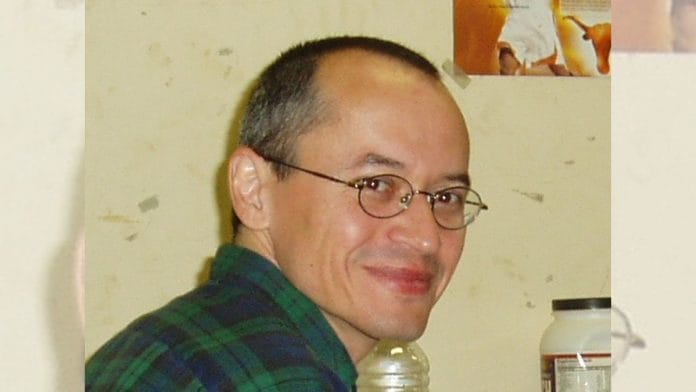


New Delhi: Two weeks after his book The Once and Future Riot was pulled in India by Penguin Random House, Maltese-American cartoonist and journalist Joe Sacco addressed speculation surrounding the book’s future prospects. He refuted claims of bidding wars among other publishers, adding he intends the work documenting the 2013 Muzaffarnagar riots to be affordable for the general Indian audience.
“The goal is to get the book into the hands of Indian readers so they can judge it for themselves. We will try to keep the price down to make it as accessible as possible,” Sacco told ThePrint in an email response.
He also provided clarity on the editorial demands that contributed to the split with the publisher.
“I was told to remove a conclusion I made that Hindu nationalistic priorities are on the ascendant, that Hindu nationalism is ‘firing on all cylinders’ as I put it. The publisher considered this statement as ‘inflammatory’ and likely to create ‘religious offence,” Sacco said.
The Indian edition has been facing hurdles with publication. Penguin Random House India decided against distributing the title, citing an inaccurate map of India and other unspecified “red flags“. The book, which had been globally released in October 2025, was initially set to be released in India by August-September 2026.
The author stood firm in his refusal.
“I don’t think that even a Hindu nationalist would disagree that the Hindu nationalist agenda is being advanced in India,” he added. “Yes, I refused to make the change. The conclusion I made was based on my own reporting and observations, and I stand by them.”
Through Sacco’s distinctive graphic comic journalism style, The Once and Future Riot examines how the seemingly minor local conflict escalated into a deadly communal riot, resulting in widespread violence and death, and what the event reveals about the mechanics of political conflict, polarisation, and the fragility of democracy in India.
‘Need to examine society’
Sacco has expressed frustration with what he sees as excessive demands, especially after rigorous fact-checking by the book’s US publisher, Metropolitan Books. According to earlier reports, the list of requested changes extended beyond the map to several passages, raising concerns about self-censorship in the industry.
Despite the challenges with publication and distribution in India, Sacco views the book’s core message as vitally important for a global audience at this moment.
“The use of violence within the framework of electoral politics is one of the themes of the book,” he said. “In India you can see this playing out in relief. But it has also become an issue in the United States and parts of Western Europe, where the democratic spirit, always under threat, is waning. I think the book’s core message is that we need to examine how our societies have changed and decide whether we want to aspire to democracy or not.”
This perspective aligns with Sacco’s body of work, which consistently warns against the dangers of unchecked polarisation and the manipulation of fear for political gain. In The Once and Future Riot, too, he illustrates how ordinary people who once peacefully coexisted can be drawn into cycles of violence. Survivors’ accounts in the book reveal the long-term scars of such riots, detailing stories of lost homes, shattered livelihoods, and the lingering trauma of being in relief camps years after the events.
As efforts continue to secure an Indian publisher, Sacco remains committed to making the book accessible. The book’s title itself serves as both a reflection on past events and a cautionary note for the future. By focusing on a relatively “small-scale” outbreak of violence compared to historical precedents like the 1947 Partition or the 2002 Gujarat riots, Sacco argues that such incidents contain universal lessons about crowd dynamics, myth-making, and the erosion of pluralistic societies.
On the ground in Muzaffarnagar
In 2014, about a year after the Muzaffarnagar riots, Sacco traveled to the region in western Uttar Pradesh. The violence in the region erupted in late August and continued until September 2013. The riots were triggered by an incident in Kawal village involving the alleged harassment of a Hindu Jat girl by Muslim youths, followed by retaliatory killings. What began as a localised dispute quickly spiraled into widespread clashes between Hindu Jat and Muslim communities. Official figures report at least 62 deaths — 42 Muslims and 20 Hindus — hundreds of injuries, and over 50,000 to 60,000 people displaced. Many of the displaced sought shelter in relief camps. The riots occurred against a backdrop of rising political tensions ahead of the 2014 general elections.
Sacco interviewed survivors from both communities, village leaders, government officials, and political figures. His field report delves into how rumors, political mobilisation, and historical grievances fueled the communal violence.
In The Once and Future Riot, Sacco portrays how communal fault lines are often exploited for political gains. It examines the 2013 riot as a broader archetype of political violence, rather than as an isolated event. The book, already published in the West, spans roughly 144 pages of detailed graphic reportage, and connects the Muzaffarnagar events to broader patterns seen in India’s history, from Partition to later instances of communal unrest.
Also read: An 11-year-old’s murder has France in revolt. Why anger is boiling over
Human cost of conflict
Sacco, widely regarded as a pioneer of comics journalism, has built his career documenting the human cost of conflict through on-the-ground reporting.
Sacco is known for landmark works such as Palestine (1996), an exploration of the daily lives of people under occupation drawn from his experiences in the West Bank and the Gaza Strip, and Safe Area Goražde (2000), a journalistic comic book based on his conversations with Bosniaks trapped within Goražde’s enclave.
His work combines stark black-and-white illustrations with verbatim interviews and personal narration. It places the reader directly into the scene, highlighting the event while also discussing the subjective process of uncovering truth amid competing narratives.
Other notable books include Footnotes in Gaza and Paying the Land, each demonstrating his commitment to long-form, immersive storytelling that humanises complex geopolitical issues. His work involves long-term research, requiring close proximal engagement with his subjects, spanning across months and years.
(Edited by Aamaan Alam Khan)