





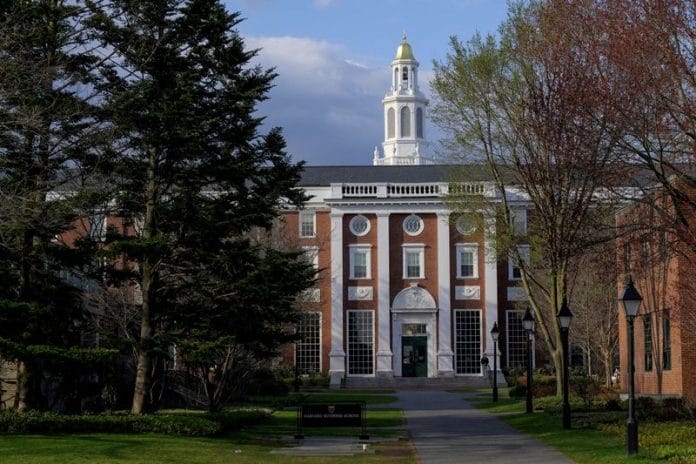

New Delhi: Harvard Business School has introduced AI clones of its professors for a new entrepreneurship bootcamp called H.B.S. Foundry, priced at $699 (Rs 67,000). The eight-week online program guides aspiring founders to practice pitches and receive feedback without speaking to the real professors.
The bootcamp will guide participants through building a startup, from refining an idea to pitching it to the appropriate investors and customers. It combines Harvard Business School content with AI agents trained on faculty expertise, peer communities, and simulated video calls for pitches, sales meetings, and board sessions.
One avatar represents Jeff Bussgang, co-founder of Flybridge Capital and a senior lecturer at the school.
In a reporting experiment by Sarah Kessler for the New York Times, she pitched an “Uber for bananas” concept to Bussgang’s AI avatar. The digital version offered a calm, polite but unmoved response, complete with subtle, slightly repetitive shoulder movements. The real Bussgang later told Kessler that he finds the simulation “a little creepy” but noted that his students love it.
Harvard has tested Foundry with more than 100 universities across 50 states. The program aims to extend the school’s reach far beyond the roughly 900 MBA students it admits each year. Experienced founders, investors, and faculty lead weekly live sessions, while the online platform provides always-available AI resources.
Tough AI agents
The project began in 2024 with plans for a simple ChatGPT-style advisor, Katharina Rings, Foundry’s project director, told the New York Times. After an October trial, feedback pushed the team toward a more structured experience, which was launched in April.
AI agents are deliberately trained to be tough rather than overly agreeable, unlike their counterparts, so that few startup ideas receive immediate approval, according to Tom Eisenmann, a faculty co-chair.
“We literally would have somebody spend 10 hours with the thing, just sort of trying and trying,” he said.
Avatars were created with HeyGen. Adding a professor’s photo to a chatbot already boosted engagement while video versions further increased user preference and trust, Rings said. Participants often access the program through university entrepreneurship centers. About 45 percent of summer participants paid individually; the rest were sponsored. Roughly 760 founders in those sessions discovered Foundry via their schools.
Harold Solomon, a principal at Georgia Tech’s Quadrant-i program, said the tool helps institutions serve more founders than human bandwidth allows. He integrated it into a 12-week workshop for Ph.D. students and faculty. Users including Pranav Sultania, a Boston University mechanical engineering Ph.D. candidate developing Magnesis Robotics, and Dragana Savic, founder of INIA Biosciences, praised the always-on availability and realistic practice sessions.
Eisenmann noted that peer forums remain one of the most popular features.
“They love the AI. They’re using the AI, they’re learning a lot,” he said. “But it keeps coming back to humanity.”
(Edited by Stela Dey)