



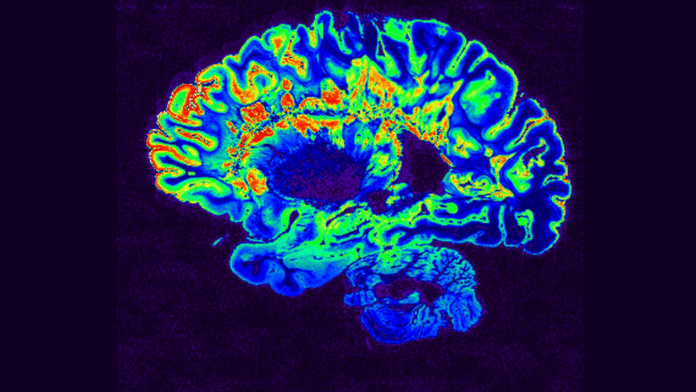
New Delhi: Scientists are uncovering new evidence that air pollution may affect the brain in ways that go beyond its established effects on the lungs and cardiovascular system, The Washington Post reported.
Research suggests that prolonged exposure to fine particulate matter, known as PM2.5, may be associated with changes in brain structure and inflammation, as well as an increased risk of neurological conditions such as dementia, Alzheimer’s disease and Parkinson’s disease.
In one study, researchers from the Rush Alzheimer’s Disease Center examined brain tissue from 11 people aged between 80 and 91 and identified foreign particles, including microplastics, silica, metals and soot.
Some were found in the amygdala, a region of the brain associated with emotion and memory.
The findings raise questions about how environmental pollutants travel through the body and enter brain tissue, challenging the assumption that the brain is largely protected from airborne contaminants.
What studies say about pollution and dementia
Large population studies have found associations between long-term exposure to PM2.5 and an increased risk of dementia.
One study, published in the Journal of Nutrition, Health & Aging, tracked more than 400,000 people for nearly 14 years and found that those with the highest exposure had a 14 per cent higher risk of developing dementia than those with the lowest exposure.
Another study, published in Environmental Pollution and involving nearly 270,000 people, linked higher pollution exposure to changes in brain volume, including alterations in the hippocampus, which plays a central role in learning and memory.
However, these findings do not establish that air pollution directly causes dementia or changes in brain structure. Measuring individual exposure over long periods also remains challenging.
Different pollutants may affect the brain differently
Experiments involving mice suggest that the composition of air pollution may be as important as the amount inhaled. Researchers compared the effects of diesel exhaust, dust collected from the World Trade Center site, and wood smoke.
The first two pollutants altered more than 1,200 of the same genes, including genes involved in inflammation, cellular damage, and the processing of amyloid, a protein associated with Alzheimer’s disease. Wood smoke, in contrast, did not produce the same effects.
These findings suggest that different types of airborne particles may affect biological processes in different ways.
Also Reaction: 9 out of 10 Indians were exposed to toxic air in 2026
Possible links to Parkinson’s and Lewy body dementia
Researchers are also investigating whether air pollution contributes to Lewy body dementia, a group of conditions that includes dementia with Lewy bodies and Parkinson’s disease dementia.
An analysis of hospital records covering 56.5 million Americans found that people living in areas with higher PM2.5 levels were more likely to be hospitalised with these conditions.
Experiments in mice offered further clues. Animals exposed to pollution developed abnormal accumulations of alpha-synuclein, a protein associated with Lewy bodies.
They also showed brain shrinkage, nerve-cell death and cognitive decline.
Mice lacking the protein experienced substantially less damage, suggesting that abnormal protein accumulation could be one mechanism through which pollution affects the brain.
Reducing exposure and understanding the risks
Xiaobo Mao, a professor of neurology at Johns Hopkins University, says reducing exposure to airborne pollutants could be a useful precaution.
The broader challenge is to determine which pollutants pose the greatest risks, how exposure at different stages of life affects neurological health, and whether cleaner air can prevent or delay cognitive decline.
(Edited by Maryam Hassan)