



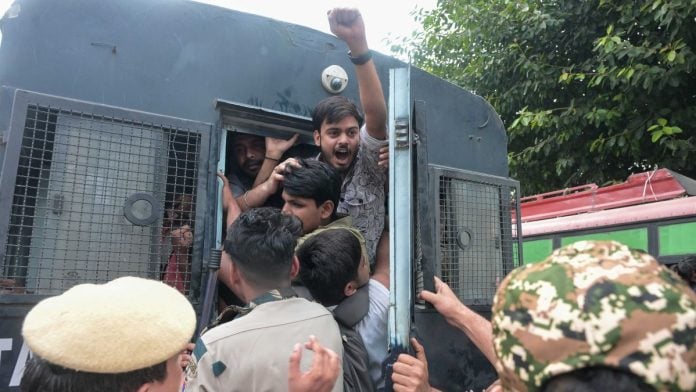
New Delhi: For six hours Saturday, Soutrik Goswami was driven around New Delhi in a police bus — from Safdarjung to the Haryana border, then Badarpur, Okhla and Chhattarpur. The police kept rerouting, but never took him to a ‘proper’ detention centre. The bus, Goswami claimed, became one.
“It was a merry-go-round. I could hear police conversations where they were confused about where to finally take me,” he told ThePrint.
Goswami was among more than 3,500 protesters detained across New Delhi after they tried to march to Jantar Mantar. The Cockroach Janta Party (CJP) had called for a protest demanding the resignation of Chief Election Commissioner Gyanesh Kumar over alleged irregularities in Special Intensive Revision (SIR).
The police crackdown began even before many protesters could reach central Delhi. CJP founder Abhijeet Dipke and national spokespersons Saurav Das and Ashutosh Ranka were detained aboard at New Delhi’s Indira Gandhi International Airport, while other protesters, opposition leaders including Mamata Banerjee and Pinarayi Vijayan, and YouTuber Dhruv Rathee were also detained.
More than 3,500 people were picked up across the capital. Yet, there was no single detention centre — protesters were moved between police stations, buses, stadiums and locations outside Delhi, with many held for hours before being released.
As police restricted access to Jantar Mantar and surrounding areas, protesters arriving from different parts of the capital were stopped, picked up and taken to different police stations, stadiums and other locations.
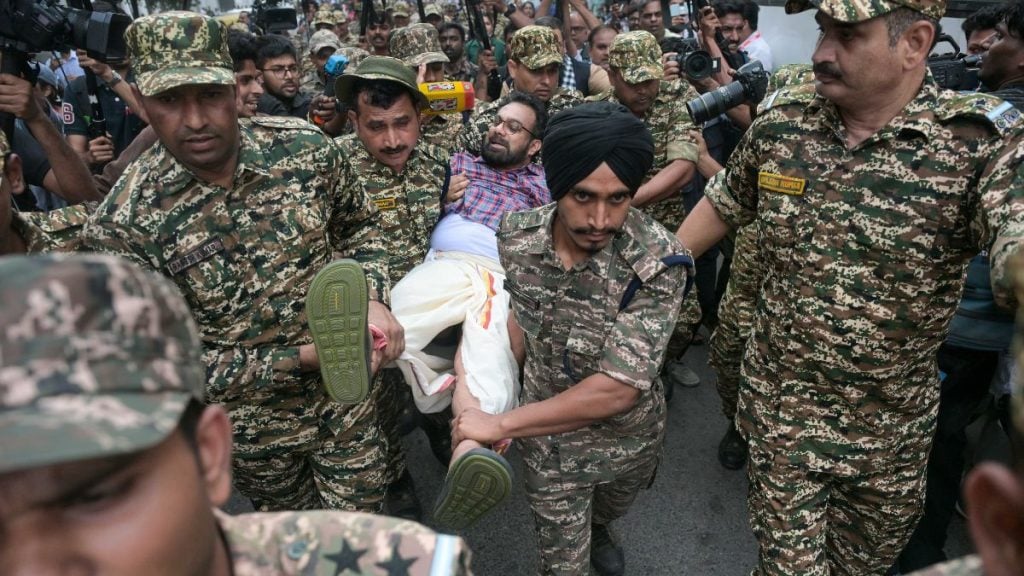
For Goswami, the crackdown played out inside a moving bus.
He was detained along with AISA President Neha Bora and others at Dilli Haat around 3 pm. The 29-year-old said he spent hours in the bus as it moved around the city, with police picking up more detainees along the way.
“I was alone, then there were 20 people in the next hour,” he claimed.
The bus was first taken toward Maidan Garhi Police Station, Asola, before heading toward the Haryana border. Goswami alleged he heard police personnel discussing where to take the detainees next.
“I heard police talking on the phone, where he was asked to take us to Badarpur Police Station,” he said.
But that destination changed again.
“I heard again we were taken to Okhla, but before we could reach there the destination changed to Chhattarpur,” he said.
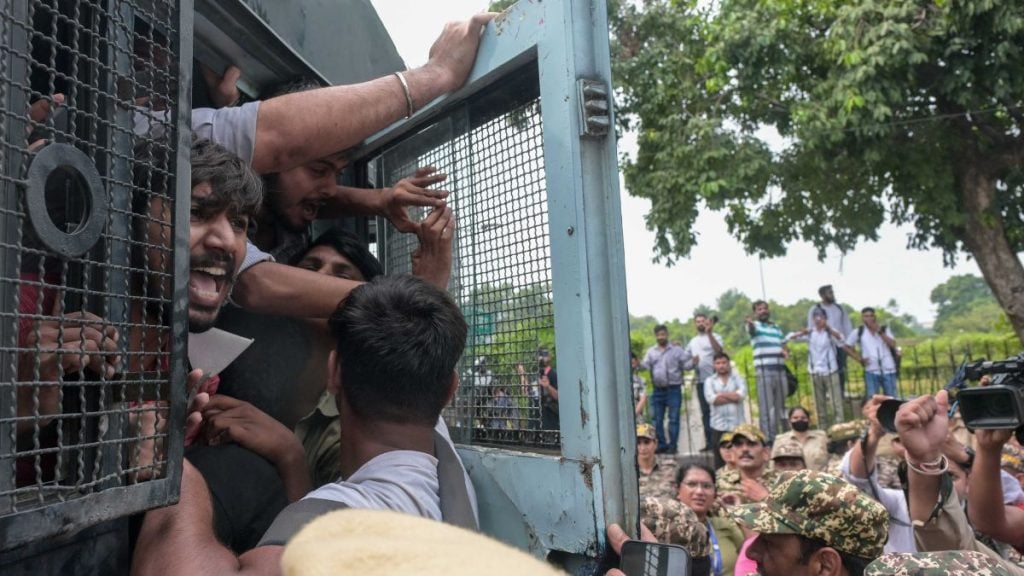
Goswami was finally dropped at an unspecified location in South Delhi’s Chhattarpur around 7 pm, where he alleged that a group of men belonging to Hindu organisations confronted the detainees.
“A few men from Hindu groups came to attack us; when I went to stop them, they pushed me,” he alleged. “The police watched all of this from afar.”
The 29-year-old managed to escape, took a DTC bus to the nearest Metro station and reached home around 8 pm.
Protesters detained at different points in the national capital reveal how police intercepted demonstrators, moved them between locations and kept them in detention for hours, often without an explanation of where they were being taken.
Meanwhile, tensions flared as protesters struggled to reach the site amid three-layered barricades.
Jawaharlal Nehru University professor Nivedita Menon was among those gathered near the barricades. Describing the heavy security deployment in New Delhi as a siege, she said the state’s response to the protesters reflected fear of the people.
“This is a war against people. This is a terrified state waging war against people. If you are reduced to doing this, we have already won,” she said.
‘An unsafe area for women’
While Goswami spent hours inside a moving bus, Ritu Aswal and two other protesters were taken to a stadium in a secluded area.
Aswal, who is associated with the All India Democratic Youth Organisation, had been assembling with other protesters at different gates of Bangla Sahib Gurudwara. She was at gate number 3, speaking to the press, when police dragged her and others away.
“When we reached the stadium, it already had more than 200 people sitting,” she told ThePrint.
The detainees were not informed where they were being taken. Aswal said the stadium was in a secluded area and factory workers there warned them that it was unsafe for women.
After hours of protest and demands for their release, Aswal was taken to Mundka police station. She was released around 5.30 pm after lawyers arrived.
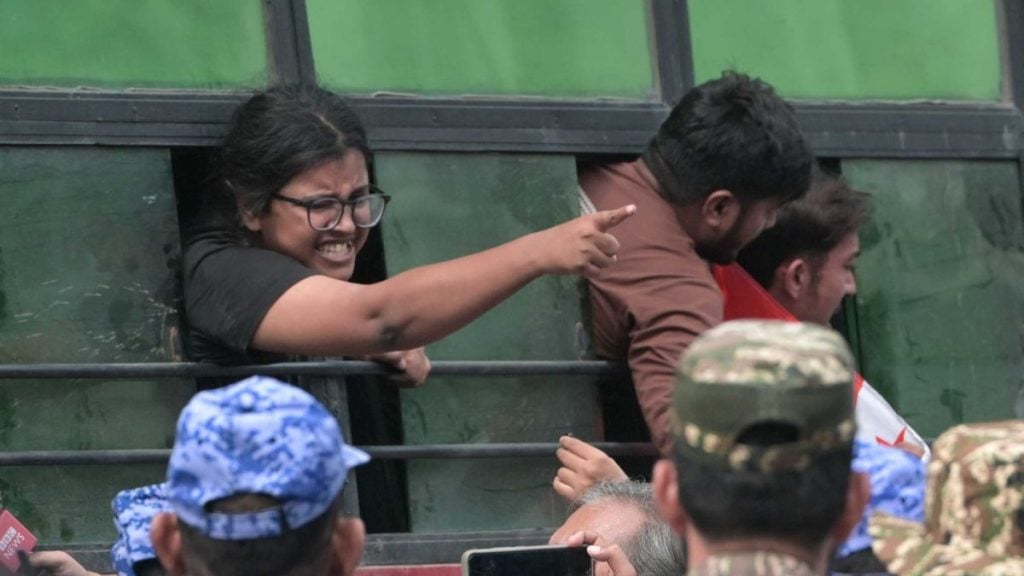
Before being released, Aswal alleged police recorded their Aadhaar details, addresses and phone numbers.
“For hours we were asking for water. We were not provided that, but they got a photographer to click our photos and show videos,” she alleged.
The 46-year-old Dwarka resident had joined the protest to show solidarity with the CJP. While she was at the stadium, she claimed she saw Delhi Police vehicles making repeated rounds carrying detainees.
“Many booked cabs to return. I called my husband to pick me up from the police station,” she said.
Also read: AI maps, long walks to Jantar Mantar—3-layered barricades block CJP protesters
‘We were made to sign a blank paper’
The movement of protesters across the capital followed similar routes in other parts of New Delhi.
Shreya, an activist with the All India Democratic Students’ Organisation, told ThePrint that protesters from different organisations left the North Campus area in groups Saturday.
She was part of one such group of around 20 people. The protesters, she said, deliberately stood some distance apart from each other.
They took a bus towards Shivaji Stadium, but road closures meant they were dropped near Zakir Hussain College instead.
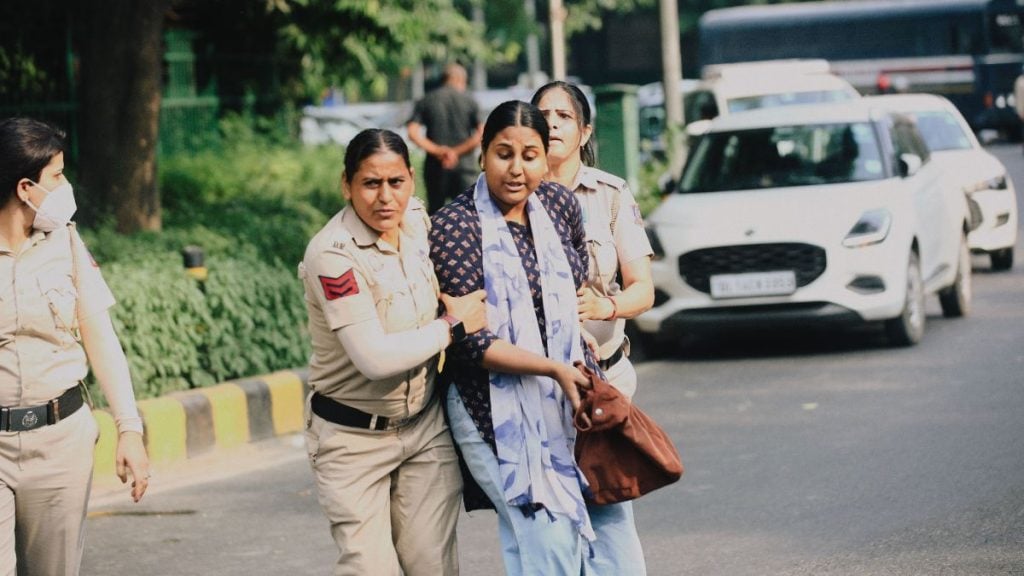
From there, the group began walking toward central Delhi, carrying placards.
They had walked around 150 metres when police personnel arrived and detained them, Shreya claimed.
The protesters were put on a bus and taken to Morris Nagar Police Station. After waiting there for hours, they were taken to Sarai Rohilla.
They were released around 7 pm.
But before leaving, Shreya alleged, police asked the protesters to sign a blank sheet of paper and noted down their personal details.
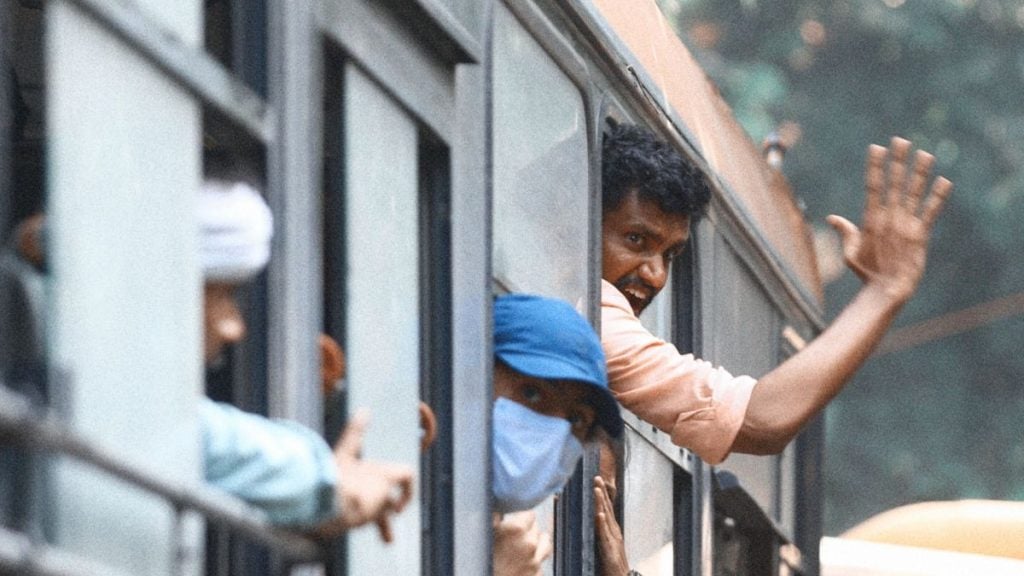
Shreya and the others initially refused to sign the blank paper. According to her, police told them that the signatures were required to ensure that they would be released.
“Our bodies have black and blue marks. It happened while we were in the so-called detention. Our videos were taken while we were leaving the police station,” Shreya alleged, adding that protesters from different groups were taken to several locations across and outside New Delhi, including Gurugram and Nangloi.
The accounts of Goswami, Aswal and Shreya describe different routes through the city but a similar pattern: protesters were intercepted while trying to reach the demonstration, transported away from central Delhi and, in several cases, kept for hours before being released.
Meanwhile, members of the Students’ Federation of India (SFI) were among those caught up in the police action.
Several SFI protesters detained from central Delhi were taken away, while others were kept at HKS Surjeet Bhawan, according to accounts shared with ThePrint. Many were taken to Nangloi stadium, where detainees staged a protest.
Also read: Delhi Police drags, detains protesters at Bangla Sahib Gurudwara. Many took shelter overnight
‘No FIR registered’
According to a senior police officer, detentions were preventive measures based on intelligence inputs suggesting that protesters could create law-and-order problems.
No FIR had been registered against CJP leaders or volunteers that would warrant their arrest, police sources said, adding that those picked up were placed under preventive detention.
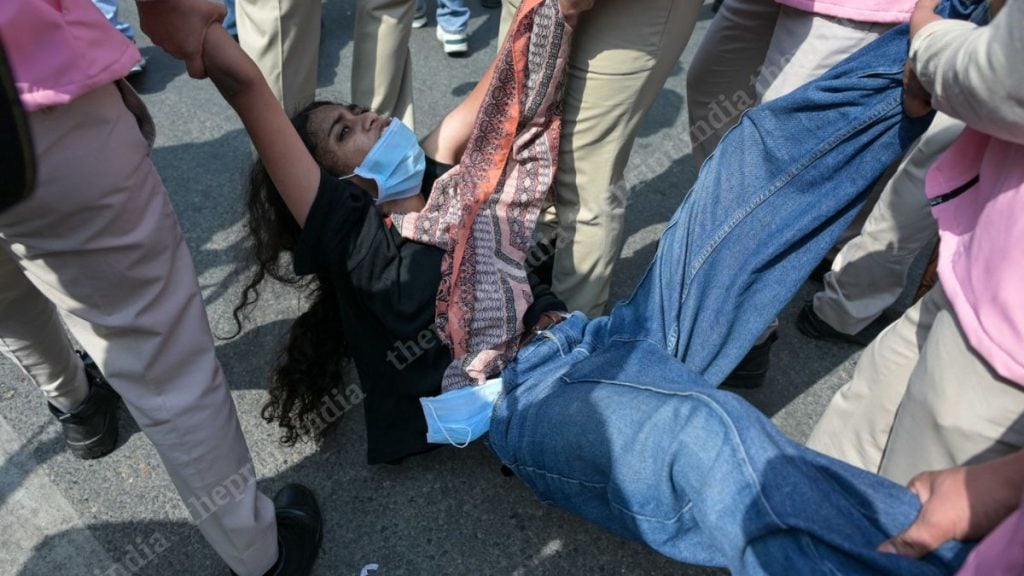
Meanwhile, the police had denied permission for the CJP protest at Jantar Mantar, citing the short notice given by the organisers and alleged violations of directions during an earlier protest.
The police also cited the party’s failure to follow lawful directions and undertakings during an earlier protest at Jantar Mantar, along with concerns over public safety, traffic management and the prevailing law-and-order situation.
“Section 163 (prohibitory orders) of the Bharatiya Nagarik Suraksha Sanhita (BNSS), which empowers authorities to issue orders to prevent potential disturbances, has been imposed in New Delhi district,” Joint Commissioner of Police for the New Delhi range, Nupur Prasad, had said.
(Edited by Saptak Datta)