







New Delhi: For nearly a decade, Bollywood seemed determined to grow up. The loud men who mistook strangers for gangsters, the bumbling con artists chasing lottery tickets, the tenants, the crooks, and the fools trapped in impossible situations slowly gave way to a more restrained humour. The laughs moved from flying slippers and mistaken identities to awkward silences, deadpan exchanges and relatable middle-class anxieties. Slapstick comedy, once Bollywood’s most reliable crowd-pleaser, started to lose ground.
But the art of chaos, it turns out, never really left.
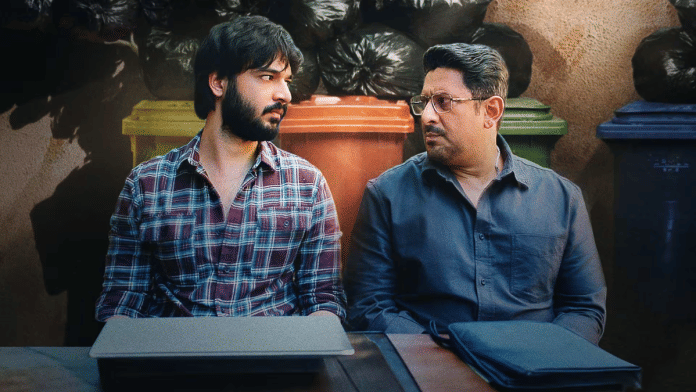
With Rajkumar Hirani returning to broad comedy with Pritam Pedro, a series about two mismatched cops stumbling through bizarre investigations, Bollywood appears to be rediscovering slapstick comedy—a genre built on confusion, exaggeration and comic mayhem.
The revival has been gathering pace for a while. Films such as Jolly LLB 3 (2025), Happy Patel: Khatarnak Jasoos (2026), Dream Girl 2 (2023), Welcome to the Jungle (2026), Hai Jawani Toh Ishq Hona Hai (2026) and Madgaon Express (2024) embraced comic chaos over realism, bringing back a style of filmmaking that defined much of mainstream Hindi cinema in the 2000s.
So why is Bollywood returning to slapstick comedy at a time when audiences also seem deeply invested in subtler, dialogue-driven comedies on OTT like Panchayat, Gullak and Mamla Legal Hai?
It might be simply because Indian comedy never really moved in a straight line.
Critic and filmmaker Anuj Malhotra told ThePrint how comedy possesses a radical and subversive energy. He added that mainstream Indian comedy films frequently conclude with a conservative resolution.
“Whether it is verbal or bodily comedy, the radical energy inherent in its history remains its most fascinating aspect. Yet, I often think that mainstream Indian comedy films tend to conclude with a conservative resolution,” he said.
He gave the example of Dibakar Banerjee’s Khosla Ka Ghosla (2006).
While the film is a comedy, the ultimate objective is to ensure that the family stays together.
“The middle-class family institution is restored in the end. Rather than remaining a purely subversive or radical force as seen globally, comedy here often ends up reinforcing conservative middle-class values and structures,” Malhotra said.
The age of comic mayhem
The decade between 2000 and 2010 was arguably the golden age of slapstick comedy in Hindi cinema.
Directors such as Priyadarshan, Rajkumar Hirani, David Dhawan, Neeraj Vora and Rajat Kapoor dominated the decade. Movies like Hera Pheri (2000), Bhool Bhulaiyaa (2007), Golmaal (2006), Housefull (2010), Bheja Fry (2007) and All The Best (2009) are still remembered because of their timeless comic energy.
The humour came from movement as much as dialogue. Characters ran, panicked, lied, schemed, and collided with one another. Entire plots rested on mistaken identities and escalating confusion. The joke was often the situation itself.
Unlike subtle dialogue-driven comedies like Angoor (1982) and Chupke Chupke (1975), Slapstick comedies thrived on exaggeration.
These films, however, were not only critically loved but also commercially successful, earning several times their budgets.
Also Read: Is Ranveer Singh’s Bollywood ban justified? Internet weighs in with Dhurandhar theories
Golmaal versus Golmaal
Bollywood comedies, unlike other films, allow the viewer to experience both the bizarre and the possible. The contrast is best illustrated by two namesake films.
Hrishikesh Mukherjee’s Golmaal (1979) was rooted in situational realism and character wit. Amol Palekar’s humour emerged from his caricatured identity and dialogues that portrayed his awkward charm and comic desperation around the heroine, backed by well-written conversations.
Rohit Shetty’s Golmaal (2006), on the other hand, embraced loudness, physical comedy, absurdity and exaggerated situations. Cars flew in the air, characters screamed their dialogues, and relatability was no longer important—entertainment was.

Actor Ranvir Shorey, star of comedies like Bheja Fry and Khosla Ka Ghosla, said that the two forms of comedy have always existed side-by-side.
“Slapstick comedies rely more on physical comedy and tend to be more absurd or farcical, while situational comedies and satire arise from real situations and characters, and their desires and conflicts, told through the lens of irony and humour,” Shorey added.
When Bollywood met OTT
As streaming platforms expanded, Bollywood comedies changed.
Writers suddenly had eight episodes instead of two-and-a-half hours. Characters could breathe, and jokes no longer had to arrive every few minutes.
Shows like Panchayat proved comedy does not always need exaggerated reactions or loud punchlines. Jitendra Kumar’s Sachiv Ji rarely cracks jokes directly, yet characters like Durgesh Kumar’s Banrakas and Ashok Pathak’s Binod create humour through their behaviour and dialogues. Lines such as “Samajh rahe ho, Binod (Do you understand, Binod)?” and “Alhua (potato)” quickly became viral.

Similarly, SonyLIV’s Gullak used the story of a middle-class family and their everyday struggles to create subtle humour through relatable conversations, while even side characters like Bittu ki Mummy, played by Sunita Rajwar, became memorable.
While streaming platforms have popularised a more grounded and dialogue-driven form of humour, chaotic comedy continues to thrive in mainstream cinema. Rather than replacing one another, the two forms have evolved alongside each other, serving different audiences and different comic needs.
Arijeet Mandal, professor of film studies at Jadavpur University, argues that OTT platforms have enabled a more self-reflective kind of comedy, where audiences laugh at their own aspirations, failures and social realities rather than merely at others.
“I think OTT and this new form of private screening have made it possible for a more self-reflective kind of comedy. But it comes with a price,” he said.
He added: “It appeals to a niche audience. People are laughing at their own follies, their own limitations, and the realities of life, but it doesn’t reach everyone.”
Also Read: Akshay Kumar gets a Bhojpuri makeover. Amitabh Bachchan & Dharmendra did it first
Why chaos still works
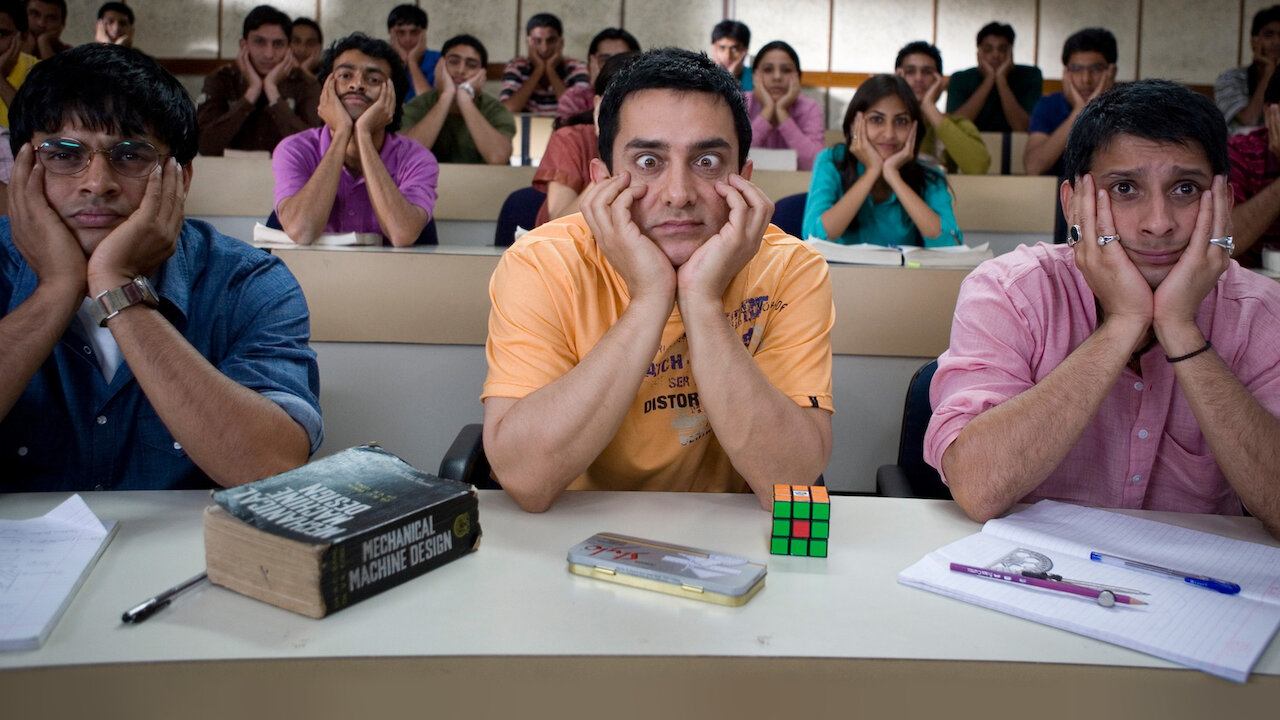
Slapstick comedy films directed by Hirani often rely on ensemble humour rather than a single comic lead. In Hera Pheri, Akshay Kumar, Paresh Rawal and Suniel Shetty all contribute equally to the humour, making the chaos feel strangely relatable. Similarly, in 3 Idiots (2009), even characters with limited screen time became memorable.
The dialogue writer for Pritam and Pedro, Pranjal Saxena, along with writing partner Shashank Kunwar, shared how the series balances clever dialogue with visual chaos, confusion and exaggerated situations.
“What Raju Hirani works on while finalising a scene is whether it touches any emotional beat—fear, sadness, happiness or humour. Then the scene is worth it, otherwise he chucks it out,” Saxena said.
The approach can be seen in 3 Idiots as well, where even characters with only a handful of scenes remain etched in popular memory years after the film’s release, such as Om Vaidya’s Chatur “Silencer” Ramalingam.
“Even if a character is not speaking in the scene, his or her presence and reactions can make or break the scene. Remember Millimetre from 3 Idiots? ‘Didi, Millimetre ab Centimetre ban gaya hai’, this line works because the character was given its due importance,” Saxena added.
While speaking about Arshad Warsi, who has a long record of working in hit comedies such as Munna Bhai M.B.B.S. (2003) and Dhamaal (2007), Saxena explained how actors like him need space from writers so that the character can become more polished, exaggerated and rhythmically comic.
“Arshad is a master of comic timing. There are times when we aim to give a little extra for the artist to make it his or hers. It’s always good to provide the actors a little more fabric, and they will cut it down to suit the body fit of the character on their own. That’s where it starts, belonging to the actors, and that’s where their timing comes into play,” he commented.
A similar technique can be seen in Rohit Shetty’s Golmaal Returns (2009), where Vrajesh Hirjee’s character does not rely on dialogue-driven humour. Instead, the comedy comes through his exaggerated actions, caricatured movements and over-the-top martial arts movements, making the character memorable through physical humour rather than dialogue despite being on screen for a brief time.
“Treat them as per their importance in the scene. Either make it a gully cricket match where everyone wants to bowl and bat, or make it a professional game and find your specialists for every situation. You got to find your specialist of every scene and stay true to the soul of the scene and hence the script,” Saxena remarked.
Satirical comedies, however, have remained fewer in number, with films like Delhi Belly (2011), Peepli Live (2010), Tere Bin Laden (2010) and Bangistan (2010) standing out in the genre.
Karan Anshuman, director of the Emmy-nominated Inside Edge, shared his views on the difference between slapstick and dialogue-driven comedy.
“I’d place Bangistan slightly outside this space, as it was more of a satire than a slapstick comedy. Satire today faces a unique challenge because reality itself has become too absurd and extreme,” Anshuman said.
(Edited by Insha Jalil Waziri)