



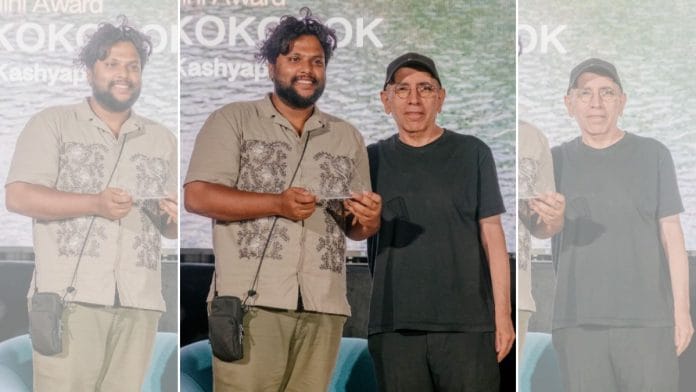

New Delhi: When Assamese filmmaker Maharshi Tuhin Kashyap won the Fellini Award, presented to him by Iranian auteur Mohsen Makhmalbaf, it was a dream come true. He had grown up admiring Makhmalbaf’s work. The three days Kashyap spent with him at the 27th Lucania Film Festival in Italy turned into a masterclass on cinema and life.
“Fame is nothing. It’s a chance encounter that you and I are here,” Kashyap recalled Makhmalbaf saying. And although the famed Iranian filmmaker adores discussing films, he knows there are more important things than the silver screen.
“Cinema is very, very small in front of how big your life is,” Makhmalbaf said.
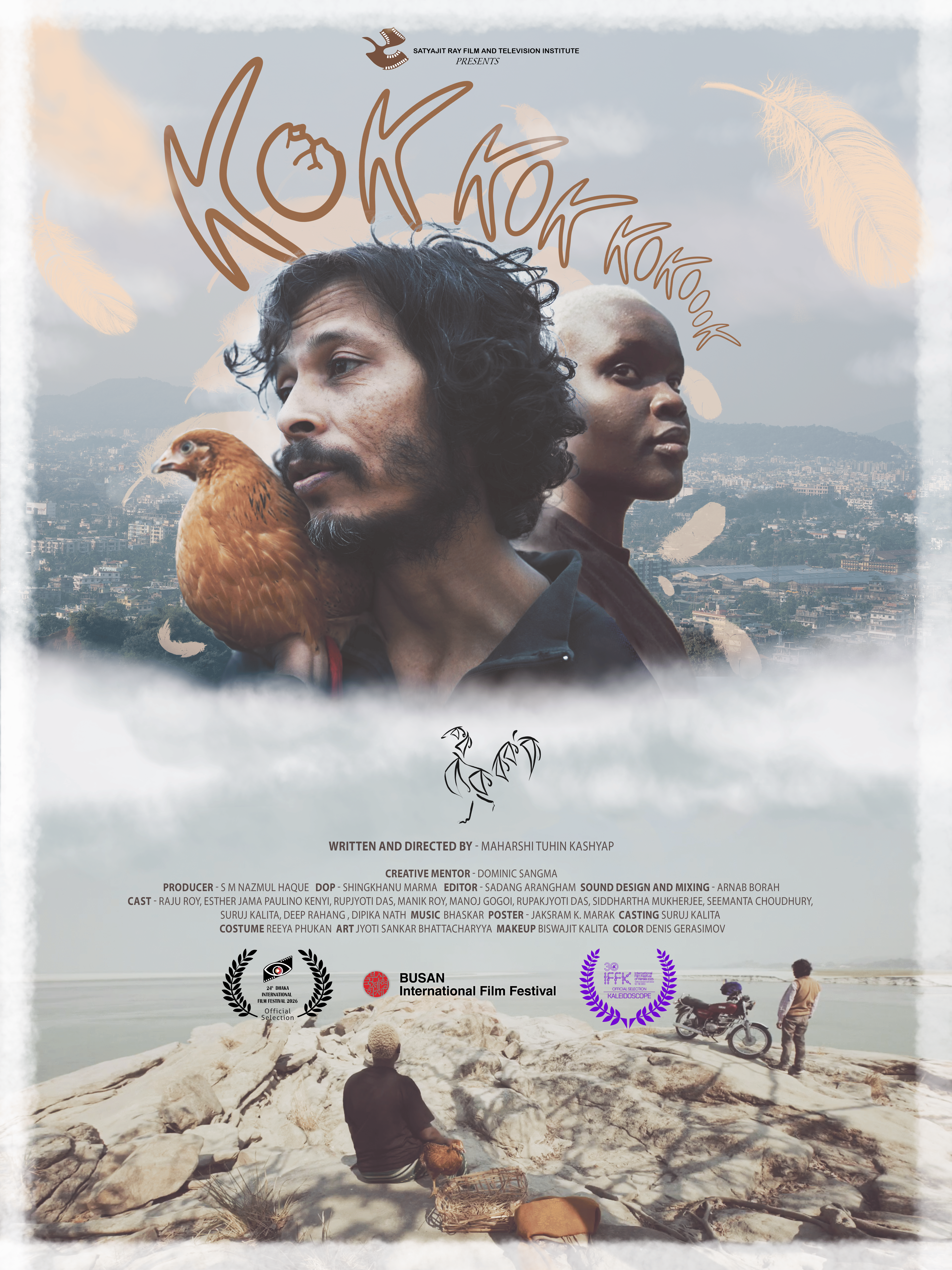
Kashyap calls the encounter more surreal than his own film.
Kok Kok Kokoook (2025) employs magic realism to explore contemporary politics and the struggles faced by migrants in Assam. It follows Siken, a migrant chicken seller, whose beloved RX100 motorcycle becomes the subject of a police search after a road accident.
The film has an odd narrator—a chicken. We watch the story unfold through her eyes. For Kashyap, chickens in cages wait for the moment when they will be butchered. They don’t know when, but they know they will be butchered eventually.
“The people in the film and outside are the same. Waiting,” he told ThePrint.
The film began as Kashyap’s graduation project at the Satyajit Ray Film and Television Institute. It was shot in just six days, but the post-production work took up a year. From the idea to its premiere in Busan’s Vision Asia section, the journey took about two years. The Busan premiere, Kashyap said, was completely unexpected for a student film like theirs.
‘There are people who will listen’
The director is still unsure what the recognition will translate into practically. He hopes winning the Fellini Award and being awarded by Makhmalbaf will help him “grab more eyes in the film market”. The Lucania festival, held in the southern Italian town of Pisticci, has already opened up possibilities of co-production for his next films, he added.
Kashyap also hopes that his winning the award inspires younger filmmakers. He points to northeast Indian filmmakers Dominic Sangma, Haobam Paban Kumar, Pradeep Kurbah, and Rima Das, whom he describes as torchbearers for new filmmakers.
He hopes the award gives younger filmmakers the feeling that “there are people to listen to us, who will understand us.”
(Edited by Prasanna Bachchhav)
Also read: Anti-corruption site bribes.fyi shuts down forever, says will delete all data