



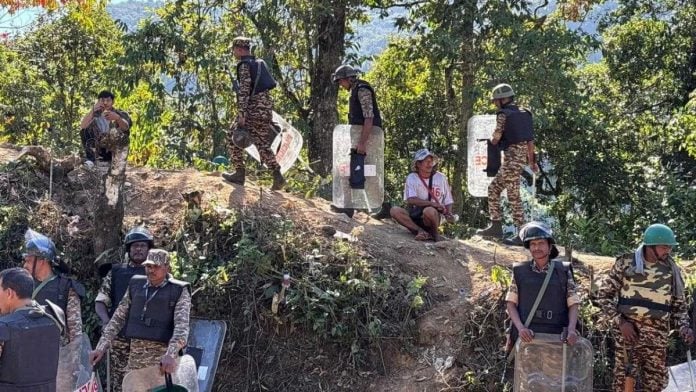
Siang, Arunachal Pradesh: At first glance, there is little to suggest that Komkar in Arunachal Pradesh’s Upper Siang district is the centre of a growing confrontation. Villagers sit on mats by the roadside, some playing cards, others chatting with each other. Then a convoy of security vehicles passes, followed by another. A few protesters arrive everyday for a sit-in that has become the centre of resistance against the proposed Siang Upper Multipurpose Project, an 11,200-MW dam that has brought the government and the Adi community to a standoff.
The immediate fight is over a survey. The government says it is only a pre-feasibility exercise, not approval to build the Siang Upper Multipurpose Project spearheaded by National Hydroelectric Power Corporation (NHPC), planned across Siang and Upper Siang districts. Three sites have been identified: Parong and Dite Dime in Siang district, and Ugeng/Komkar in Upper Siang.
Villagers see the move differently. Once drilling begins on their ancestral land, they fear the dam is no longer just on paper. So they have blocked roads, stopped machinery and demanded that security forces leave, turning a survey into a test of whether the state can enter land that the community considers its own.
The Siang project has not moved much on the ground since 2008, when then Manmohan Singh-led United Progressive Alliance (UPA) government declared it a national project. For years, the project has faced protests from the Adi—the second-largest tribe in Arunachal—and Galo tribal communities, but they were largely confined to villages directly affected by it. Now, it has spilled all over the state.
The path leading to one of the three proposed dam sites on the Komkar-Yingkiong road has been blocked by villagers opposing the survey for the past few days. Fewer than 20 protesters gather at the site at any given time, a stark contrast to the nearly 1,000 security personnel deployed in the region.
“We have stopped this road because they have brought drilling equipment. This is our ancestral land and we eat and live from this. We don’t want PFR (Pre-Feasibility Report) and we don’t want a dam,” said Omin Kartek, a Komkar resident who has been sitting in protest.
Eight boreholes have been planned across the locations with two tentatively to be drilled at each site. Opposition is particularly strong in Geku, Komkar and adjoining areas, where residents have blocked roads to prevent machinery from reaching the proposed sites.
The state government maintains that the PFR is intended to assess technical feasibility and possible locations which include geological surveys. But the villagers behind the barricades say there will be no survey and no dam until there is dialogue.
Also Read: Arunachal anti-Siang dam protest town reeks of burning. Youth on hunger strike in custody
Beyond barricades
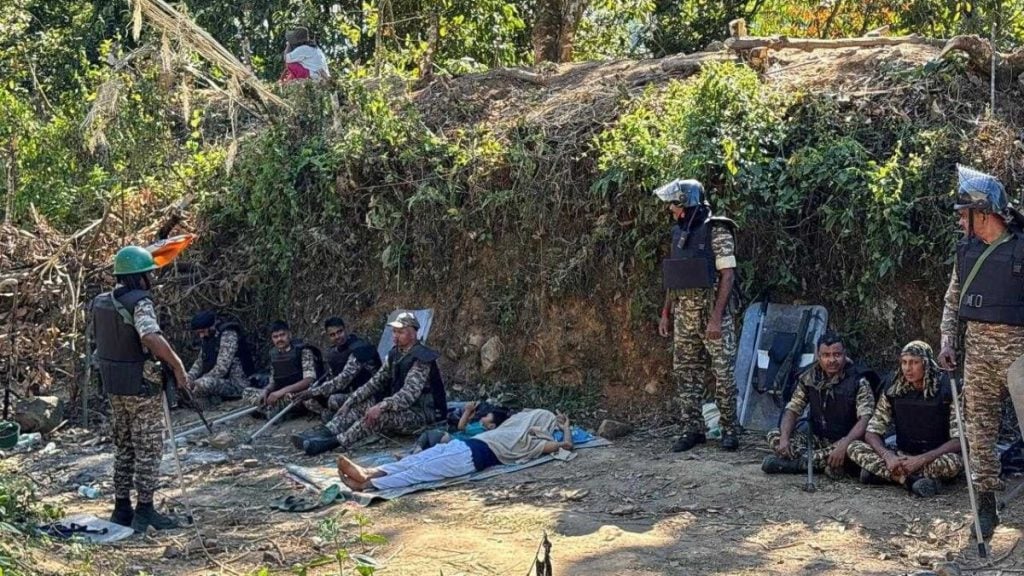
Beyond the first barricade, several more blockades are visible along the route toward the proposed sites. For the villagers, the blockades are an attempt to keep drilling machinery away from land they fear could be submerged or permanently altered.
In recent weeks, villagers have blocked roads, opposed the movement of survey machinery and demanded the withdrawal of security forces from areas they claim are being militarised to facilitate the PFR process. They even allegedly vandalised some camps set up by authorities for the survey.
At the Komkar protest site, men, women and children from the village continue to gather every morning, even as the presence of security forces makes residents uneasy.
“It’s a peaceful protest but they stop and check the locals. We can’t even carry our dao to the fields,” said a resident of Geku who walks to the fields every morning.
The dao, a traditional utility blade, is commonly carried by farmers in the region to clear thick vegetation and harvest crops. Residents say frequent checks and the heavy security presence have turned even routine movement to the fields into a source of anxiety.
The trouble was brewing for days. It first began near Ditte Dime in the Geku area of Upper Siang district, where police fired tear gas to disperse protesters during a 12-hour bandh on 23 October. Protesters alleged that several women suffered breathing difficulties, whereas the police claimed that demonstrators threw stones and attacked security personnel.
Then, nearly 150km away, the NHPC office was targeted during protests in Pasighat. The district is still recovering from the curfew and the violence that followed it late on Friday. East Siang Police arrested 26 people, including five minors, in connection with the violence.
Soon after, during Chief Minister Pema Khandu’s visit to Yingkiong on 30 September, protesters entered the residence of Tuting-Yingkiong MLA Alo Libang and allegedly vandalised it.
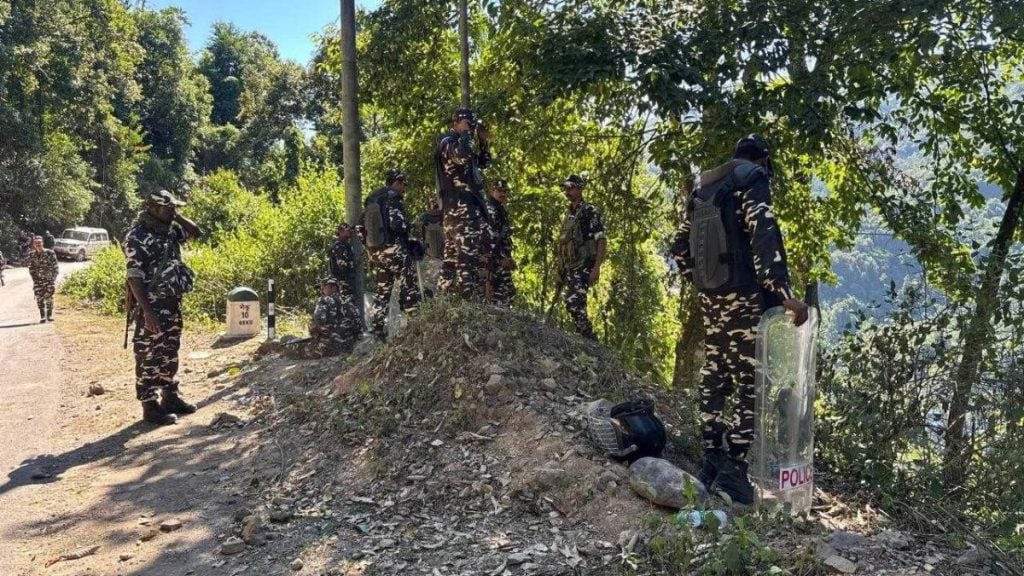
The state government has since deployed 30 companies of Central Armed Police Forces (CAPF) across East Siang, Siang and Upper Siang districts, including 15 CRPF companies, four of which are from the Rapid Action Force. The Centre also flew in two additional RAF companies after the Pasighat violence.
Gochem Sakter, the DCP in charge present at Komkar, told ThePrint that two companies of the CRPF had been deployed in the region on a rotational basis.
“The villagers have created barricades and the roads have been damaged. The proposed dam site is further down where drilling was to be done. Tents were made for the purpose but they were damaged,” he said. “In some ways, that was damage to public property. So we are here to prevent further damage and maintain law and order.”
He added that the security and increased surveillance is not to create anxiety or attack the villagers.
“We are just trying to maintain law and order,” he said.
(Edited by Stela Dey)