



New Delhi: The Indian queer community longs for history. In the West, personal diaries, letters, photos, and records often reveal that a celebrated actor, writer, or scientist lived a second life. They become icons that validate a young queer person’s identity.
In India, that search is sharper in the face of the charge that queerness is a Western import. So when Sandip Roy wrote a biography of Chapal Bhaduri, the last living female impersonator in Bengali Jatras, traditional folk theatre, he presented the community with a textual record of a new-old icon.
But in his book, Chapal Rani, the Last Queen of Bengal, Roy doesn’t seek to pin the artist down to specific frameworks of gender and sexuality.
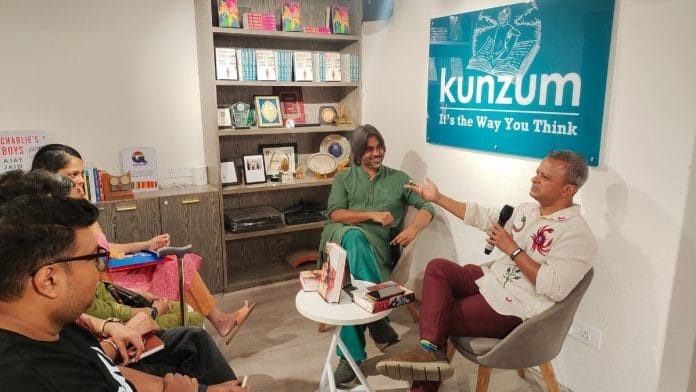
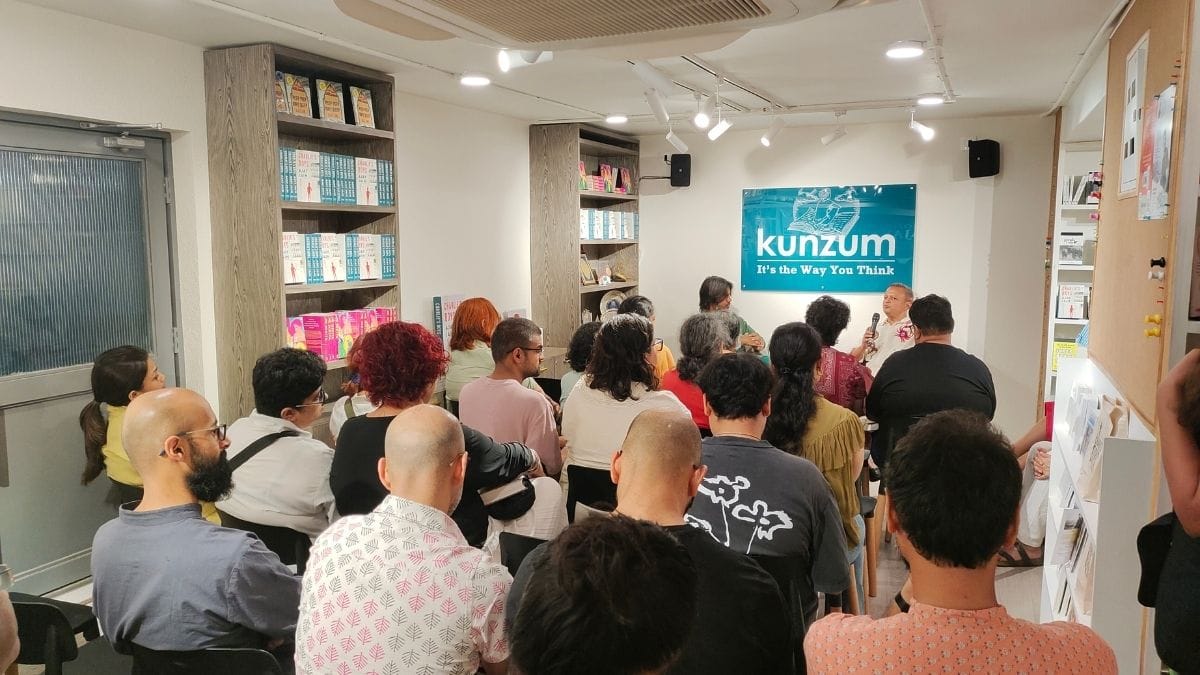
This was a key point in the discussion on the book between Roy and journalist Dhrubo Jyoti at Delhi’s Kunzum Bookstore on Tuesday. Rainbow Lit Fest (RLF) partnered with Kunzum to facilitate the discussion.
“The book shows us that there’s no one way to look at things such as gender or ageing,” Jyoti told ThePrint. “If we want to go back into the past and create a history of queerness, then that would also mean embracing the various ways of thinking about queerness that may not adhere to what we think.”
For someone attempting to write a biography of a female impersonator in 2026, resisting the urge to retrofit is no small challenge. Bhaduri was first introduced to Bengali speakers through the 1999 documentary The Chapal Bhaduri Story by Naveen Kishore, and is often seen through the lens of gender.
“One of the first things Chapal-da told me is, ‘I am not transgender. I am first gender.’ I was like, oh my god. Given what we know about transgender politics, how will that be taken? How transphobic is that?” Roy told Jyoti as a room of 30-odd people listened with rapt attention.
But the author chose not to filter Bhaduri’s words. The artist was born in the late 1930s, at a time when being an effeminate child landed him a place in the Jatra. According to Roy, the folk theatre form saved Bhaduri from what could have been a miserable life. He was allowed to be effeminate because he was a Jatra Rani.
“He lived and made his choices in a world with no role models. He had no support system. He literally made his own identity and his own choices,” Roy said.
For those gathered—journalists, writers, and activists—Roy’s choice was significant. More than one audience member said they weren’t interested in a narrative of Bhaduri’s life that was steeped in sanitised discourse.
“Earlier, I had a very limited idea of what Chapal Rani was, and who Chapal Bhaduri is,” said Sharif Rangnekar, founder of RLF. “What Sandip has done in this book is to bring out his journey, humour, and his matter-of-fact way of living… it brings us back to the beauty in not always carrying labels.”
‘Everything, except respect’
When Bhaduri entered Jatra, the art form was at its peak, yet it was seen as low-brow entertainment.
“Jatra kare phatra lok, naatopi dake Bhadralok (If you’re riff-raff, you do Jatra, but if you’re Bhadralok, you go to Proscenium Theatre),” Roy repeated Bhaduri’s words as the audience, a majority of it Bengali speakers, chuckled.
Even when people tell Roy that they have visited Jatras as a child, they say it was their cook or domestic worker who took them, never a parent. Ironically, at a time when Kolkata’s Proscenium Theatre could seat about 200 people for a show, a six-hour Jatra performance would be packed with crowds as large as 10,000.
“So the scale was entirely different. Jatra had money, it had people, it had everything except respect,” Roy added.
When women began entering the Jatra as performers, Bhaduri welcomed the change. He assumed that female impersonators would continue to exist alongside women artists. That assurance was dashed in the form of a clay cup thrown at him during a performance in 1974. Bhaduri was playing a “wicked stepmother-type” character on stage.
“That’s the last time he performed that role. He was 34 years old. A career that had been at dazzling heights in the Jatra world ended like that. And he just left in humiliation. And he said, ‘I will never wear a sari again,’” Roy recalled a scene from the book.
Also read: Churro shots, DJs, dance floor—this Delhi cafe is hosting rave parties without alcohol
Always a performer
After leaving the Jatra, Bhaduri started living with his lover, who worked at Tata and whose name Bhaduri never disclosed to Roy. The man was married, and Bhaduri lived in the household with his wife without friction, helping raise his lover’s child.
“I asked him, did it upset you when this man got married? And he said, ‘No, because I could do everything for him, but I couldn’t give him children,’” Roy recalled.
For a man born in the late 1930s, loving another man wasn’t much of a scandal to Bhaduri. It was he who brought up the subject when Kishore was shooting the documentary, Roy said.
As Kishore started recording, Bhaduri was grating raw papaya. His lover, he said casually, loved a dish made from it. As ducks could be heard outside, the filmmakers wondered whether Bhaduri had somehow set them up to conjure this extraordinary scene for his romantic story.
“When Chapal-da talks about love, he doesn’t have the language of same sex,” Jyoti said. “He says, ‘Him and I did what a man and woman would do.’ If we want to really understand the evolution of desire and how queerness has evolved, we need to understand what these words—love—can mean.”
(Edited by Ratan Priya)