



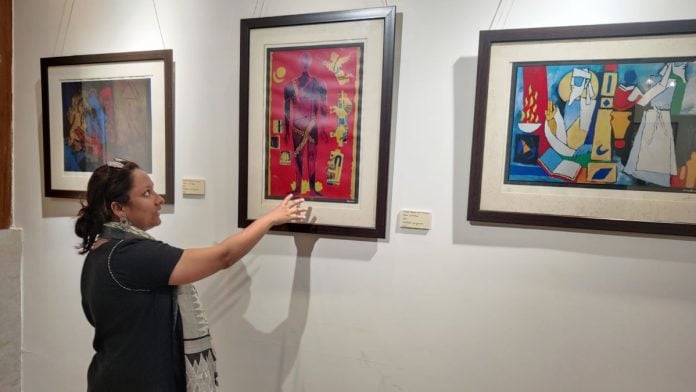
Jaipur: In a tourist-friendly state of forts not known for an appetite for contemporary art, Jaipur’s Rajasthan International Centre is bringing together nearly 50 works by 35 artists. On display are a 24-carat gold painting, rare lithographs, MF Husain’s serigraphs, and miniature works so detailed they demand a magnifying glass—and visitors can buy them.
For the Rajasthan International Centre (RIC), the exhibition is about more than putting artworks on walls. It is part of an attempt to build a market for contemporary and modern art in a state better known for its miniature traditions, handicrafts, and blue pottery.
“We have brought together young artists along with masters, including MF Husain, PN Choyal, Ketaki Roy Chowdhury, and Akhilesh. Delhi, Mumbai, and Bengaluru have very good art markets. It is not there in Rajasthan,” Nikhat Ansari, the artist-curator who heads the visual art section at RIC, told ThePrint.
By showcasing masters and younger artists under one roof and putting them up for sale, the centre is testing whether Rajasthan can build an ecosystem where artists can earn from their work.
The approach is deliberately commercial. Unlike galleries that can charge commissions of up to 30-40 per cent, Ansari says RIC takes only 5 per cent from artists.
At RIC’s Rang-e-Rajasthan Art Exhibition in April, paintings worth Rs 10 lakh were sold.
“Artists are literally struggling. Many people, like me, are artists. If I don’t do well, my children won’t follow my profession. So I have to add a commercial factor for them,” said Ansari.
Lunch with Picasso
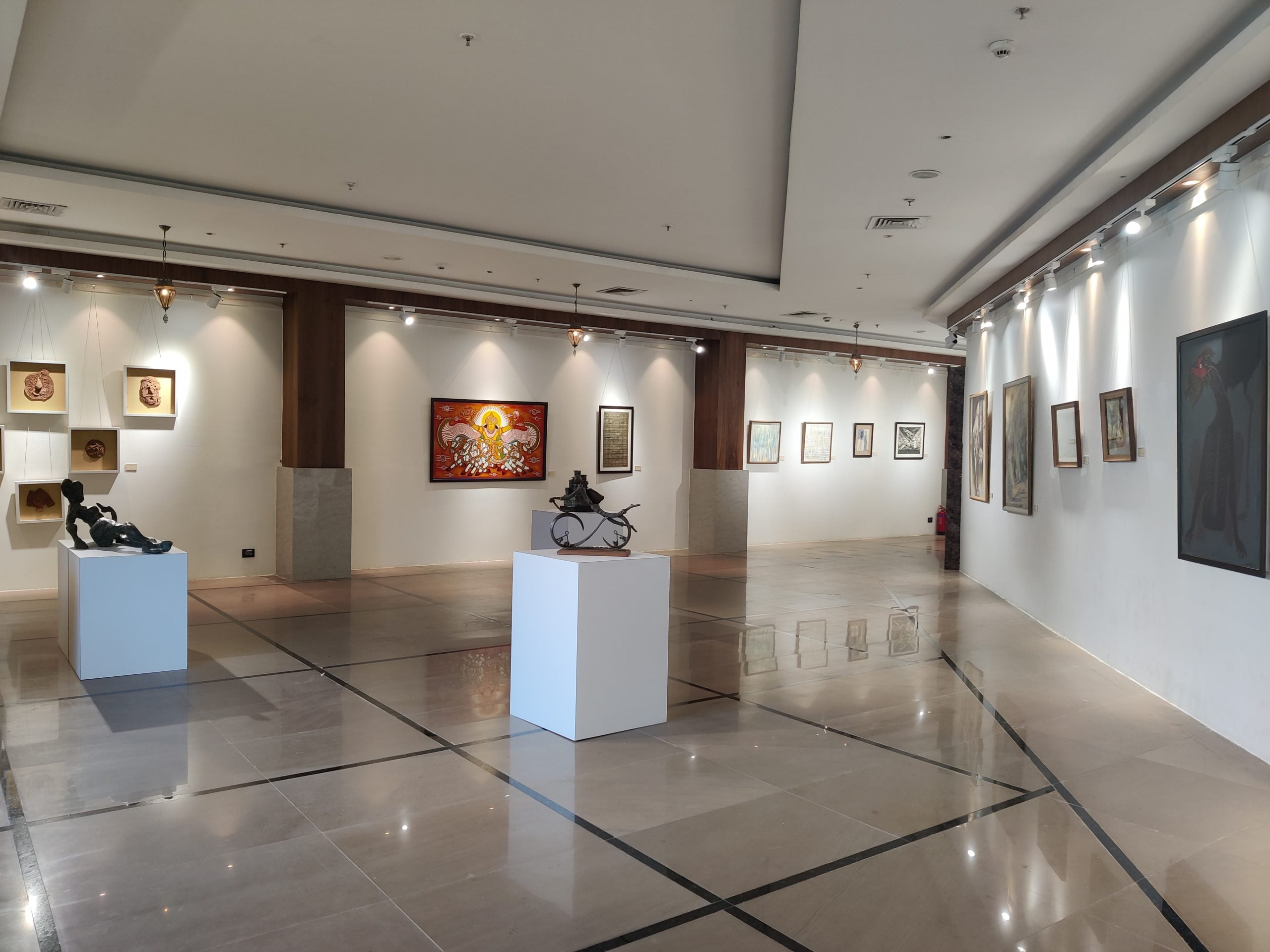
The exhibition moves across generations, regions, and mediums.
The entry section features works by Dhiraj Choudhary, a Partition survivor from Delhi College of Art known for his abstract compositions, including a work inspired by Kalidasa’s Shakuntala.
Some works are reminders of techniques that have become less common. Lithographs, etchings, and serigraphs form a substantial part of the display. One of the paintings by Baroda school artist KG Subramanyan in lithograph medium showcased tribal women.
“In Santiniketan, tribal women have inspired some of these works. Subramanyam made the background using serigraphs, while the print lithographs are placed over it. So, there are two mediums in the work,” explained Ansari. Three of the paintings by Subramanyan sold for Rs 3.4 lakh.
The exhibition also includes works using the wash technique associated with the Santiniketan tradition, in which colour is repeatedly applied and washed from paper to create compositions without conventional brush strokes.
The technique, the curator said, could take months to complete and is now less commonly practised.
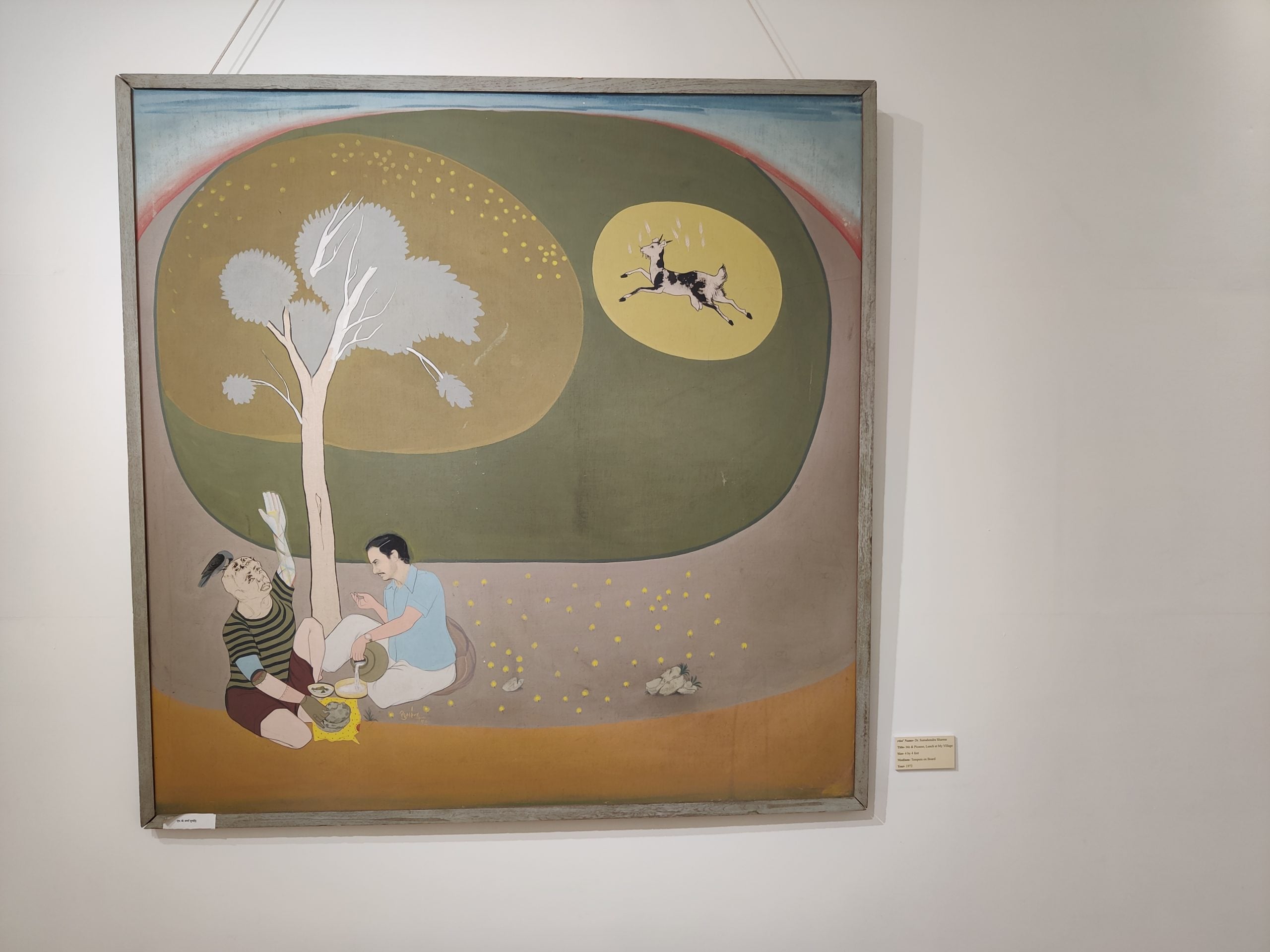
A highlight at the exhibition is a painting by Rajasthan artist Sumahendra Sharma titled Me and Picasso, Lunch at my Village. In the painting, Sharma imagines Pablo Picasso sitting with him and having lunch in his village.
“He is introducing Picasso to his culture. It is almost as if Picasso has entered his world,” she said, adding that the painting shows a person serving chaach, bajre ki roti to Picasso.
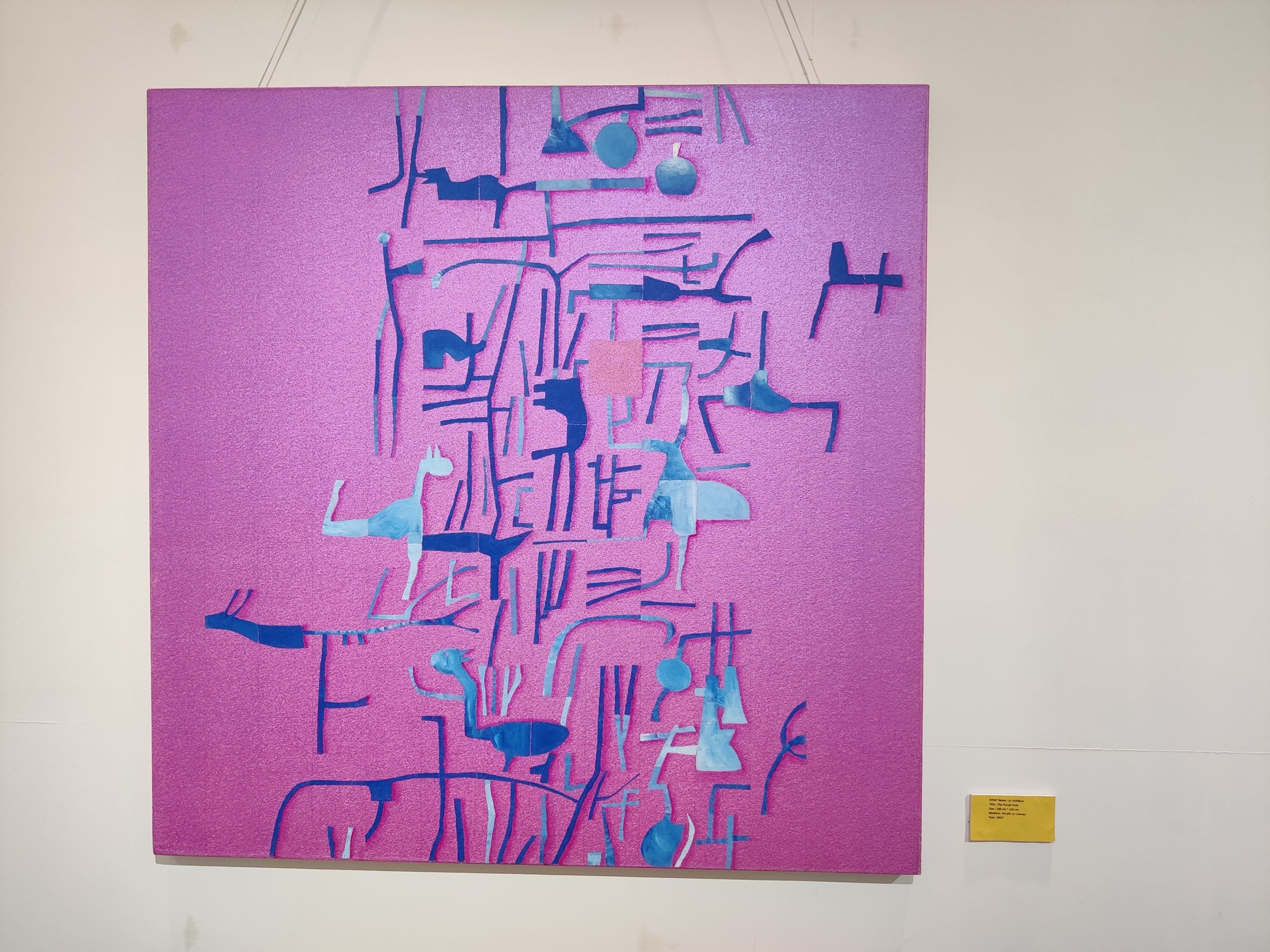
One of the paintings by artist Akhilesh, titled The Purple Rain, shows how colours behave in surprising ways.
“The dialogue between colours teaches you that the colour you see is not just this. There is something more. You should know its nature. You just go on playing with the colour. You just go on playing with the form. You enjoy it,” Akhilesh said.
The exhibition also attempts to place very different kinds of artists in the same conversation.
There are abstract pieces from Rajasthan and Bengal, ones linked to Santiniketan, Kerala mural paintings, traditional miniature works, sculptures, installations, and experimental contemporary pieces.
A sculpture inspired by an incident at Galtaji—where an artist saw a peacock during a fire—is made of metal and priced at Rs 30 lakh, the highest-priced artwork at the exhibition.
Ansari said such works need buyers as much as they need viewers.
“For the promotion of art and culture, a lot of people have promoted it. But artists also need to get paid,” she said.
The exhibition is also drawing visitors who would not necessarily describe themselves as regular art-goers. Some moved slowly from one work to another, stopping to read the labels, and asking about the prices.
“The exhibition offers an opportunity to encounter modern and contemporary Indian art in a city where such works are not as routinely accessible as the forts, palaces and traditional crafts that dominate Jaipur’s cultural landscape,” said Manoj Meena, a Rajasthan University student.
Meena was surprised to see Sharma’s Picasso painting.
“It is quite stunning to imagine Picasso eating local Rajasthani food under the tree,” said Meena while spending 10 minutes near the painting.
Also read: Hum Dekhenge to Khalid, Utho—Delhi poets, singers mark Umar Khalid’s sixth year in jail
MF Hussain’s work
Works of deceased artists have been sourced through families and students, the curator said. Not every artist or family, however, has been willing to sell.
The family of Rajasthan artist Ram Gopal Vijayvargiya, for instance, declined to provide works for sale because it wanted to preserve the collection for a proposing museum. For Ansari, this is part of the challenge of putting together such an exhibition.
Among the more notable names on display is MF Husain, whose works include serigraphs dealing with themes such as Jainism and Zoroastrianism.
Husain’s inclusion was particularly significant, given the controversies that surrounded the artist during his lifetime, including protests and legal disputes over some of his works.
On whether displaying Husain under a BJP government posed any difficulty, the curator said the institution viewed him primarily as an artist rather than through a political lens.
“We should not look at him as a BJP or Congress supporter. We should look at what he has presented through his art,” said Ansari.
The exhibition, she said, is interested in the themes and artistic ideas represented in the works rather than the political affiliations attached to their makers.
(Edited by Prasanna Bachchhav)