





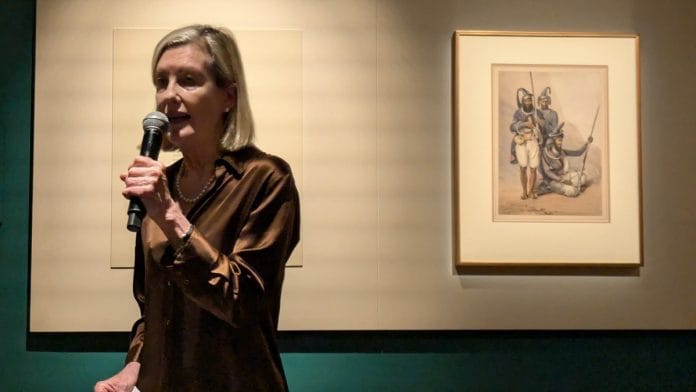


New Delhi: In the winter of 1838, British writer and artist Emily Eden travelled across northern India with the entourage of her powerful brother — Lord Auckland, the governor-general of India. Along the way, she drew maharajahs, princes, fakirs, servants, and others who caught her eye. Later rendered as hand-coloured lithographs, these portraits have now returned to the land that inspired them, accompanied by her perceptive commentary.
The exhibition ‘Princes & People of India: Portraits by Emily Eden’ opened at DAG, New Delhi, on 10 July and will remain on display till 1 August. It brings together the complete set of Eden’s Portraits of the Princes and People of India (1844), along with newly acquired material from the Eden family archives and a rare album of Lahore Company School paintings from around 1850. Together, they offer three distinct perspectives on the same stretch of Punjab, created for very different reasons.
Guest curator and editor Mary Ann Prior, author of the 2012 book An Indian Portfolio: The Life and Work of Emily Eden, said she was approached for the project by DAG senior vice-president Giles Tillotson about 18 months ago.
“It took a long time to write the essays published in the catalogue,” Prior told ThePrint, referring to contributions by scholars such as Brigid Allen, Eleanor Nesbitt, and FS Aijazuddin.
Also Read: This Delhi exhibition asks you to see queer lives beyond symbols and stereotypes
Heat, dust, and a reluctant Maharaja
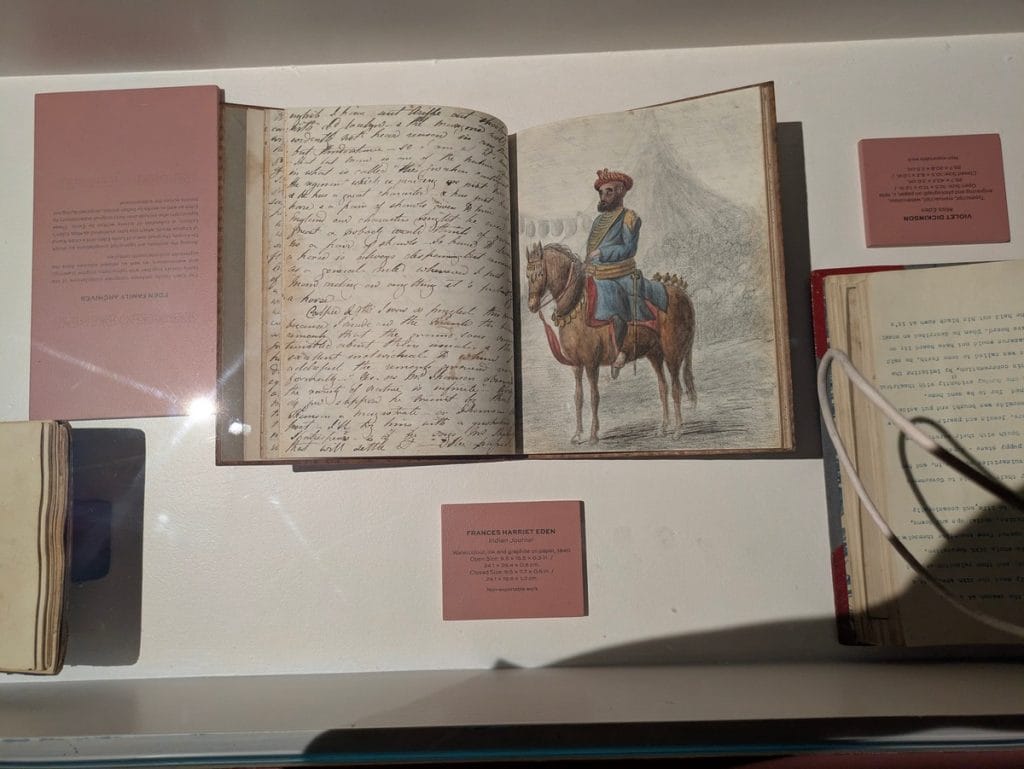
The core of the exhibition is the complete set of Portraits of the Princes and People of India, now owned by DAG. These are complemented by selections from the Eden family archives, including sketchbooks, journals, correspondence, original watercolours, and family papers, which DAG recently acquired from the estate of former British prime minister Anthony Eden.
For Prior, finding previously unseen material was particularly exciting. Among the discoveries is an album chronicling the Edens’ voyage to India, including scenes inside the ship.
“That was a new addition. I had never seen it before! There are sailors climbing the rigging and mending the masts, and then there are little midshipmen,” Prior told ThePrint. The sketches, she said, reveal Eden’s eye for everyday life.
In India, she was privy to rarefied domains, keenly observing and sketching those who caught her attention — Afghan and Sikh nobles, Akalis, hill people, fakirs, servants, and hunting attendants. Travelling with the governor-general also gave her entry to the court of Maharaja Ranjit Singh in 1838.
“No Western women had that kind of access, I think,” Prior said. “She was pretty much the only woman who has documented that.”
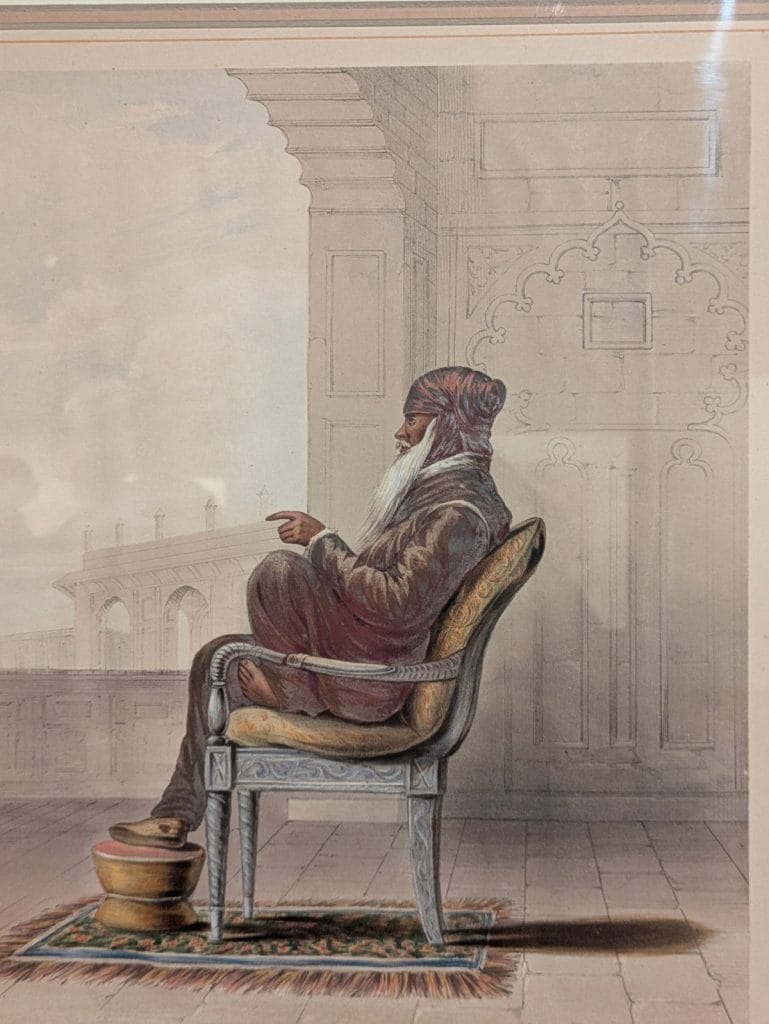
One of the exhibition’s highlights is Eden’s portrait of Maharaja Ranjit Singh. The ruler reportedly sat sideways, indicating that he did not want to be disturbed. Despite the limited time, Eden captured a likeness he approved of. She also admired the handsome looks of Ranjit Singh’s sons, according to Prior.
The curator added that the Edens and the Sikh court developed a warm rapport, with both sides feeling privileged to meet the other.
Eden also composed evocative group portraits, including one of the Raja of Nahan with his two sons and another of exiled Afghan emir Dost Mohammad Khan with his relatives. Prior counts both among her favourites for their skilful spatial arrangement.
The exhibition also features Lahore Company School paintings from around 1850, produced after Eden left India. Created in one of the last flourishing centres of Company painting, they depict similar subjects — royalty, tradespeople, and servants — and provide a local counterpoint to Eden’s British perspective.
“They were put to contextualise Emily Eden’s work because they reflect the same subject matter,” Prior said.
The Lahore works draw on the Indian miniature tradition, with fine outlines and intricate detail, while Eden worked in watercolour. Yet, Prior noted, there was “a lot of crossover between the British and the Indian artists”.
Behind the polished final images lay significant hardships. The Edens undertook a long, arduous journey from Calcutta to Lahore via Shimla.
“Travelling such a long distance was most uncomfortable in those days, however rich you were,” Prior noted.
Drawing under such conditions — extreme heat, motion, and fatigue — added practical difficulties often invisible to modern viewers.
“Eden frequently complained about the heat in her notes. I don’t know how they survived!” Prior laughed.
Also Read: How British photography represented Indian women—nautch girl, aayah, bhadramahila
Personal vs political
Eden’s artistic journey began long before India. Born into a prominent political family, she honed her skills through private lessons, exposure to the Old Masters, and travels across Britain and Europe. Her early sketchbooks capture family members, landscapes, and costumes with growing sophistication. India, however, marked the zenith of her creative output.
As Prior writes in her catalogue essay, ‘From Private Pastime to Public Property’, Eden’s years in India transformed her from an amateur artist into a significant chronicler whose work gained public recognition after her return to England.
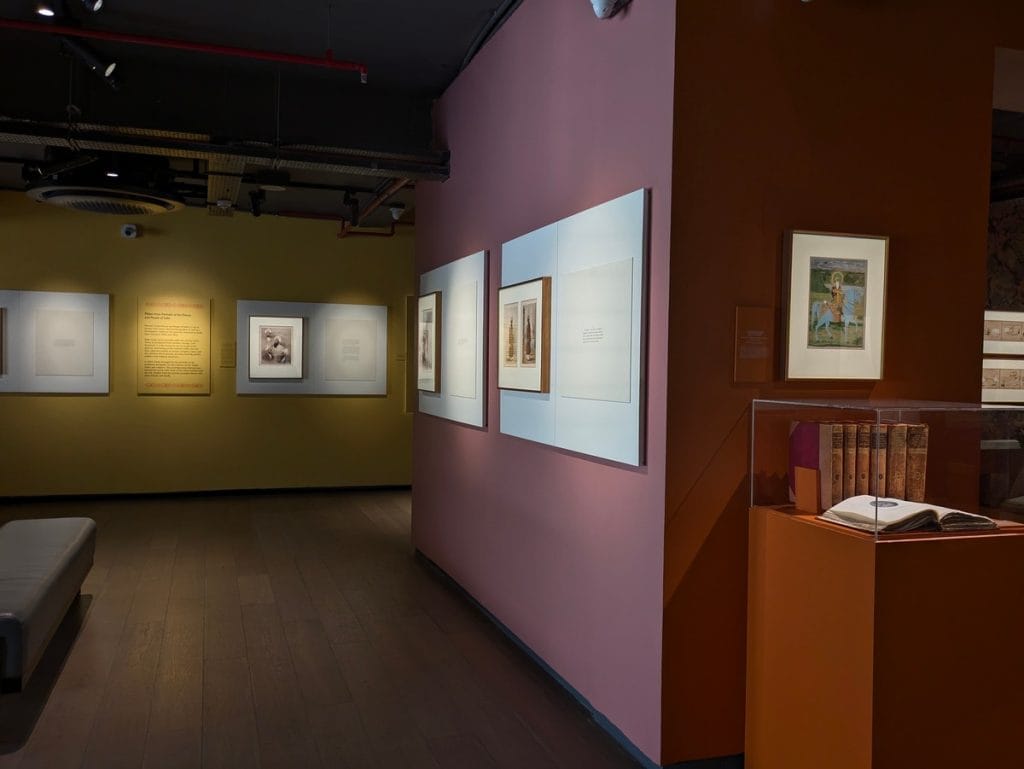
Together, Eden’s portraits, journals, and letters create what the exhibition materials describe as “an extraordinary visual record of a society in transition”.
At the exhibition inauguration on 9 July 2026, the elegant space of DAG New Delhi, with its distinctive blue-green, white and orange walls, came alive as art collectors, enthusiasts, scholars and historians gathered. Eden’s hand-coloured lithographs formed the main focus, displayed prominently across the gallery walls, while the Lahore Company School paintings were presented in a dedicated separate section. In the middle of this section, the Eden Family Archives and voyage sketches were showcased in a striking central glass enclosure.
“We specifically chose these so that you could interact with them and reflect on what it must have been like to be British or Indian in the first half of the 19th century,” Prior said at the inauguration.
She urged visitors to consider the artists’ skill and passion, rather than view the works solely through politics.
“Emily was producing it mainly for her family at home to show them what she was witnessing,” she said. “Travelling as a woman, albeit as a privileged woman, was unusual.”
Many of Eden’s other works remain unlocated.
“It’s rather exciting to think that they might still be in people’s libraries or personal attics,” Prior added.
(Edited by Asavari Singh)