





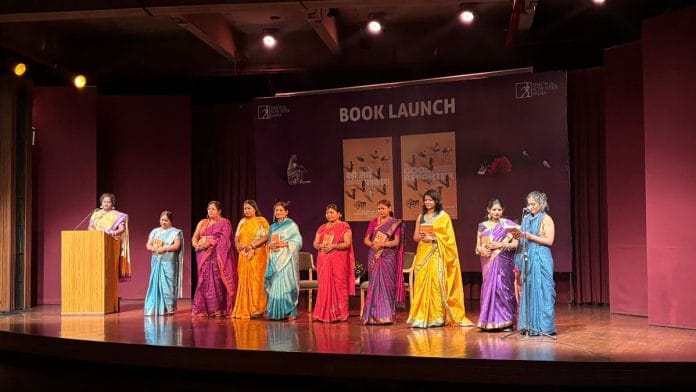


New Delhi: When a row of smartly dressed women in bright saris lined the stage at Delhi’s Triveni Auditorium on 8 May, there was a sense that this was not a conventional book launch. The auditorium was jam packed long before the discussion began. People spilled into the aisles, craning their necks for a glimpse of the speakers, while bursts of laughter and greetings echoed through the hall.
The launch of The Good Reporter: A Memoir of Journalism in the 21st Century became less an event and more a collective reckoning with journalism, womanhood, and memory. The evening alternated between readings from the book, and conversions with the ten authors that moved fluidly between reporting, politics, family and fear.
Penned by 10 women journalists from Khabar Lahariya, the book, published by Simon & Schuster, follows 25 years of the country’s first hyperlocal digital news channel run entirely by women.
In a conversation with coauthor Sunita Prajapati, writer and publisher Urvashi Butalia reflected on why the book felt urgent now.
“Times are changing and because that change has happened this book becomes very important to publish,” Butalia said, adding that once she read the book, she knew why it had to be brought out into the world.
Prajapati, who is from Mahoba district in Uttar Pradesh, spoke candidly about the emotional labour behind the writing. Journalism, she said, often leaves much unwritten in the name of objectivity.
“This book became an opportunity to be completely raw, completely naked,” she said. Writing it brought fear, but also solidarity. “There is support in writing within a collective. This is a kind of hand-holding.”
The discussion was interspersed with readings from deeply personal passages–stories reporters had never before shared publicly. The contributors spoke about reporting from places “too local, too close to home”, where anonymity does not exist and professional distance collapses into personal experience. There were conversations about how reporting shapes family life, the peculiar access women reporters often receive in the field, and how empathy sometimes becomes inseparable from journalism itself.
Read more: Nalanda’s end was more complex than the popular version, says William Dalrymple
‘Badi Aayi Patrakar’
The Hindi title drew some of the loudest recognition from the audience. Badi Aayi Patrakar–loosely translating to “look who’s become a journalist now”—captured the dismissive taunt many women reporters from rural India grew up hearing.
“In a way, both the books have opposite names. But this hindi title, the tonality of it, hits home for us from rural areas. This phrase is heard by every woman reporter who steps out,” said Meera Devi, who lives in Banda and is the managing editor of Khabar Lahariya, in conversation with Farah Naqvi, the author of the 2007 book Waves in the Hinterland: The Journey of a Newspaper.
The phrase landed with familiarity and affection in the room.
There were tears, applause and occasional hooting from the audience. At one point, the women on stage—10 of them glowing in vibrant saris—seemed to embody the very argument the book makes: that journalism is never entirely detached from the lives of those who report it.
The evening ended with long, unending claps, the kind that feel less like applause and more like recognition.
(Edited by Janaki Pande)