



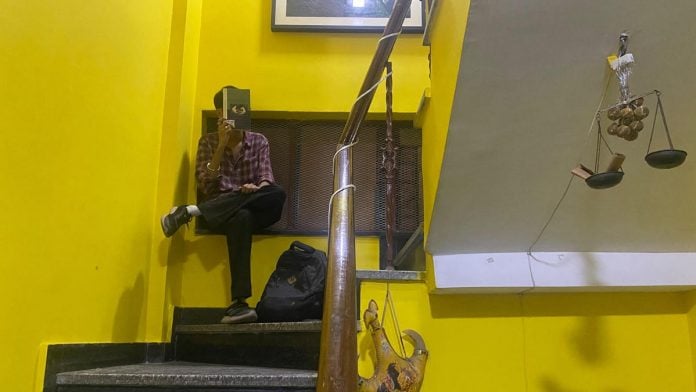
New Delhi: Three checkpoints stood between the ground-floor entrance and the 60-seater arts space in the basement of a four-storeyed building in a posh South Delhi housing society. The idea was to keep “anti-social elements” out of a screening of Prisoner No. 626710 is Present, Lalit Vachani’s documentary about Umar Khalid, jailed since 2020 under the UAPA.
On Friday evening, around 50 students and working professionals, largely in their 20s, streamed into the venue, many in faded cotton kurtas and harem pants. They first had to confirm their registration at the entrance, then pass a young man watching them from the staircase, before having their names checked again at the basement door.
The hour-long screening, organised by a Delhi-based students’ group, had the air of a secret meeting. Many organisers asked ThePrint not to use their full names and wanted the arts space kept unidentified. They were on high alert. IIIT-Hyderabad had cancelled a screening earlier this month after the CBFC warned that showing the uncertified film would violate the Cinematograph Act. NLSIU Bengaluru had called off another after ABVP threatened a protest. Organisers in Mumbai alleged police pressure had scuppered a screening.
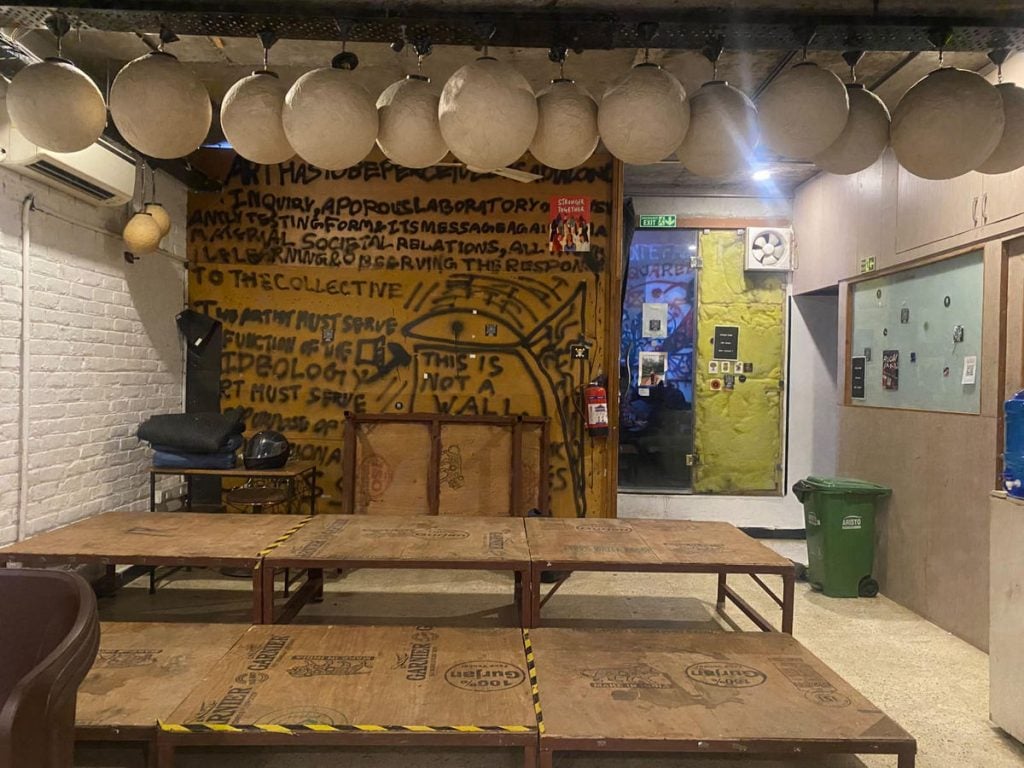
This seemed to have increased the appeal for some members of the audience.
“I wanted to go and see what’s so problematic about this film that it was not allowed to be screened elsewhere,” said Camilia, a 21-year-old undergraduate in physics at Delhi University.
Sehr, a third-year economics student at Delhi University’s Miranda House, said she was there because Umar Khalid was someone she felt “very strongly for” since his arrest and incarceration without trial in the Delhi riots case.
“His arrest and imprisonment don’t often get represented in mainstream media, it’s a very taboo topic. I’ve been wanting to watch this documentary for very long, and am glad I finally got the chance,” said Sehr, who had come with a group of friends straight from a protest against the alleged gang rape of a minor girl in a park near Lady Shri Ram College.
Also Read: Hum Dekhenge to Khalid, Utho—Delhi poets, singers mark Umar Khalid’s sixth year in jail
‘No photos’, secrecy, lawyers onsite
Everyone arriving for the screening at the independent arts space was given strict instructions: no photos, no videos, nothing from the event posted anywhere online. Both at the beginning and end of the screening, viewers were told to delete any photos or videos that they might have taken.
The organisers had first planned to hold the screening a week earlier. It advertised the event on social media and WhatsApp groups and received around 200 registrations, said M Kashyap, one of the organisers. But with news of screenings being cancelled on various grounds, they decided to be more “cautious”.
“We knew that we would find legal help if things got bad, but we could not decide for the venue in that sense,” Kashyap added. He was also involved in organising two other screenings of the documentary at bigger institutional venues in Delhi. But both decided to pull out after they got wind of alleged police intimidation in Mumbai.
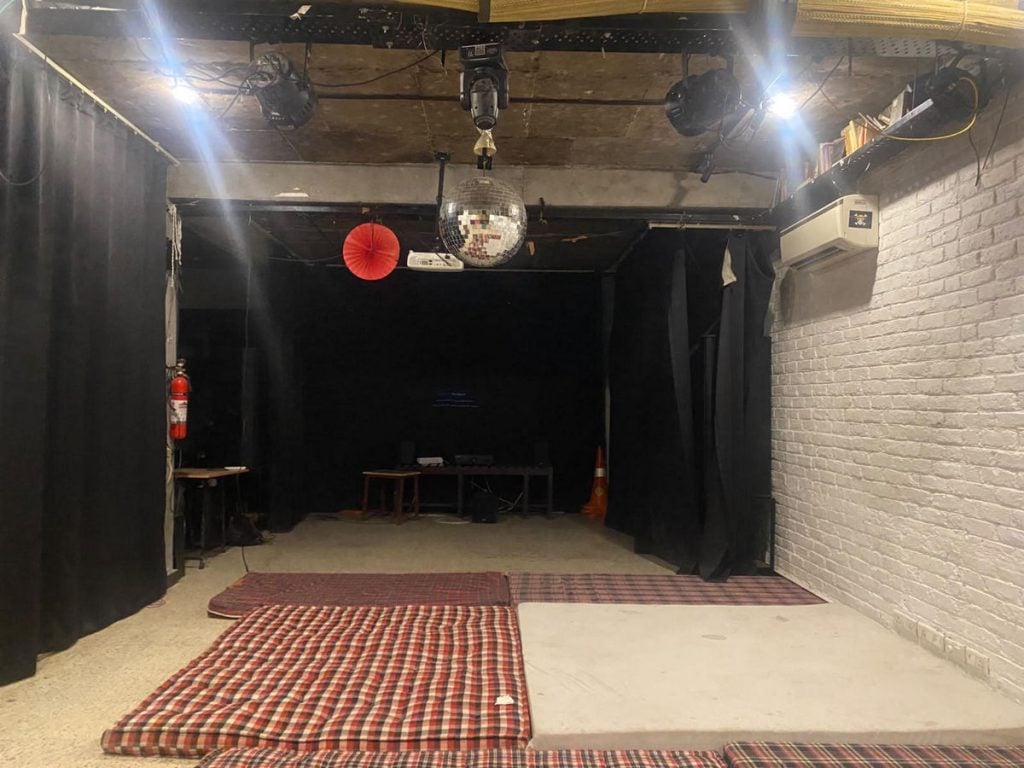
The organisers then turned the screening into an invite-only event. It pulled down its earlier social media post and switched to messaging channels considered more secure than WhatsApp. A stringent vetting process preceded the rescheduled event. Interested viewers had to join a group on the alternate app, contact an organiser personally and fill out an online form explaining their interest in the screening.
Lawyers Vishwas Tanwar and Shivangi were asked to remain present on location in case a legal threat were to arise.
“There is a social currency that having lawyers on hand gives you,” added another organiser, Sidharth, adding that this was also a safeguard against “lumpen elements”.
“This might seem excessive, but for us it was more about being prepared on our end, in case something were to happen,” said Lucky, a member of the group that organised the screen. He added that he felt more “relaxed” about the screening as much of Delhi was preoccupied with other protests, including over the workings of the Election Commission and the alleged gang rape.
“I knew nobody was coming here,” he joked.
Caution came from the venue owner as well.
Aarohan, the 23-year-old owner, had already had two brushes with the police in the two and a half years of running the space. The first was a year ago, during a Palestine fundraiser held at the venue with Voices Against Genocide.
“The Additional Commissioner of Police had come,” Aarohan said. “At that time it felt like a larger issue [than now] because it was about funds going from a fundraiser to outside of this country.”
The second was a little over a week ago, when two beat officers visited the venue over another event, saying police permission had not been sought.
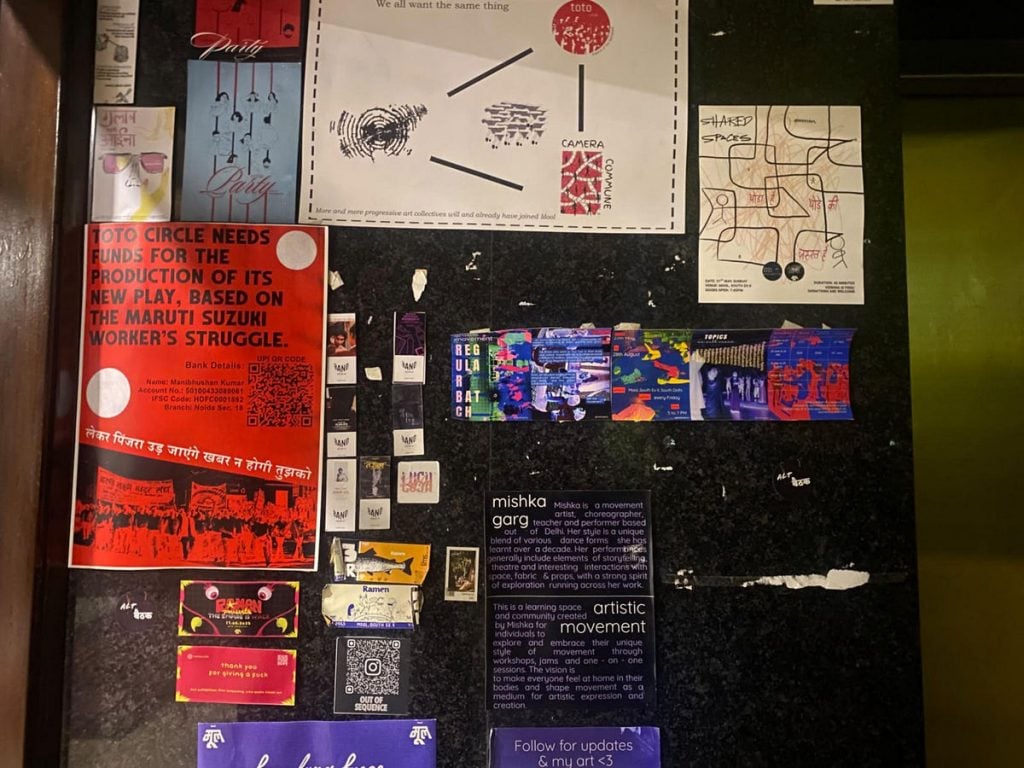
“We were going to host an exhibition of the works of two of the artists who were jailed in the Noida workers’ struggle,” Aarohan said.
Also Read: ABVP seeks Centre’s intervention to cancel Umar Khalid documentary screening by NLSIU, demands probe
‘Solidarity screening’
With nearly all 60 seats full, the audience watched with rapt attention as the film traced the events leading up to Khalid’s arrest. They chuckled at anecdotes about how he “could not keep his mouth shut” and woke up with “50 questions a day”. They sighed at primetime television’s treatment of him, and cringed at comments by Hindu Right influencers about Muslims.
The hour-long documentary was released in 2024 and uses footage of Khalid’s speeches, television coverage and interviews with his friends to reconstruct the events that led to his arrest in 2020 during the anti-CAA protests. With September 2026 marking six years of his imprisonment, it is being screened as part of a fresh “solidarity screening” campaign.
Vachani and the Instagram page @Free_Umar_Khalid called for screenings through September, describing them as “a renewed call for a fair trial and expedited bail hearings for Umar Khalid and Sharjeel Imam”. September 13 is also Political Prisoners Day in India.
A pre-screening discussion with Khalid’s friend Shuddhabrata Sengupta–who also appears in the documentary–gave students a chance to discuss the whys and hows of Khalid’s arrest.
Apeksha Priyadarshini, a close friend of Khalid who was also at the venue, said private screenings had been held across the country despite some cancellations and crackdowns.
“By and large, it’s been a very, very good and widespread campaign,” she noted. “Even in cases where screenings have been cancelled, it’s actually led to people discussing this issue, people talking. Not just about Umar and the case, but also about why this kind of censorship. Especially on a film about somebody who is under pre-trial detention.”
Restlessness pervaded the audience as the screening came to a close.
“I genuinely had goosebumps for most of it. The pauses they were taking throughout the film let the viewer sit with the feeling of what is actually happening and how serious the issue is,” said Varunika, a 21-year-old maths student at Miranda House, as she left the space.
(Edited by Asavari Singh)