





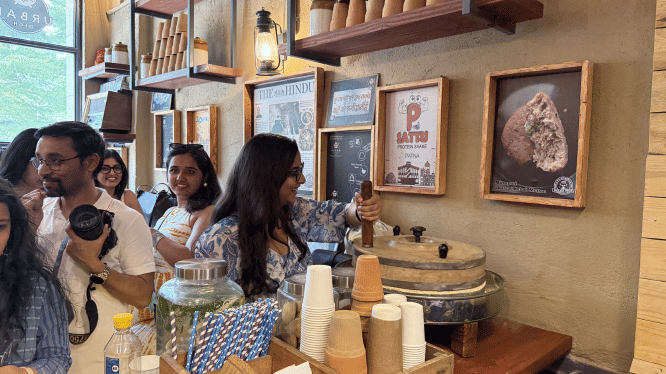

New Delhi: It was 45 degrees outside, and the restaurant’s air-conditioning wasn’t working. The kind of Delhi afternoon that makes people cancel their plans. Instead, bottles of just-made, chilled shikanji were passed around at Urban Degh in Gurugram as people took their seats, and conversation picked up quickly enough that the heat, for the most part, faded into the background.
The food workshop in Gurugram on 25 April began with a simple prompt about childhood and food.
Held at Urban Degh, a North Indian and Mughlai-cuisine restaurant, the session titled “Cook like it’s 1975”, organised by City Girls Who Walk Delhi, brought together a small group of women for an afternoon of conversation, tasting and hands-on cooking.
Manisha Kalra, who founded the women-led community, said that the community began as “a way to interact with new people outside my friend circle”, and has since grown into a mix of workshops and events across the city. What followed here was not so much a lesson in recipes as a way of thinking about food through memory, ingredients and the traditions behind everyday meals.
The workshop began, as most do, with introductions. Each participant shared a favourite food memory from childhood.
Abida Nahid, who runs the social media for Urban Degh, spoke about her grandmother saving leftover rotis through the week.
“Once enough were collected, they were turned into laddoos with ghee and sugar. Something we learnt from older generations was not to waste,” Nahid said.
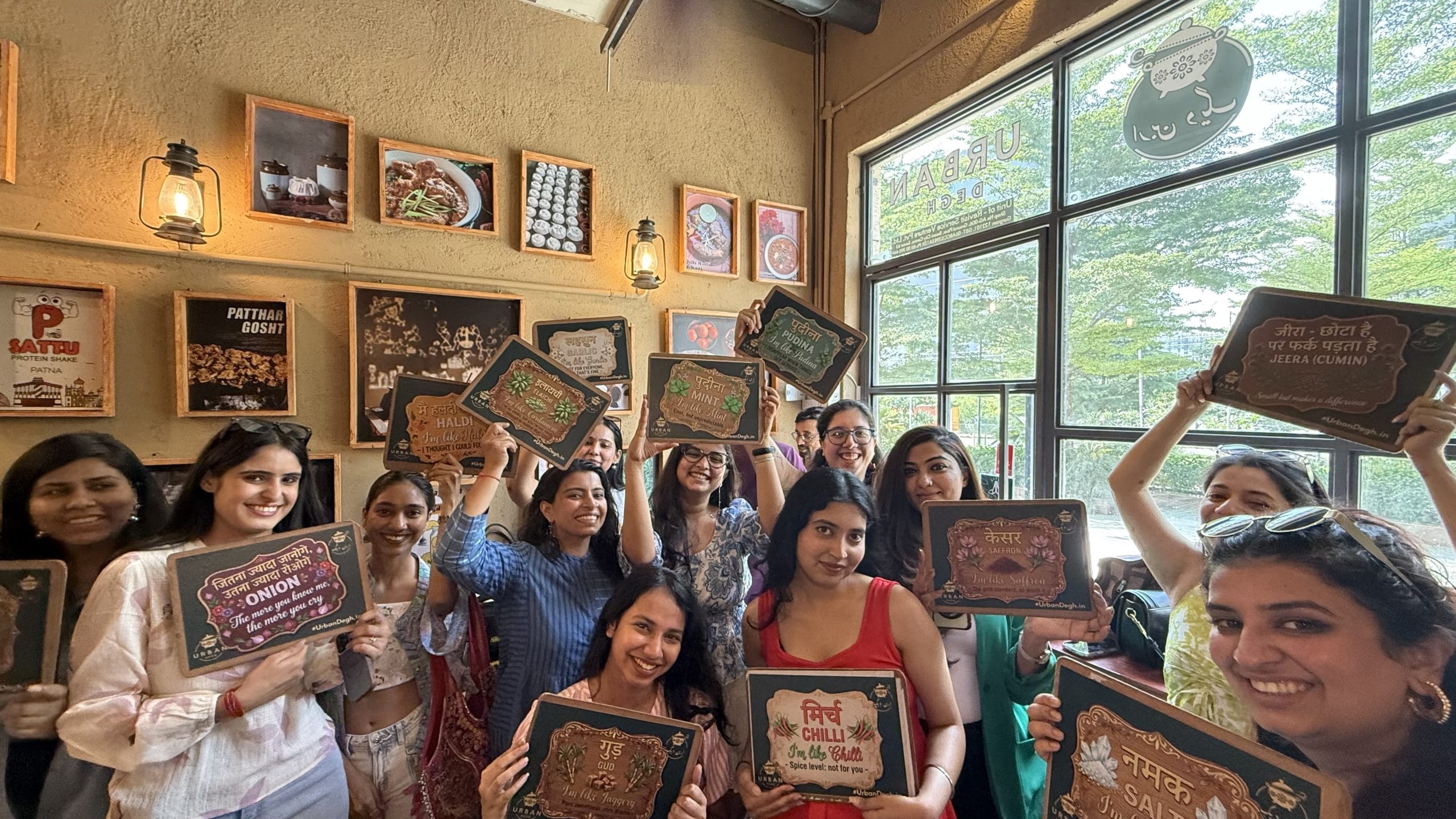
Sanjana Pahwa, a 27-year old developmental psychologist, shared her love for the golgappa counter at weddings, not the ceremony.
“Everyone knew where to find me at weddings when I was a child,” she said.
Aastha Rath’s story stayed with the room: A strict grandfather, who refused to let her eat street food because it was “unhygienic”, would still wake up early during her summer visits, go to the market, and bring back dahi-bara and aloo-dum for her breakfast.
“You will get an upset tummy from this,” the 25-year old Delhi-based lawyer mimicked her grandfather. He would watch her eat, and then lecture her about falling sick from the outside food. The contradiction drew laughter, but also recognition.
Also Read: What is the sound of a salad? Reinventing the kitchen as a performance space
Food, history and heritage
The Urban Degh collaboration, Kalra said, came out of the group’s learning-based sessions.
“Cooking is an essential life skill,” she said, adding that the focus on traditional techniques drew her to the partnership.
Sameer Dhar, the owner of Urban Degh, linked this approach to his childhood in Anantnag, where winters meant planning months ahead.
“Once the snow fell, even a neighbour’s house a hundred metres away became inaccessible. Families relied on what they had already grown and stored, herbs, vegetables, dried ingredients, shaping how they cooked,” Dhar added.
Trained in physics, Dhar spoke about his kitchen in precise terms, explaining how even the source of heat changes a dish. Wood fires and cow-dung upalas, he said, produce different kinds of heat, affecting both cooking time and flavour.
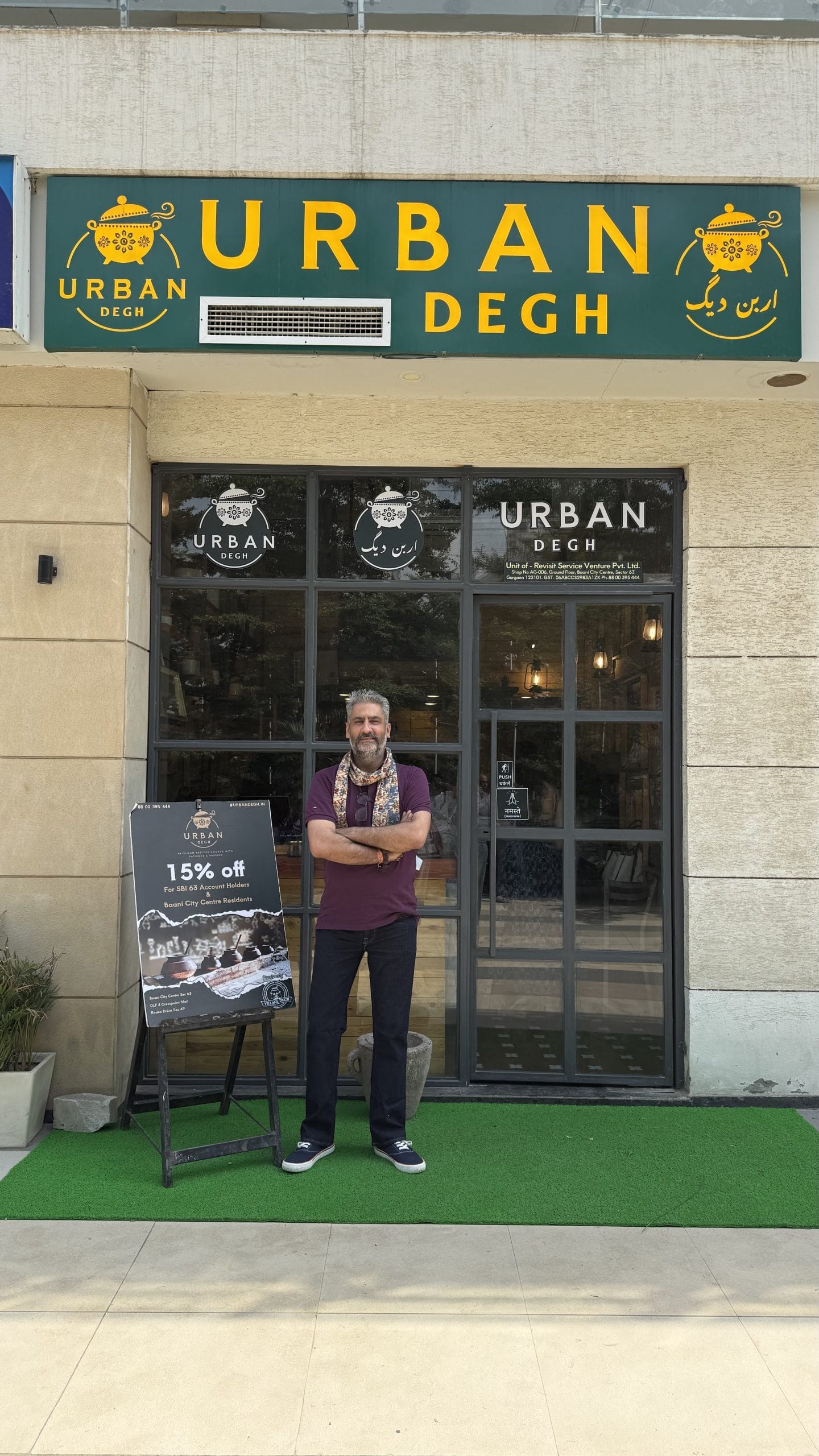
From there, he moved to spices. Holding up raw turmeric, he pointed to its cost before asking: “If the root itself is this expensive, how is the processed powder cheaper than the raw ingredient?”
The question hung in the room. For most people present, the ingredients came already processed and packaged, their origins were not something they thought about often.
He followed it with a guessing exercise. Jars of spices were passed around, and participants tried to identify them by smell. Most guesses missed. Cinnamon was the only easy one.
Then came the food. A mushroom galouti kebab, soft and rich, tasted convincingly like meat. This made the point Dhar had been building toward: ingredients, used well, can change a dish completely.
Plates of palak patta chaat (spinach chaat), shakarkandi chaat (sweet potato chaat) and corn chaat passed around as people kept talking, food prepared, as Dhar put it, with “passion and patience”.
The final segment turned to preparation. Sattu, a chickpea-based summer drink, was made by grinding chickpeas with water on a chakki (grinder). A few participants tried it themselves and quickly realised how much effort it took.
“Arm workout,” one of them dubbed it, laughing, as others stepped up to try it for themselves.
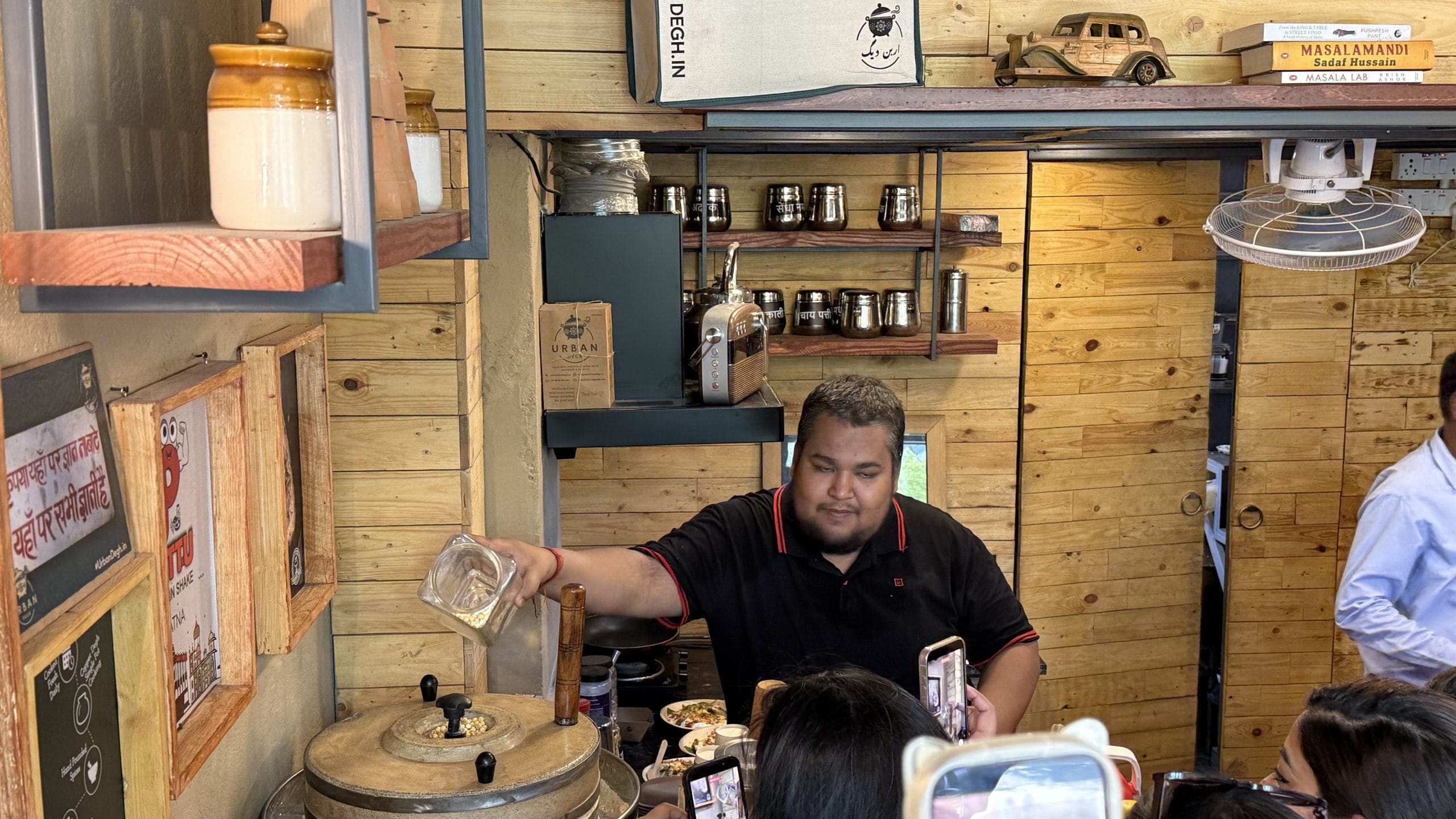
The pace slowed. Attention shifted from finished dishes to how they came together. Grinding, mixing, waiting, and echoing earlier conversations about traditions that are no longer part of everyday cooking for many.
By the end of the session, the afternoon had settled into its own rhythm. What began as a room of strangers felt different now. People lingered for photographs, another round of food, and conversations that kept going.
(Edited by Insha Jalil Waziri)