





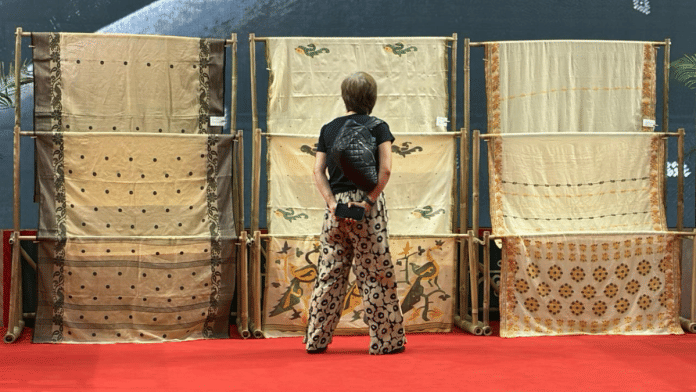


New Delhi: For Khokon Basak from Tangail, weaving is not an occupation; it is a lineage. His family has been weaving sarees for over 200 years; he is the ninth generation to carry forward the tradtion. He has been working the loom since 1997.
This inheritance was brought into focus at the Bangladesh High Commission in New Delhi on 17 April. The High Commission hosted its first-ever exposition dedicated to Bangladesh’s handloom heritage, with a special focus on sarees from two historic weaving centres—Tangail and Pabna. The event highlights centuries of craftsmanship, cultural memory, and artistic refinement embedded in the textile traditions of South Asia. The exposition opened to the public on 18 April and is on display till 21 April.
“A saree is never just fabric. It is memory made visible, labour made continuous, and an inheritance worn across generations,” Basak told ThePrint.
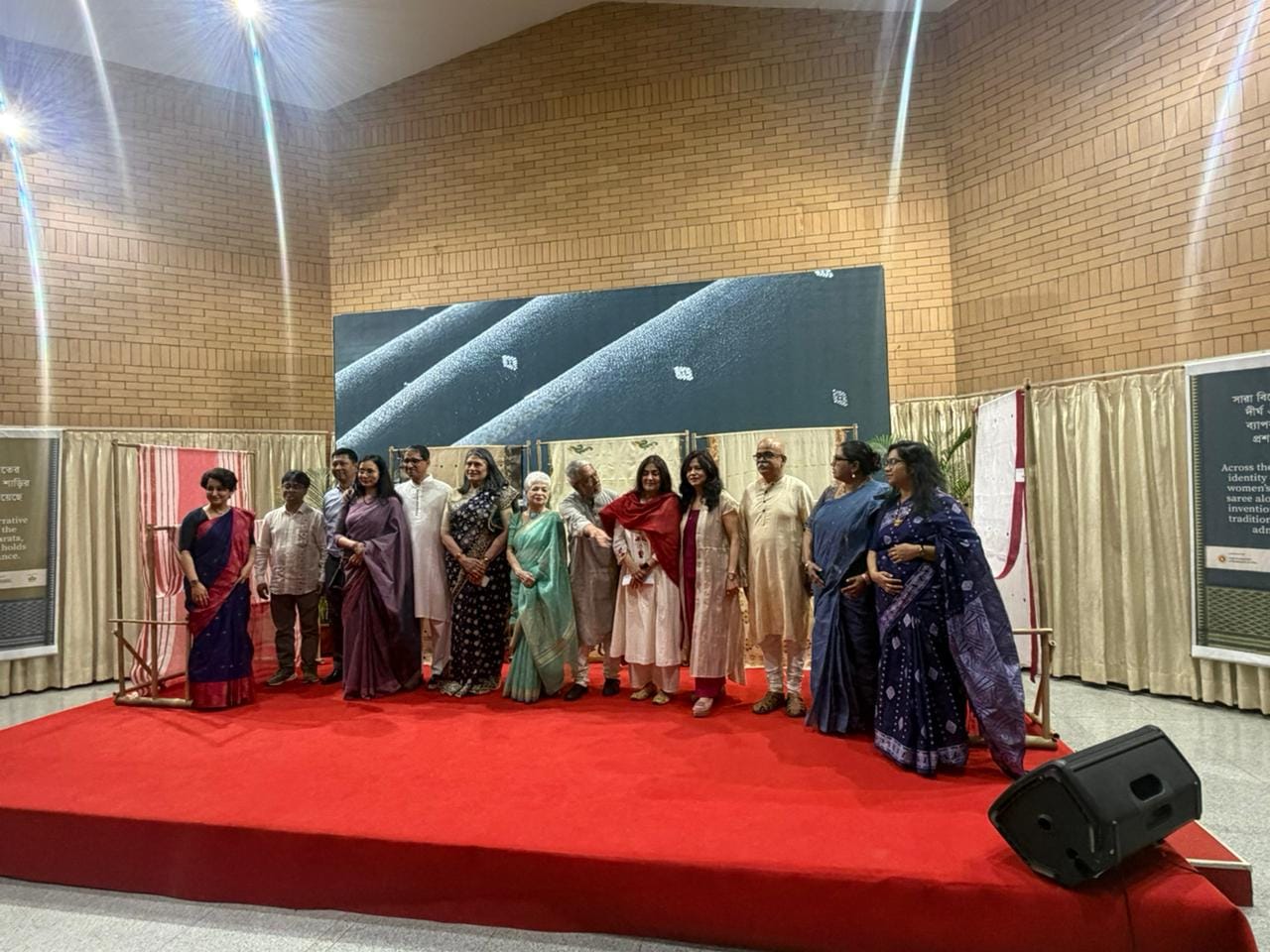
Featuring over 300 curated sarees, the display includes heritage pieces as well as contemporary interpretations. Curated by Chandra Shekhar Shaha, the president of the Bangladesh Crafts Council and Indian textile artisan Chandra Shekhar Veda, the exhibition reflected a shared cross-border effort to preserve and celebrate South Asia’s textile heritage. The exhibition was inaugurated by Bangladesh High Commissioner M Hamidullah Riaz, designer Laila Tyabji and interior designer Sunita Kohli.
Riaz described the event as an act of “shared heritage.”
“This is not an act of diplomacy… This is purely to celebrate craftsmanship. Each saree carries a unique emotional expression and a story of ‘obstinacy’—the stubborn refusal of these artists to let a beautiful tradition die,” he said.
History, hands and humans
Beyond textiles, the exposition aims to foreground the lives, skills, and legacies of the weavers who sustain these traditions across generations.
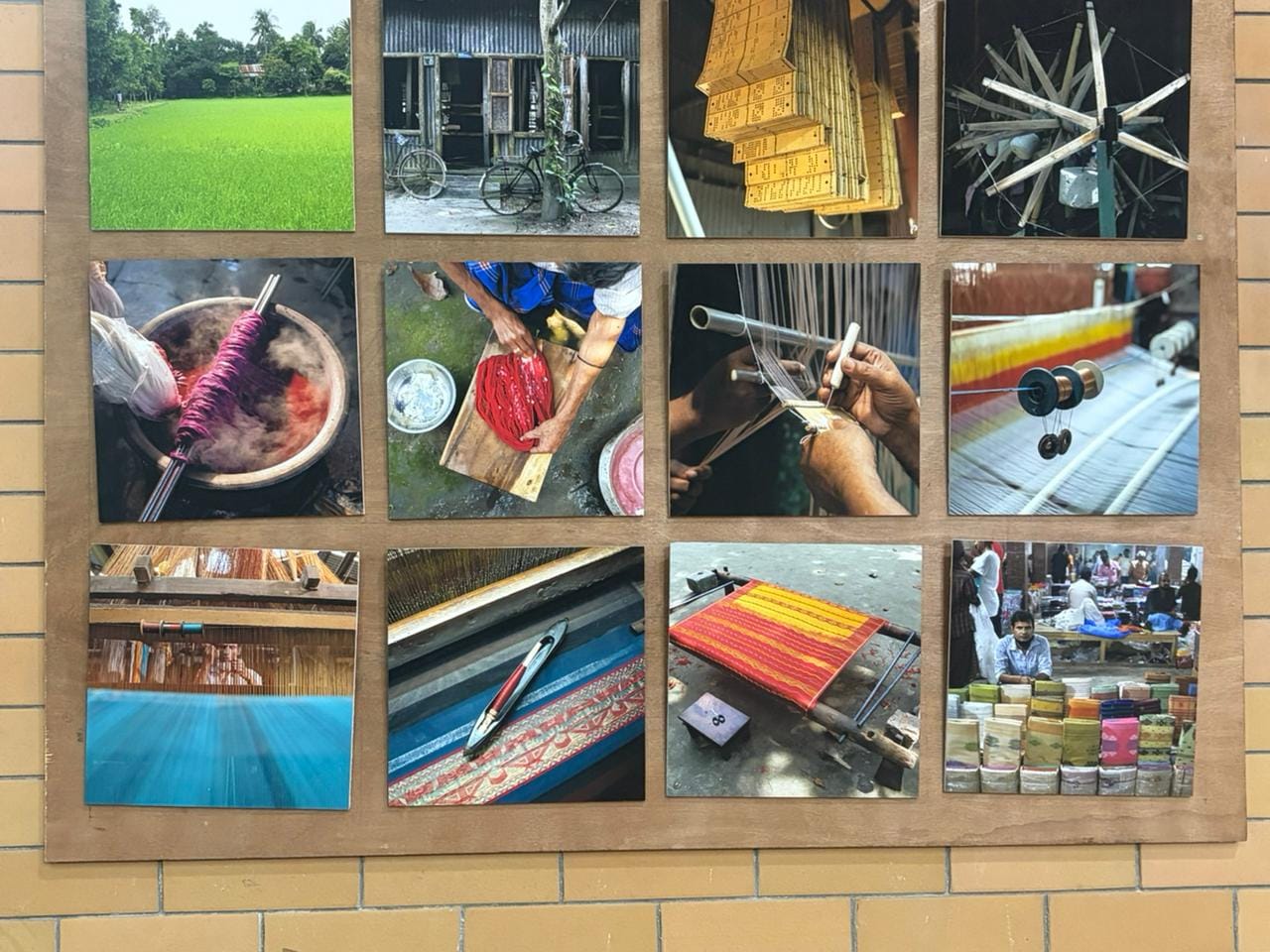
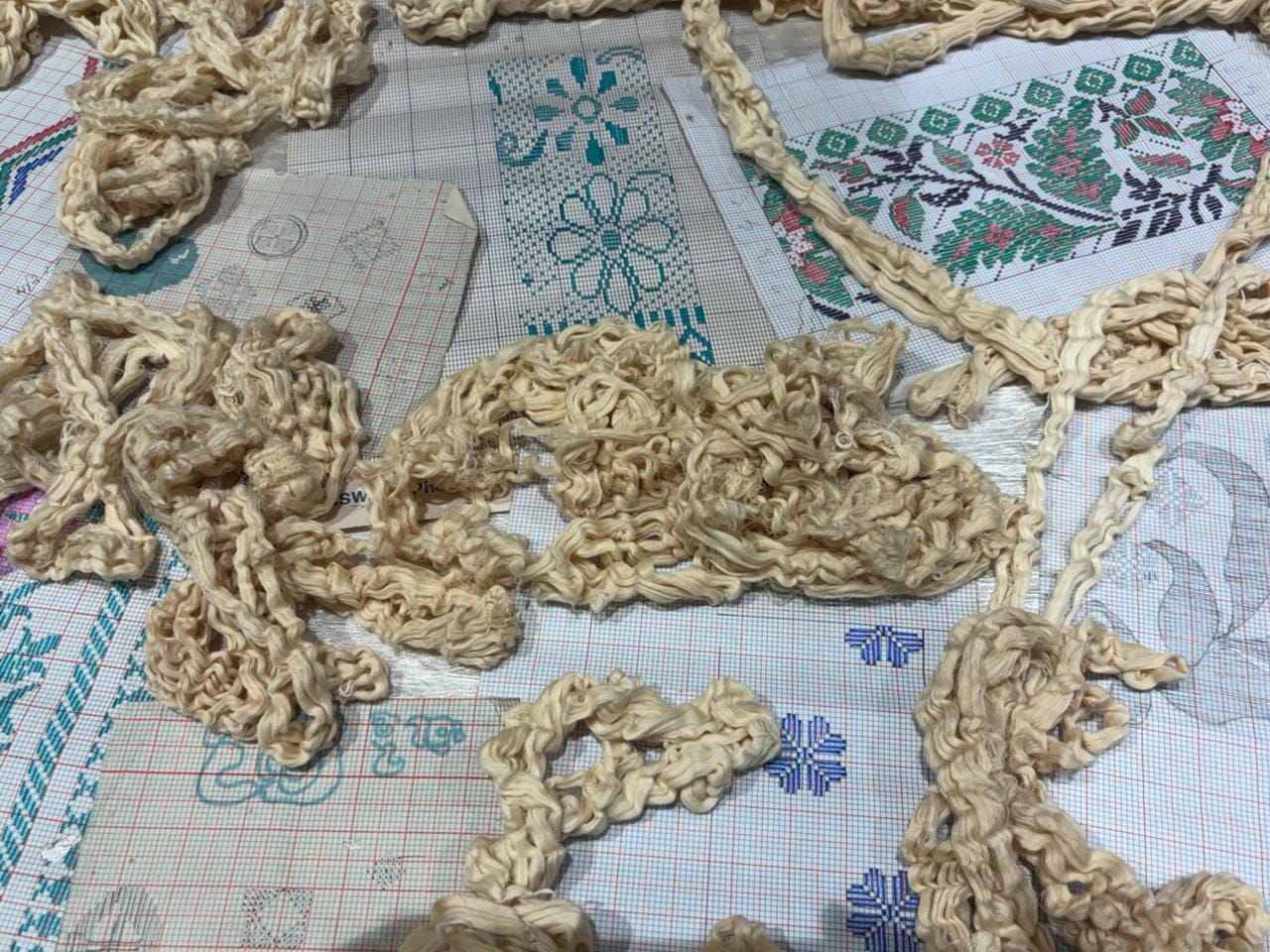
The hall resembled less a diplomatic venue and more a living archive of craft and continuity. The room itself is curated as a narrative: shuttles designed as boats floating in the nearby pond, and design palettes, heirloom textiles, and scraps of fabric are scattered intentionally to tell a larger story. Some of the pieces were almost 60 to 70 years old, preserved by weaving families like Basak’s.
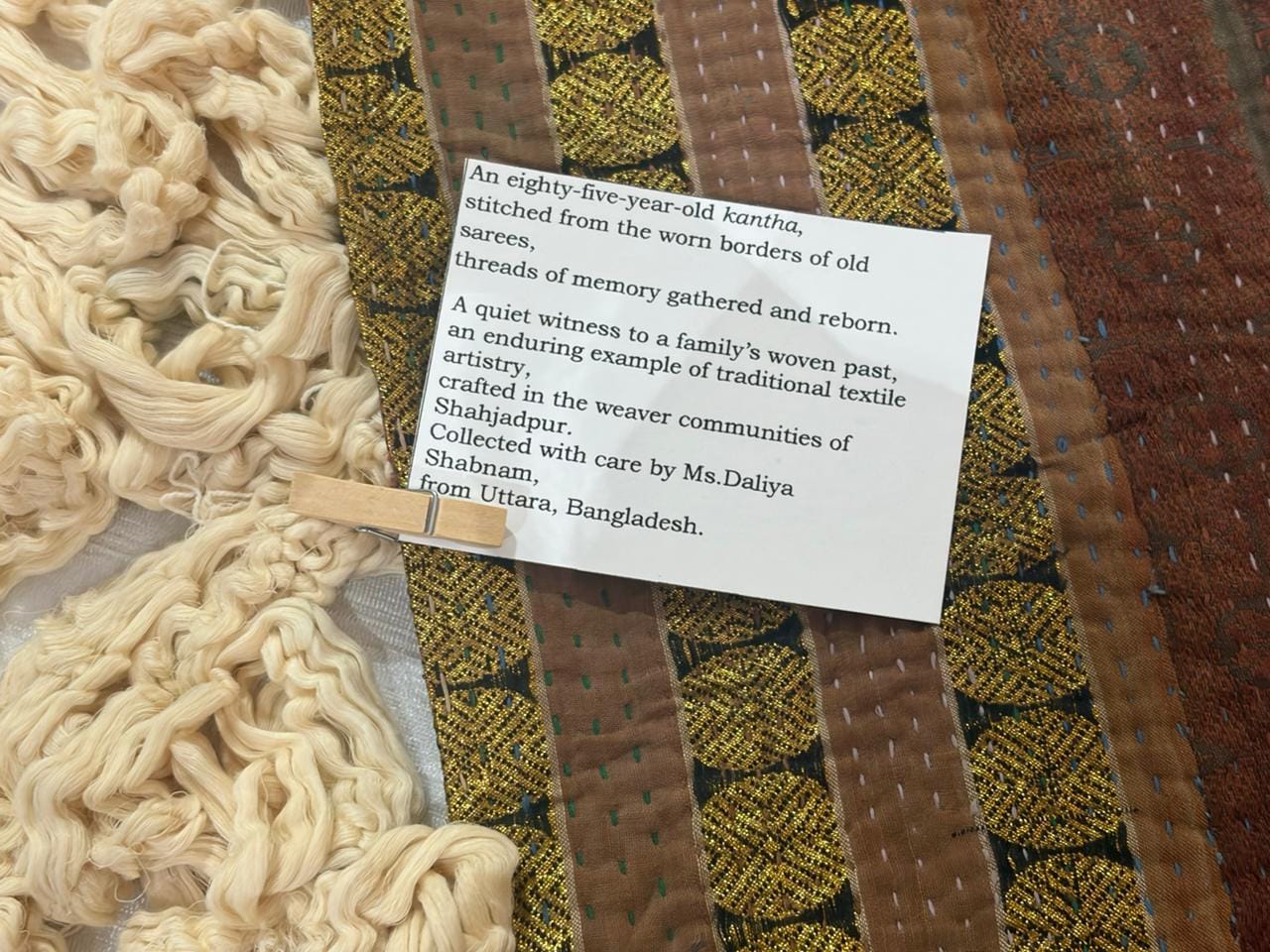
At the centre of all this sat Basak, observing and sharing the history behind each weave. A single saree may take months to complete, sometimes extending to a year. The process demands absolute coordination: “brain, eyes, hands and feet must work in harmony,” he told ThePrint.
“We rejoice at a handloom piece but we donot understand the travail and the agony that goes behind it. We see it as a product but we need to celebrate it. Heritage is not something you can put a price tag on”, Riaz added.
Also Read: Sikkim’s Lepcha hat to Naga shawl—new exhibition explores the stories behind Northeast textiles
Culture, continuity and the clash of life
As machine-made fabric becomes cheaper, faster, and better, the struggle to continue the weaving traditions becomes increasingly precarious. In Bangladesh, where many of these weaving customs trace their origins, the new machine looms have made it economically unviable to continue the craft.
“I want my children to continue this work the way I inherited it from my father. But it is fading,” Basak said.
In December 2025, Tangail weaving was inscribed on UNESCO’s Representative List of Intangible Cultural Heritage of Humanity. The recognition has drawn global attention, but for artisans like Basak, visibility does not necessarily translate into stability.
“Recognition brings pride, but survival depends on whether the next generation can still afford to weave,” he said.
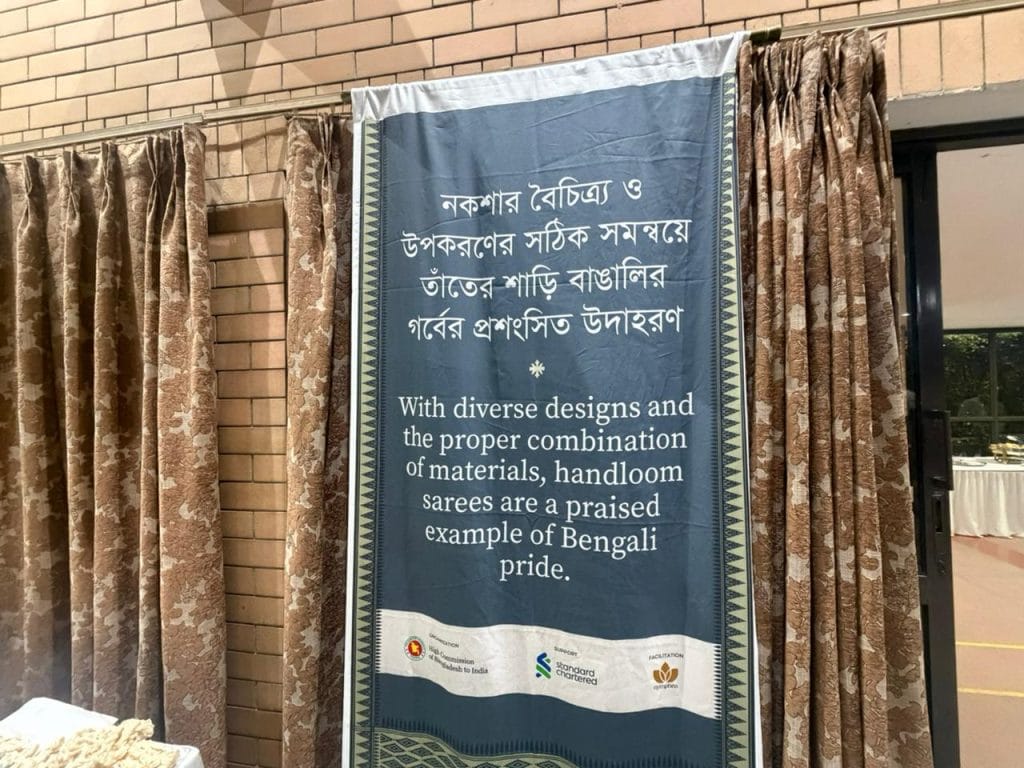
Inside the exhibition, visitors moved between displays of heirloom sarees from Basak’s family collection.
Craft activist Tyabji, observing the crowd, noted the proximity between India and Bangladesh in both geography and culture.
“In both countries, there’s a strong tradition of making things by hand—and choosing to wear what is handcrafted. This exists alongside a more mechanised system that produces goods at scale. It’s a choice we all face: whether to support what is made with care and human effort or follow the faster, mass-produced route. “Unfortunately, much of the momentum today leans in one direction,” she told ThePrint.
India and Bangladesh share a deep cultural connection, and there should be more exchange and celebration of that shared heritage. While we often think of these traditions as “ours,” they truly belong to all of us collectively. And with such richness in choice and variety, there’s something meaningful for everyone to connect with,” Tyabji added.
She recalled how, standing by a narrow river marking the border between Meghalaya and Bangladesh, she had once remarked that the distance between the two nations could be measured “in the length of a saree.” The metaphor lingered in the room—borders dissolving into shared practices of making and wearing.
“That shared inheritance is reflected in our traditions—cultural and spiritual alike—which need not compete but can instead be celebrated together. And at the heart of that continuity lies something as intimate as a handwoven garment,” she added.
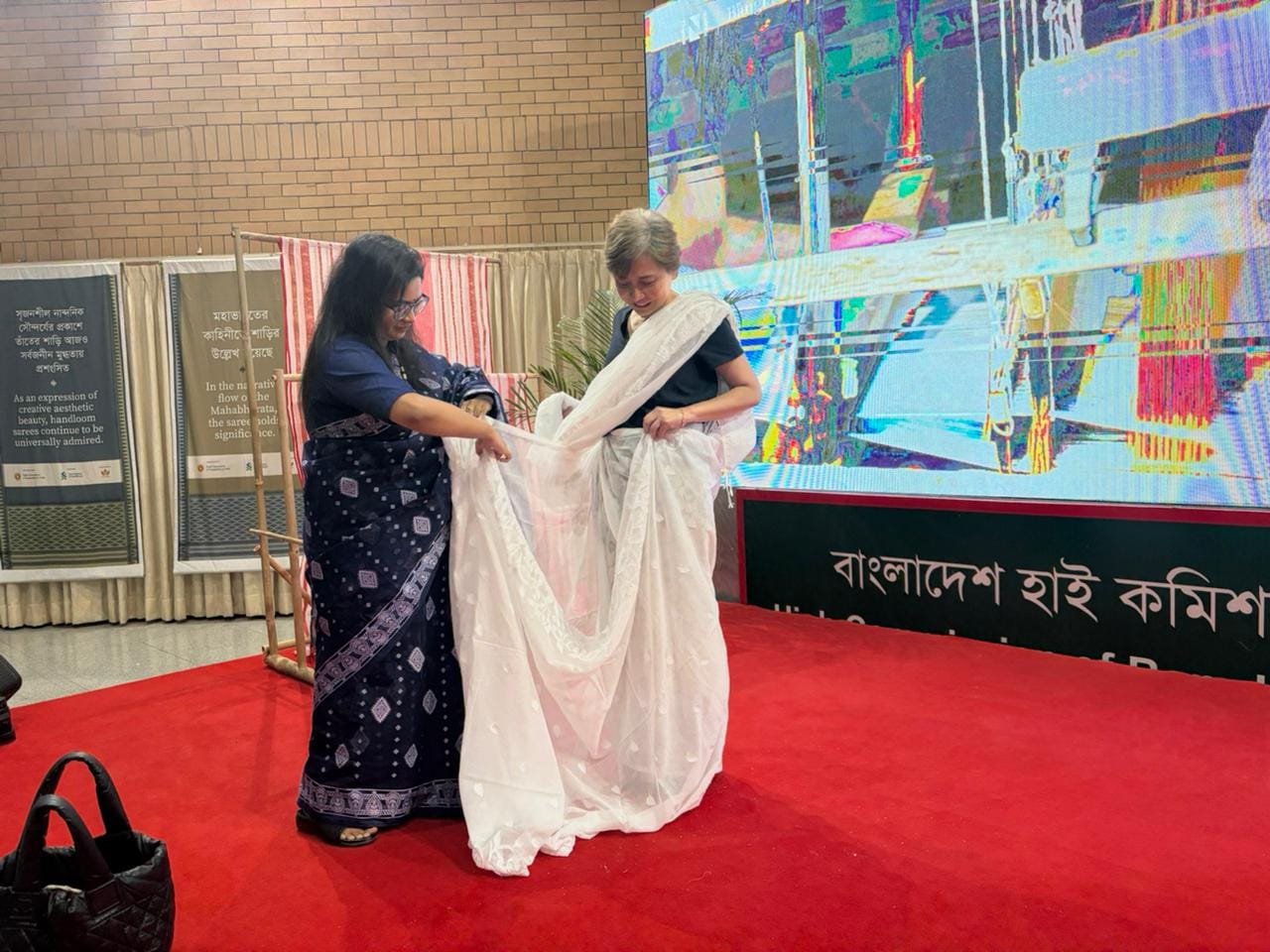
For others, the saree is not just a garment but a civilisational thread. Incidentally, the place was littered with handwritten notes on the significance of the weave.
“There are traces of it from the Indus Valley Civilisation. There are mentions of it in our Vedas… the fact that we wear this as an unstitched garment really speaks of purity and continuity,” architectural restorer Kohli noted.
“The saree is really perhaps the only garment in the world which has been continuously worn,” she added.
Shaha, who is also one of the pathfinders in modern crafting and textile design in Bangladesh and one of the founders of Aarong, a state-led textile initiative asked a deeper question—What lies beneath the reverence? Why must such traditions be saved at all?
“The industrial revolution and western influence in the fashion industry and the wave of globalisation have reshaped how people dress and what they value. It was mentioned in the Mahabharata. Why do we need to save it after 5000 years? Because no other cloth has so much history or identity. Handloom differs from industrial work because the weave carries the breath of the weaver… the everyday story is woven into it,” he goes on to say.
To wear a Tangail saree, then, he concluded, is to carry something both intimate and collective.
“When you wear one, you are carrying a memory, a story,” Shaha said.
As the evening thinned and the last sarees were folded into bags, one image lingered on the screen: a weaver at his loom in Tangail, humming a folk song.
“I often wonder if it is the weaver influencing the song or the song influencing the weaver,” the ambassador asked.
In Tangail, and in that room in Delhi, the distinction seemed beside the point. The song, like the saree, endures, woven through generations, carrying with it the quiet insistence of human hands that refuse to give up.
(Edited by Insha Jalil Waziri)