



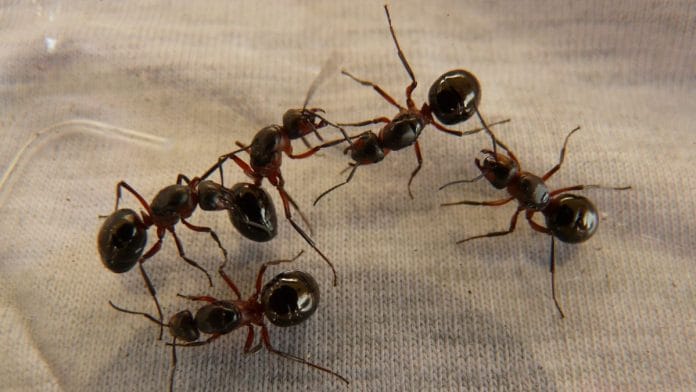
New Delhi: The owner of a Michelin-starred restaurant in South Korea has landed in legal trouble after going a little overboard while garnishing a dessert. The restaurateur chose to top up the dish with ants and now faces one year behind bars.
Prosecutors, on Monday, accused the owner of violating South Korea’s Food Sanitation Act. According to the country’s law, only 10 insect species are allowed for human consumption — including brown mealworm larvae and grass hoppers — and ants are not among them, reported local media.
The matter came to light not during a routine inspection but after social media and blog posts mentioning the ant dishes did rounds. Soon, the ministry of food and drug safety launched an investigation and booked the owner of the two-Michelin-starred restaurant, located in Seoul’s Gangnam, one of South Korea’s most expensive districts.
Besides a year in jail for the owner, prosecutors have also asked a court to impose a fine of 20 million Korean won ($13,525) on the company that runs the restaurant, reported Yonhap news agency.
Also read: Rats at K Rustom, fungus at Parsi Dairy—why many are cheering FDA shutdown of Mumbai icons
‘For a sour taste’
As per prosecutors, the eatery served sorbet topped with ants over 12,000 times, making around 120 million Korean won from it. About 49,000 ants were used in the dishes, The Korea Herald reported.
The restaurant admitted using ants in its dishes, but argued that the figures mentioned by prosecutors were inflated. The defendant’s lawyers claimed that only about 60 per cent of the customers chose the ant topping when they were served the desserts. It was also argued that only a few dishes on the menu contained ants, and that several countries, including the UK, Australia, and Denmark, use the insect for consumption.
The court also heard that the chef added only “three to five” ants to icy desserts for some “sour taste”.
“I apologise for this incident, which arose from my failure to fully understand the relevant regulations,” the defendant said.
The court will deliver its verdict on 2 September.