



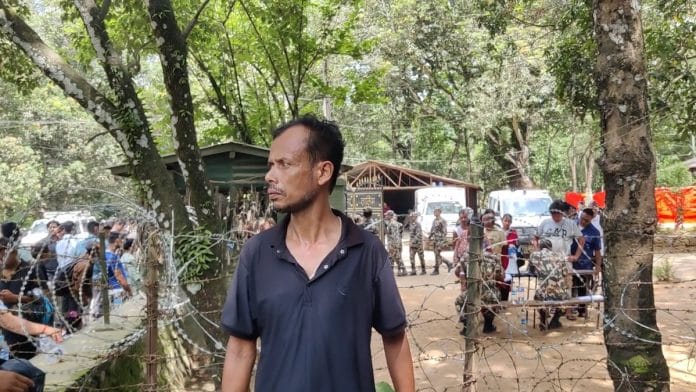
Bidur: Arjun Remal says he is thankful he checked his phone. While working with his eight-person construction crew on a bridge in Rasuwa on the morning of 26 August, he remembers feeling a buzz in his pocket. When he checked, it was an SMS alert from the National Disaster Risk Reduction and Management Authority warning him of flash floods in his location.
“I looked down at the phone and by the time I looked up the water was already rushing in,” recalled Remal, sitting outside the Nepal Army’s rescue operations HQ in Bidur. “I just called to my crew and ran.”
Remal was working as a technician on a bridge on the Bhange Jharna, a popular tourist spot in the Mailung region of Rasuwa district, where the floods hit first. He remembers a great white 10-ft wall of water, mud and rocks descending on the bridge as he and his coworkers ran for their lives up a side road into the nearby hills.
“If I would have not seen my phone, or seen it 30 seconds later, we would have been dead,” said Remal. “It was so sudden that we didn’t even have time to process.”
As he hurried uphill, he lost his shoes, his phone and every other belonging. Except for the clothes on his back, he says, he left everything behind.
“But the good thing is that we’re all alive, all my crew members are with me and everyone I was responsible for is here,” he recalled, with tears in his eyes.
Rasuwa was the worst-hit district in Nepal, taking the first major impact as the flood came down from the Tibet border. Roads, bridges and hydropower infrastructure were destroyed and settlements such as Timure and Syabrubesi were badly damaged.
Also Read: Inside Kathmandu’s Tribhuvan Hospital. Frantic families, flood wards, 1 Indian in ER
A night in the jungle
Remal and his crew spent the entire night in the hills and jungles surrounding the Mailung region, walking in the darkness towards safety. As they could not descend to the inundated river basin below, they had no way of knowing where they were or how far they were from the waterfall.
Sometime around 10 pm, they came across a few houses and realised they had walked all the way to Nuwakot district. No helicopter or ambulance had come to rescue them, and after eating something at the houses, they walked on.
“We just wanted to be safe. I don’t remember how we walked or where we walked but I just remember that we needed to leave the bridge behind and go towards safety,” said Sunil Tamang, one of the crew members with Remal.
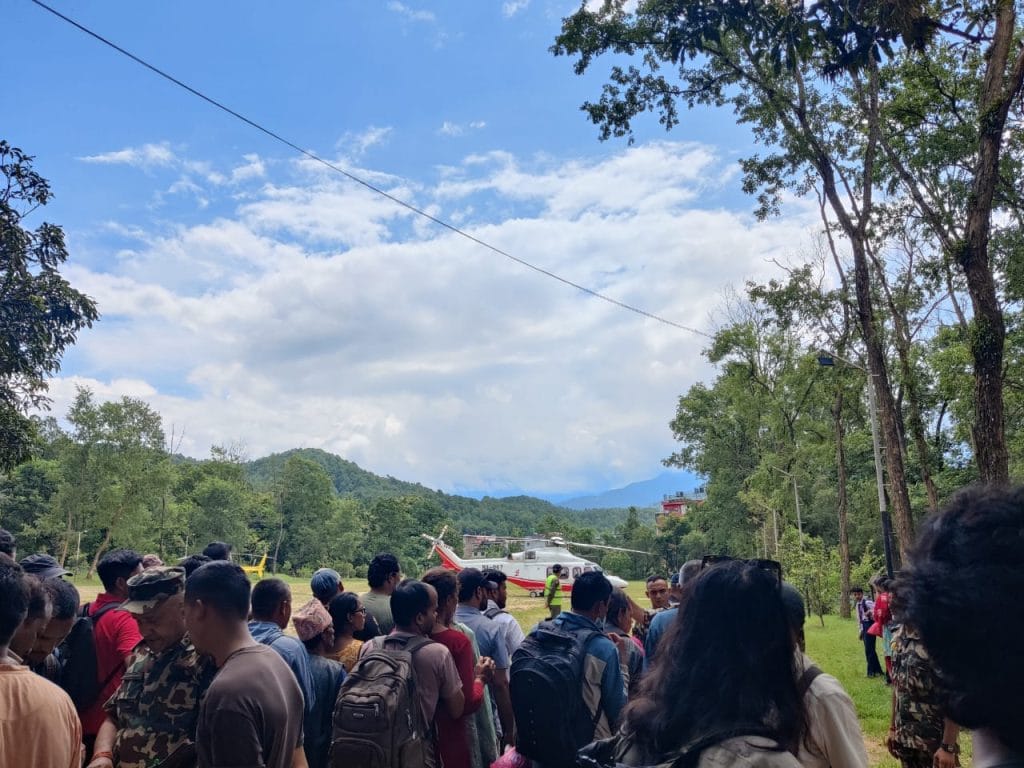
On Thursday afternoon, the men reached Bidur municipality and were told by passers-by that the Army had set up a base at its training centre. After heading there, Remal began looking for ways to get his men home.
“I am from Bidur, but the others are from further downstream, some live near Kathmandu,” said Remal. “I have to get them medical attention and then get them home.”
While four of his men found rides in pick-up trucks and vans to go to their villages, Remal stayed on with the rest at the Army Training Centre. Here, as families came searching for their missing loved ones, he recounted his own harrowing tale.
“Honestly, I ran like I had never run before. Others might not be so lucky,” he told a family from Bidur looking for their son, a construction worker like Remal.
While the army help desk in Bidur diligently noted down the names of civilians missing in the flash floods, Remal had his own grim assessment of the situation.
To families looking for their loved ones, he asked one question: “Have you been able to get in touch with them after 5 pm the day of the floods? That’s the time I got some signal to call. If not, I doubt they’re alive.”
(Edited by Asavari Singh)